A Learning Hospital: The Education Hub
Thanks to support from the Good Friday Appeal, The Royal Children’s Hospital (RCH) world-renowned Education Hub and Simulation Centre will be joining forces to offer more education and learning opportunities for clinical staff both at the RCH and across the state, including regional and rural areas.
The RCH’s Education Hub has been central to the delivery of education on campus for close to a decade. By working with campus partners such as The University of Melbourne, the Hub has supported clinical excellence through its one-of-a-kind delivery of programs.
“When it comes to clinical care, we often think about the technical bits of learning. For instance, learning about diseases or treatments. A lot of what the Education Hub does is think about how we can support health providers thrive,” explained Professor Amy Gray, Head of the University of Melbourne Department of Paediatrics and the Director of the Education Hub.
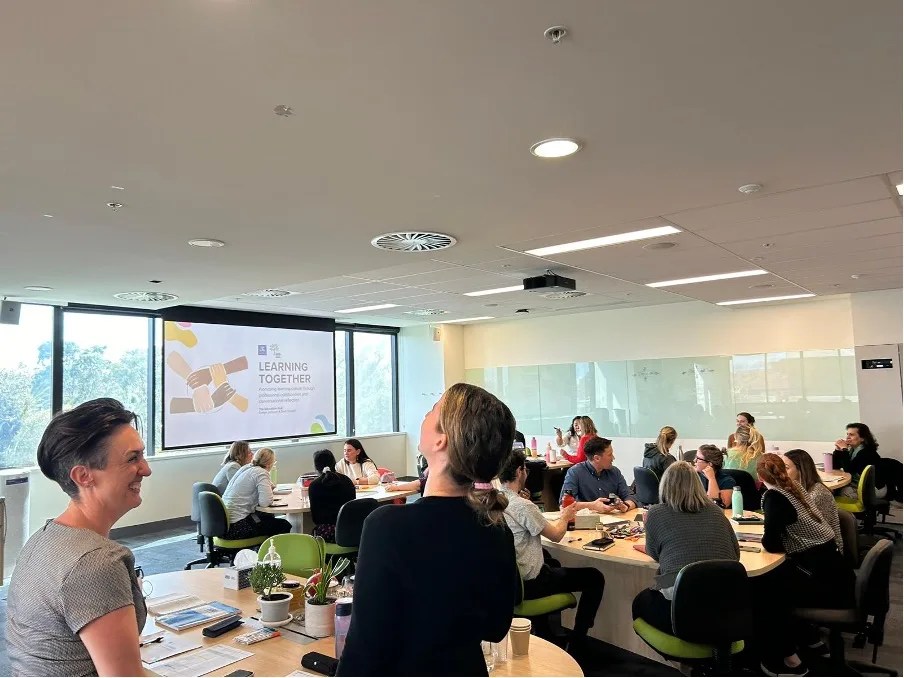
Through innovative and bespoke learning practices, the team have been able to deliver programs that are cultivating a holistically skilled workforce. Similarly, as a well-established leader in the field, the RCH’s Simulation team has been making a profound impact in improving teamwork and driving safer clinical environments.
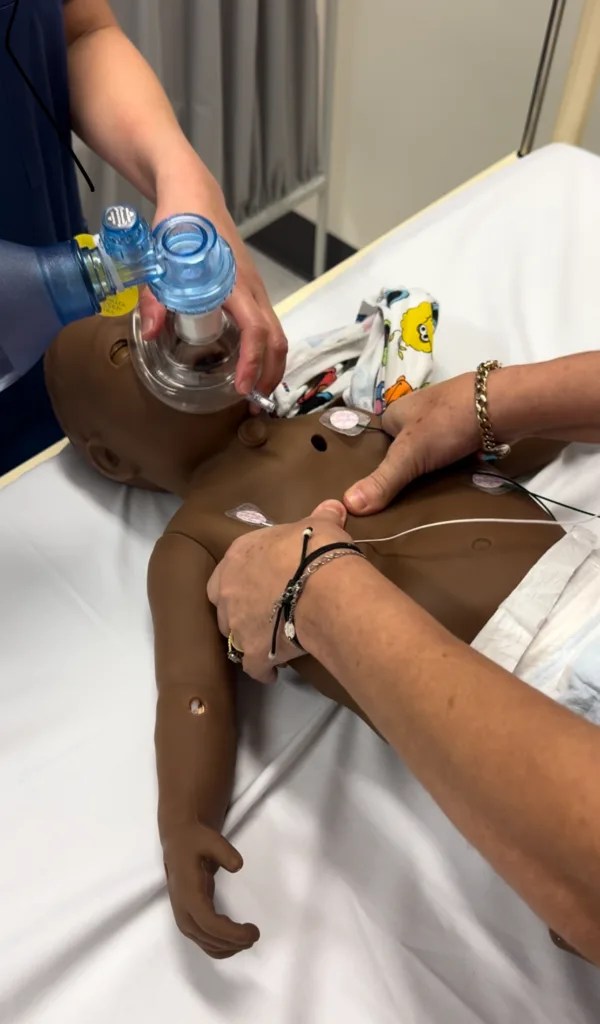
“We’ve known for years how important simulation is in supporting health teams. But simulation today doesn’t look the same as it did five years ago. We now use simulation to test ideas before we even put them into practice. This really elevates the safety for patients and their families,” Amy highlighted.
The Education Hub and Simulation team have already made a profound impact on the paediatric workforce across the state. For instance, in 2024, both the Education Hub and the Simulation team’s outreach efforts supported 111 health facilities across metropolitan, regional and rural Victoria, empowering clinicians to look after their local communities.
“We’ve worked with hospitals that have never done a tonsillectomy before. Hospitals across the state expanded their services to address long waiting lists for this common procedure. To help them do so with the best possible care our nurses went to metropolitan and regional hospitals to upskill the post-operative teams. So, I think this statewide and regional impact is really important,” Amy said.
“The feedback we’ve heard on our outreach programs is that it has helped change the way they look after children. It has also given them new evidence and new ideas of how to practice that has been quite rapidly incorporated into what they do,” she continued.
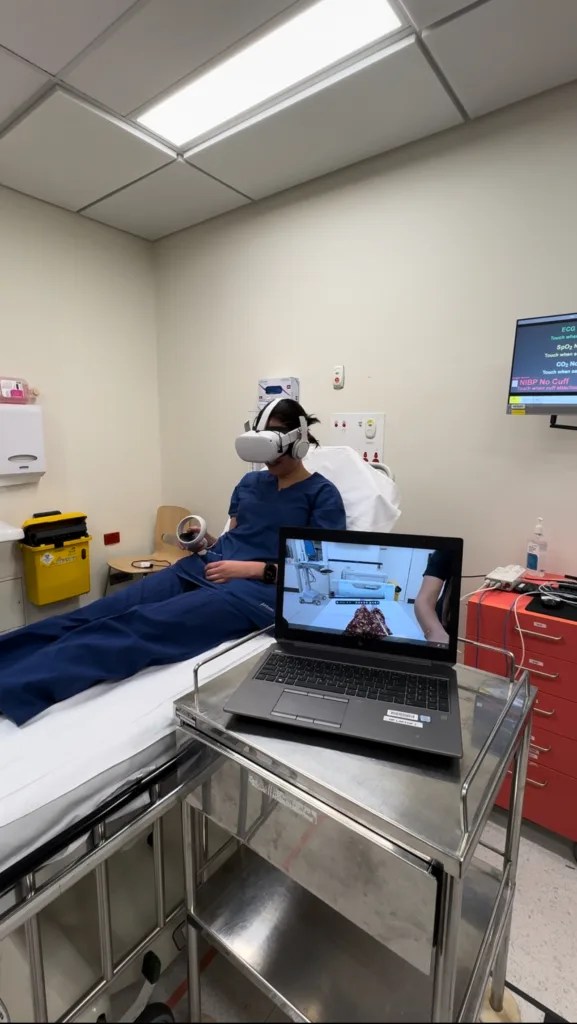
This new partnership will help uplift clinicians and paediatric staff across the RCH and state-wide, ensuring that even more children and young people can receive the best possible care, closer to home.
“Our health system needs to continually grow and change, and so to do the best for our patients, we need to continually take in new evidence and research. We’re working to enable the whole organisation to grow and learn, and be more adaptable,” Amy emphasised.
The Education Hub’s impact would not be possible without the support of the Good Friday Appeal and its generous donors. This is something that Amy and her team are incredibly grateful for.
“Investment in education is an investment in the future. This can often be taken for granted, but I’m so incredibly grateful when education receives the support from philanthropy because it allows us to do things that we would not be able to do otherwise,”.
Professor Amy Gray, Head of the University of Melbourne Department of Paediatrics and Director of the Education Hub.
Key Statistics
- In 2023, more than 15,000 clinical and non-clinical staff participated in the Education Hub and Simulation team’s programs combined, helping build a quality workforce both within and beyond the hospital’s walls.
- In 2024, these outreach efforts provided custom education programs to 111 health facilities, including 36 regional centres and 75 rural hospitals or acute care facilities.
- In just the last year, the program has reached 5,000 staff across the campus through 500 face-to-face education events. The program has also accelerated opportunities for digital learning through technology. This includes the introduction of a virtual learning platform with over 20,000 users in 67 countries, podcasts that have 17,000 downloads a year, and web-based video content which have over 35,000 views each year.
2026 Program update:
Over the past year, this initiative has achieved a variety of successes including:
- The Education Hub’s interprofessional team delivered 70 education sessions attended by over 1,300 staff across the Melbourne Children’s Campus.
- Outreach programs engaged more than 2,800 participants from RCH and 18 metropolitan and regional health services.
- The Simulation program reached over 1,600 participants from RCH and partner hospitals, including The Royal Women’s Hospital, Eastern Health, and La Trobe Hospital.
- Collaborative education events strengthen links between RCH clinical departments and external professionals. Nine events to date have engaged over 405 external professionals and 306 Campus staff through flexible in-person and online delivery.
- Customised programs were co-designed with stakeholders to meet the specific needs of health services and professional groups.
- The Maternal Child Health Nurse program engages over 700 nurses annually and has inspired a similar initiative for Victorian School Nurses, launching February 2026.
- The Hub increased visibility of learning activities through the RCH Education Instagram channel, quarterly newsletter, and other initiatives.
- The virtual learning platform supported over 26,000 participants from 29 countries, up from 10,000 last year, with podcasts downloaded 13,600 times, video-based education viewed 32,300 times, and additional online resources accessed globally.
- Innovative programs included a virtual reality education initiative, delivering 31 sessions to over 301 participants.
- All programs are evidence-based, informed by stakeholder needs, and evaluated for high participant satisfaction and measurable impact.
- Year to date, the team has published three research papers (four more in pre-submission), delivered four oral and two poster presentations at national and international conferences, received an award, and was invited to present at a webinar attended by over 300 participants.
Impact and value – looking ahead
The Royal Children’s Hospital (RCH) is committed to continuous improvement and innovation. This initiative, encompassing support for the hospital’s world-leading Simulation Centre, will help create a sustainable model that strengthens how staff learn, ensures risks are identified early, and strengthens the way knowledge is shared across the paediatric health system.
This will help achieve safer, more advanced patient care with better outcomes by establishing the RCH as a Learning Health System. By putting practical learning infrastructure in place, insights from clinical care will help lead to safer practices, better teamwork and faster improvements.
- Together with the University of Melbourne’s Department of Paediatrics, the RCH is establishing a Learning Health System to improve outcomes for sick children, their families, and caregivers.
- This system will embed data-driven decision making, patient and family co-design, and contemporary learning approaches into the hospital’s operations.
- A Learning Health System architecture will drive a shift in organisational thinking, shaping what the hospital does and how it does it. Central to this is a dedicated Learning Lab that identifies problems in care and implements practical solutions.
- The Lab will bring together teams from the Education Hub, Simulation Centre, and Centre for Health Analytics to review clinical challenges and develop tailored solutions aligned with the priorities of the RCH Executive Team and clinical departments.
- By enabling clinicians to identify and address risks earlier, the Lab will enhance patient safety and promote best-practice approaches, supporting sustainable improvements and capability building based on health service priorities.
- Leveraging existing hospital initiatives, the Lab will maximise the value of investments in data infrastructure, education, and improvement programs, transforming the RCH’s approach to learning.
- The initiative will strengthen teamwork, leadership, and staff wellbeing, while delivering measurable improvements in safety, quality, and efficiency of care.
- Ultimately, this model has the potential to extend beyond the RCH, serving as a blueprint to enhance paediatric care across Victoria.
Last updated March 2026.
Read More

Explore More