The RCH Neuroscience Advanced Clinical Imaging Service (NACIS)
Central nervous system disorders, such as brain tumours and epileptic disorders, are among the leading causes of childhood chronic illness-related morbidity and mortality worldwide.
Over the last decade, The Royal Children’s Hospital (RCH) and the Murdoch Children’s Research Institute (MCRI) have worked to deliver an advanced neuroimaging program that has revolutionised neurosurgical practice and improved surgical outcomes for children with epilepsy and selected brain tumours.
This resulted in the establishment of Neuroscience Advanced Clinical Imaging Service (NACIS) under the Department of Neurosurgery at the RCH.
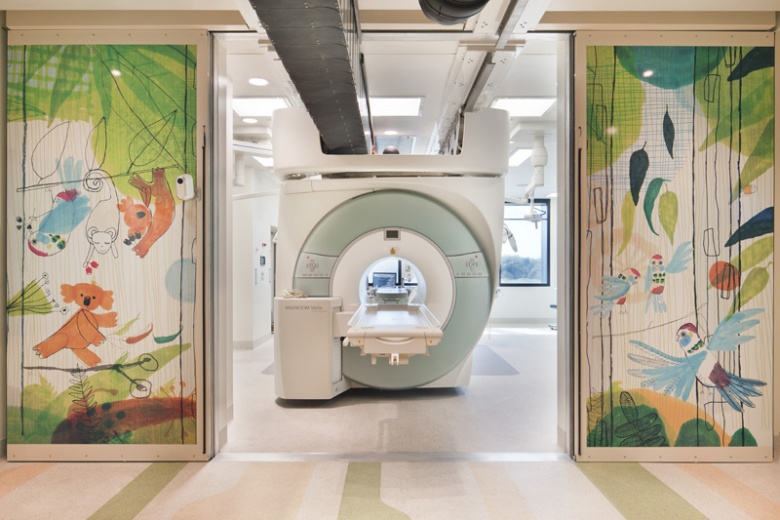
The Neuroscience Advanced Clinical Imaging Service (NACIS) is a one-of-a-kind service at The Royal Children’s Hospital (RCH). Through advanced brain imaging technology and image processing techniques, this service has been able to help make the invisible appear visible, going further than commercial magnetic resonance imaging.
Thanks to the support of the Good Friday Appeal, NACIS is improving long term outcomes and quality of life for young patients with brain tumours and epileptic disorders.
The NACIS team can help to identify particular lesions in the brains of patients with epilepsy, which were unable to be accurately detected before the establishment of the service. Across 2024, NACIS has helped clinicians deliver personalised and safer brain surgery to over 120 children.
NACIS uses sophisticated image processing techniques to produce a detailed map of a child’s brain vessels, functional brain regions and the underlying nerve fibre connections, which control functions like language, vision and movement.
They also use the technology to assist surgeons in identifying safe “surgical road maps” for precise brain mapping and surgical execution, as well as assessing patients’ post-surgery to ensure the best possible outcomes The map is used by surgeons to precisely plan and perform their operations, allowing them to avoid injuring these critical functional brain structures, thus ensure the best possible functional outcomes.
NACIS is a one of kind service, working to perform more high-risk and complex surgical cases, and in selected cases, offering surgery as a treatment to children previously considered inoperable.
2026 Project Update
Since its launch in 2020, NACIS has supported hundreds of children, including high-risk cases that would not have been safely operable without its input.
- NACIS is a nationally and internationally unique service that has been embedded within the RCH Neurosurgery department. Since its launch, it has translated cutting-edge neuroimaging into clinical care, enabling safer, more precise, personalised brain surgery for children.
- The service fills a critical gap in paediatric care by integrating advanced brain imaging into real-time surgical care. This makes high-risk or inoperable brain surgeries safer and possible.
- Since its inception, NACIS has supported 588 children with pre-surgical planning, contributing to over 200 epilepsy and brain tumour surgeries, including 122 high-risk cases.
- The outcomes of these surgeries are also noteworthy. Thanks to this innovative and cutting-edge machine, over 80% of drug-resistant epilepsy patients are now seizure-free, and most brain tumour surgeries achieved complete tumour removal without deficits.
- As a result, clinical demand for this service has increased from 40% to 200% since 2020.
- The NACIS team also developed and successfully implemented a streamlined, child-friendly workflow from telehealth preparation to scan quality control, processing and analysis and advanced reporting. This has increased the success of certain imaging, helping reduce the epilepsy MRI waiting list and expanding access to safe, image-informed surgery for more children.
- Thanks to the continued and generous support shown by the Good Friday Appeal, NACIS will be able to continue its vital service as standard care and expand its reach.
- This will mean that three NACIS team members will be able to receive further support – a group lead/lead clinical scientist (1.0 FTE) and 2 postdoctoral clinical scientists (1.0 FTE and 0.6 FTE).
- Each member of this team will play a critical role in strengthening the multidisciplinary care and improving access to personalised, image-guided care.
- Overarchingly, NACIS has made care possible for children who would otherwise have been deemed inoperable. This is improving outcomes for children with epilepsy, brain tumours, stroke and vascular conditions.
- It has reduced diagnostic delays for subtle epilepsy lesions from years to weeks and continues to reduce long-term disability, invasive tests, repeat surgeries and hospital stays.
- NACIS continues to position the RCH as a global leader in paediatric neurosurgical imaging and is an investment in the future of paediatric brain surgery.
Last updated March 2026.
Explore More