Thanks to support from the Good Friday Appeal, researchers at the Murdoch Children’s Research Institute (MCRI) are helping to ensure a brighter future for children with cardiac conditions.
Associate Professor Jonathan Mynard is a bioengineer and cardiovascular researcher at the MCRI, specialising in paediatric hypertension, medical devices, cardiovascular modelling, blood pressure and flow dynamics (haemodynamics), and congenital heart disease. Jonathan’s current research project is looking at the difference in blood pressure measurements between a child’s arms, and the impact this may have on a child’s diagnosis. It is the first study worldwide to determine the size and frequency of inter-arm blood pressure differences in children and adolescents.
Initial findings revealed that even a small difference in blood pressure measurements between one arm and the other could lead to a wrong diagnosis. “Children with high blood pressure, many of whom appear to be healthy, have a greater risk of developing hypertension in adulthood, a major risk factor for cardiovascular disease,” said Jonathan.
Everything Good Friday Appeal, straight to your inbox. Get more information about your impact and how to get involved.
Garden Program Vision: A Breath of Fresh Air
The Royal Children’s Hospital (RCH) Therapeutic Garden Program delivers dedicated programs for patients and families at three specialised garden spaces at the hospital.
The Kelpie Garden Space – accessible to children and adolescents with acute and chronic health issues.
The Therapy Garden South – accessible to RCH staff, and both inpatients and outpatients accompanied by staff.
The North Court Garden Space – accessible to patients, visitors and RCH staff.
The programs include a combination of individual and group horticulture activities and creative experiences designed to distract from pain, decrease stress and provide relief. The gardens also offer a quiet, calming environment for patients, families and staff, providing an alternative space to the hospital wards.
The RCH Therapeutic Garden Program is funded by philanthropy, including support from Woolworths through the Good Friday Appeal. Drawing on extensive research demonstrating the physical, mental and social benefits of providing patients with access to garden spaces, the RCH is extending the program, resources and accessibility of its gardens to reach more patients across the hospital. On average, approximately 60 patients per month benefit from the program. This extension is made possible with thanks to the generous funding support this program receives.
This educational and therapeutic initiative is led by a multidisciplinary team including child life therapists, garden staff, and volunteers and aims to decrease stress for patients and their families, which helps to improve patient recovery. Beth Dun, Manager, Child Life Therapy at the RCH said that garden programs have great benefits for patients and families.
“The Garden Program will be incredibly beneficial for patients at the RCH. As well as giving them a place to breathe in fresh air, it can also be a welcoming space for children and young people from regional areas, who often find the city very intimidating,” said Beth.
Studies show that 95% of people who walk through hospital gardens report a therapeutic benefit. When hospitals provide easy access to nature, patients experience a reduction in stress, blood pressure and pain, while also experiencing an increase in pain tolerance, and faster recovery times. The social element of garden therapy allows users to feel empowered and more engaged.
Contact with nature helps hospital staff and family members more effectively deal with the stress of providing care, which enables them to better serve those they are caring for. Gardening provides a range of mental health benefits, including significant reductions in depression and anxiety, and improved social functioning.
“Gardening itself has many benefits for patients, including offering a safe, natural setting to participate in a non-clinical, fun activity that provides a welcome distraction from their illnesses. The use of familiar garden tasks that are simple and diverse offers patients the chance to feel successful as well as tasks that cater to different levels of capacity or energy.”
Impact Milestones
July 2023
Employed a Therapeutic Garden Program Coordinator and a new full-time Therapeutic Garden program staff member. These staff members are developing the workplan to deliver the new vision, including increasing wheelchair accessibility, increasing shaded garden spots to create calm spaces for therapies, and increasing the number of patients who can access the program and garden spaces.
Commenced diversifying the plant species to provide sensory experiences for all patients – providing colour, touch, smell and feel.
Undertaken consultation with clinicians and treatment teams to tailor the garden spaces to meet the therapeutic goals of a diverse range of patient needs.
Received volunteer support from corporate teams and the RCH volunteer program.
November 2024
The program has provided and hosted sessions for patients across five different wards: cardiac, oncology, rehabilitation and two for eating disorder patients.
Patient referrals have been received from a further five wards: Cockatoo, Kelpie, Sugar Glider, Koala and rehabilitation outpatients.
Mindfulness and wellbeing sessions for staff have been run in conjunction with key events like wellness weeks.
Ongoing maintenance and upkeep of the three therapeutic garden spaces.
Installation and commencement of the Kitchen Garden Project which has meant food may be picked by patients and herbs are picked by the hospital’s food services.
Commenced a research project in conjunction with the Allied Health Research team on transforming allied health with nature, resulting in a presentation at an Allied Health symposium.
Continuation of diversifying the plant species to provide sensory experiences for all patients – providing colour, touch, smell and feel.
Strengthened partnerships with clinical teams to encourage outdoor clinical sessions.
Continued receiving volunteer support from corporate teams and the RCH volunteer program.
Everything Good Friday Appeal, straight to your inbox. Get more information about your impact and how to get involved.
Dame Elisabeth Nursing Development Scholarship
Thanks to funds collected by the RCH Auxiliaries for the Good Friday Appeal, the $50,000 scholarship allows one outstanding nurse to develop skills and experience by exploring innovative practices and models of care across Australia and internationally.
Dame Elisabeth generously gave her name in perpetuity in support of this scholarship and the advancement of nursing at the RCH.
2022 Scholarship Recipient
Congratulations to Eloise Borello, the 2022 recipient of the Dame Elisabeth Murdoch Nursing Development Scholarship.
Eloise is a highly skilled clinical nurse consultant who has been caring for sick children at The Royal Children’s Hospital (RCH) since 2010. She will use the scholarship to improve the current model of treatment for children across the hospital requiring intravenous access, a delicate and often traumatising procedure that can also lead to complications.
Eloise began her career as an adult oncology nurse before transitioning into paediatric oncology, working in both Kookaburra and Kelpie wards at the RCH. In 2017, Ella moved into the Quality and Improvement Department as a Clinical Nurse Consultant, specialising in vascular access.
Vascular access can mean different things, however for this project it refers to the process of inserting a device into a patient’s vein to deliver medical treatment. The most used device is called a peripheral intravenous catheter (PIVC), which is a thin plastic tube which is inserted into a vein using a needle.
“Around 50 per cent of all children admitted to the RCH will require a PIVC. While the use of the device is common, they are notoriously difficult to insert and maintain in children, which often leads to complications,” said Eloise.
“There are a lot of factors that play into this, but one reason is because children have small and fragile veins which can make it more difficult to insert the device, often resulting in multiple insertion attempts which can make the experience incredibly daunting for young children and their families.”
“While working at the RCH, I have seen firsthand the challenges involved in inserting PIVCs into a child’s vein and the negative effect that it can have on them, which is why I am passionate about ensuring patients have access to the treatment they require with no complications or harm, so they can get back to having a happy and healthy childhood,” she added.
With the support of the Dame Elisabeth Murdoch Nursing Development Scholarship, Eloise will audit the current practice in real time, which will allow her to look at the challenges involved in the process. As part of this, she will engage clinical staff and patient families to share their experiences to help provide more insight into the best way forward.
The scholarship will also allow Eloise to seek new knowledge around peripheral vascular access by consulting with leaders in the field, both locally and internationally. The end goal is to develop a best practice recommendation for vascular access at the RCH, ensuring the hospital become global leaders in the area.
“I am beyond grateful to receive this scholarship, and I am so grateful to the RCH Auxiliaries, RCH Foundation and BankVic for giving me and many others this opportunity. By providing this scholarship, you are providing more than a one-off opportunity, you are investing in the future of nurses and allowing us to create a different future for children, one that is better,” said Eloise.
Everything Good Friday Appeal, straight to your inbox. Get more information about your impact and how to get involved.
Children’s Cancer Care
Through the Children’s Cancer Centre, the leading provider of paediatric cancer services in Victoria, The Royal Children’s Hospital is committed to providing comprehensive cancer care for children and adolescents, which addresses not only treatment of their disease, but also holistic aspects, including psychosocial, financial, mental health and wellbeing, as well as educational and vocational needs.
Thanks to Good Friday Appeal support, the Children’s Cancer centre will utilise the latest learnings and best practice in cancer care through the funding of an integrated multidisciplinary team of specialist oncology medical, nursing, allied health, supportive care and research staff to provide holistic care to children, adolescents and their families.
Dr Di Hanna, Paediatric Oncologist at the Children’s Cancer Centre, said the medical treatment of cancer went hand in hand with the holistic care to best support patients and their families.
“The cancer journey needs a really holistic approach to support the patient and their family through and that involves the whole team, allied health professionals, neuropsychology, psychology, child life, play, everything,” Dr Hanna said.
“Without the generous support from the Good Friday Appeal, we couldn’t do what we do to provide the world class care.”
“The Appeal has been critical for every piece of the cancer journey. We need the latest and best research. We need diagnostic tools and the best clinical trials and the patient and family support networks. The Good Friday Appeal has been a cornerstone for each part of that.”
Everything Good Friday Appeal, straight to your inbox. Get more information about your impact and how to get involved.
Precision Newborn Health
These babies, born early or with complicated medical conditions, are often at high risk of having major problems with their health and development throughout their life, with many needing ongoing paediatric care and then adult care.
Thanks to support from the Good Friday Appeal, the RCH has been able to establish a dedicated research program, known as the Precision Newborn Health Program.
This innovative research program commenced in 2022 and is working towards improving precision in predicting infants at high risk of health and developmental problems. The program also aims to create personalised intervention programs targeted at those most at risk to improve their outcomes.
Professor Jeanie Cheong, Program Lead for the Precision Newborn Health Program, explained the program would help build a healthier future for babies cared for on Butterfly.
“We aim to predict neurodevelopment, feeding and motor problems, and severe lung disease, which are common outcomes across all high-risk infant groups, and carry significant burden to these children and their families.
“Through better prediction of which infants are at highest risk of long-term poor health and developmental outcomes, we will be able to target support to those who are most at risk, which means more streamlined care and better outcomes.”
In the first two years of the program, Jeanie and her team made steady progress.
The team has refined data analysis and modelling programs to better predict developmental outcomes for babies born extremely preterm. They have also started the same research for preterm babies who are at risk of lung disease and babies who have had surgery. Additionally, they have partnered with parents and health practitioners to design an early intervention program targeted at children from age two.
Jeanie is grateful for the community’s support through the Good Friday Appeal in making this program possible.
“On behalf of the babies, children and families, I thank all the supporters of the Good Friday Appeal for their support in the Precision Newborn Health initiative. This will make a substantial contribution to improving their lives.”
Impact Milestones
April 2022 – March 2023
In the first year of the program, a steering committee and working groups were established to oversee and lead the program.
Staff were appointed, including two program managers.
A web page has been developed to keep stakeholders updated with the progress of the program.
The team began refining data analysis and modelling programs to better predict health and developmental outcomes for babies born extremely preterm. They started the same research for babies who have had surgery.
They partnered with parents and health practitioners to design an early intervention program targeted at children from age two.
April 2023 – December 2024
The steering committee and working groups continue to meet regularly to oversee and lead the program.
The program team is now well established and is strengthening collaborations with the Department of Electrical and Electronic Engineering at the University of Melbourne, the Centre for Health Analytics at the RCH, and the Royal Women’s Hospital.
The team have developed data modelling to better predict developmental outcomes for babies born extremely preterm, with similar work underway for preterm babies at risk of lung disease and babies who have had surgery.
They have partnered with parents and health practitioners to design an early intervention program targeted at children from age two. They have identified a lack of easy to access reputable information for families of high-risk babies and will fill this gap by developing a digital platform.
Everything Good Friday Appeal, straight to your inbox. Get more information about your impact and how to get involved.
Cutting-edge neuro equipment
The health outcomes for children with disorders of the brain, nerves and muscles will be improved thanks to equipment The Royal Children’s Hospital Neurophysiology Department is able to purchase with Good Friday Appeal funds.
A dedicated Neurophysiology Service sits within the department, with a focus on the study of nerve cells (neurones) as they receive and transmit information in the brain, spine, and muscles, and uses advanced technology to do so.
Through support from the Good Friday Appeal and 3AW, vital, ageing neurophysiology equipment will be replaced with enhanced, state-of-the-art pieces to provide the highest standard of care to patients with neurological disorders.
There are three large groups of equipment that looks at how the brain functions being funded by the 2022 Good Friday Appeal.
Ageing EEG equipment, which is brain wave recording equipment, used around the hospital, in the outpatient area, on the wards and in operating theatres, as well as in homes, will be upgraded
New monitoring equipment that will neurosurgeons and orthopaedic surgeons will use in the operating theatre to operate on the back and spine more safely
The department will also purchase a unique, cutting edge piece equipment that will allow them to do EEG recordings inside and MRI scanner which previously you couldn’t as metals and wires in MRI scanners.
Dr Simon Harvey, Consultant Neurologist and Director of the Children’s Epilepsy Program, said brain disorders, including epilepsy, were very common and could be quite disabling for some children.
“We’ll be able to work better and hopefully treat more children, more efficiently and more safely, and get better outcomes. We’ll be able to operate on more children who have scoliosis, so spinal curvature surgery, epilepsy surgery, and so forth, and do this in a more comfortable way and efficient way,” Dr Harvey said.
“The funds raised from the Good Friday Appeal allow us to go further and provide a really high level of care, introduce new services, introduce cutting edge equipment and staff to do research.”
Everything Good Friday Appeal, straight to your inbox. Get more information about your impact and how to get involved.
Radiation monitoring technology
Monitoring the radiation levels of every child that undergoes an X-ray, CT scan or other specialised medical image at The Royal Children’s Hospital has been transformed thanks to the new MyXrayDose computer system funded by the RCH Auxiliaries through the Good Friday Appeal.
MyXrayDose is changing the way the RCH cares for patients, ensuring long term health outcomes. Medical imaging and scans are essential tools for diagnosing, measuring and managing a number of health conditions, however each scan exposes the patient to a small dose of radiation. For some children, their condition means that they need to undergo a large number of these scans in their lifetime.
Thanks to this new technology, Amanda Perdomo, the Radiation Safety Officer at the RCH, and her team have the ability to accurately measure their exposure to radiation, to ensure the risk is managed and minimised.
Nine Auxiliaries including the President’s Fundraising Network, Kooyong Lawn Tennis Club, Broadmeadows, Parkville, Templestowe, Footscray and Yarraville Juniors, Geelong, Knox-Sherbrooke and the Southern Rainbows Auxiliaries funded the software as a gift of $150,000 to honour 150 years of the hospital.
“It has been of great value to the Medical Imaging Department and the service we are now able to provide, and it wouldn’t have been possible without the funding provided by the Auxiliaries,” said Amanda.
Prior to this radiation tracking software, there was no central way of monitoring patients at the RCH and their lifetime burden from radiation exposure.
“It’s much, much easier to monitor now. In the past, a radiographer would look at the scans and then contact me if there were any issues. The radiation information was recorded manually so there was more room for error or data loss,” said Amanda.
The patient radiation and image quality monitoring software collates the radiation dose exposure for all patients and for every examination involving ionising radiation at the RCH. If any of the radiation exposures are outside of predetermined dose limits or the image isn’t optimal, the software automatically sends an alert to Amanda for assessment.
Benjamin McLean 5, is fighting cystic fibrosis. Picture: David Caird
“Although there are strict safety procedures implemented when patients undergo scans, they are still being exposed to a small dose of radiation. Excessive exposure can lead to a greater risk of developing cancer. Parents can understandably feel anxious about exposing their child to radiation,” said Amanda.
“This system has immediate benefits for patients; the dose and image quality is being looked at for every single patient – I am overseeing everything in the background. Also, I now have the information at hand to show parents and ease their mind – I can communicate to them ‘here is the last 1,000 children who had this exam’ and being able to show the minimal radiation risk versus the risk of the patient not having that exam.”
The system will also allow Amanda to identify any trends in increasing radiation dose or decreasing image quality over time.
“In the long term, once we get sufficient data, we can compare ourselves to international sites and see where we can potentially improve,” said Amanda.
“We are so thankful to the Auxiliaries; this software has allowed us to deliver really great care to patients and has ensured we are able to go above and beyond. The RCH is the only Australian paediatric hospital that uses a comprehensive dose tracking software, meaning we are best practice and have the potential to be world leaders in this area.”
Please note: the X-ray image on the iPad held by Benjamin is not of his lungs.
Everything Good Friday Appeal, straight to your inbox. Get more information about your impact and how to get involved.
Auditory brainstem response equipment
The Audiology Department at The Royal Children’s Hospital plays a crucial role in the diagnosis, monitoring and management of hearing health in children.
As it services patients from birth to 18 years old, there are a variety of assessment techniques and equipment used to evaluate hearing based on age and development.
The latest auditory brainstem response audiometry equipment is providing a specialised way to assess hearing in babies.
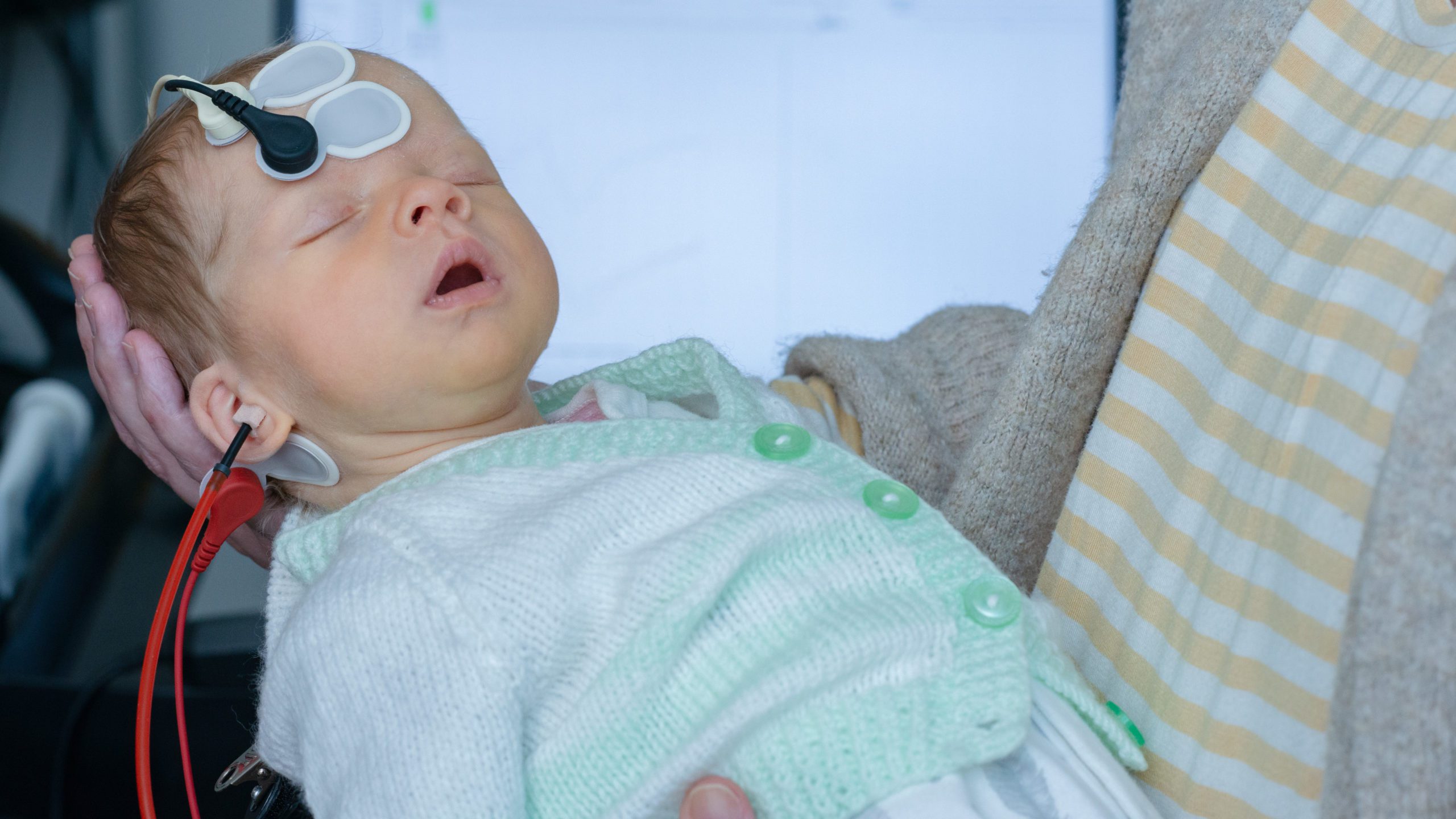
“We tell families to bring a hungry, tired baby to the clinic so the test can be conducted during the child’s natural sleep. Recording stickers are placed on the forehead and behind the ears which are all connected to a computer. Ear plugs are put in the baby’s ears where the computer can send different stimuli,” explains Christine Poulis, Manager of the Audiology Department.
“Testing commences after the baby is fed and falls asleep. The computer plays stimuli through the ear plugs, then measures the electric responses from the auditory nerve and brainstem.”
Six-week-old Alba having her hearing tested with the new equipment.
Previously, the equipment took longer to assess children as only one ear could be tested at a time.
The latest model of equipment means testing can be done in both ears simultaneously so families can have answers about their child’s hearing faster and in one appointment.
“Current research shows that hearing problems diagnosed and treated in the first three months of life result in better language outcomes for children.
“Thanks to the community’s generosity, we can continue to provide a high-quality service to all children with the best equipment on hand,” said Christine.
The auditory brainstem response equipment is one of 25 vital pieces of equipment that will be upgraded at The Royal Children’s Hospital thanks to the community’s support of the 2021 Good Friday Appeal.
Everything Good Friday Appeal, straight to your inbox. Get more information about your impact and how to get involved.
Mitral Valve Retractor
A unique piece of surgical equipment, the mitral valve retractor is designed specifically to assist surgeons conducting a mitral valve surgery.
The mitral valve is a very small valve located between the left heart chambers which lets blood flow through in a single direction.
When the valve doesn’t close, or becomes stiff, this is life threatening and requires open heart surgery to fix it.
“This mitral valve retractor is used mainly on older children or young adults. At the RCH we conduct about 20 mitral valve repairs per year, and most of these patients are Indigenous Australian children presenting with rheumatic heart disease,” said Professor Christian Brizard, Director of the Cardiac Surgery Unit.
Rheumatic heart disease is a serious disease of the heart where one or more of the four heart valves is affected.
This results from acute rheumatic fever which means the heart lining swells and causes lingering damage.
The incidence of rheumatic heart disease in the Indigenous Australian population is one of the highest in the world.
With the new mitral valve retractor, cardiac surgeons have greater visibility and stability of the surgical area as well as reducing the need for other additional assistance during the procedure.
The equipment will ensure that children from right across Australia can have this specialised surgery.
“We are always grateful to the Victorian community for their generosity in helping to fund advanced equipment which enables us to perform life-saving surgery – thank you,” said Christian.
The Mitral Valve Retractor is one of 25 vital pieces of equipment that will be upgraded at The Royal Children’s Hospital thanks to the community’s support of the 2021 Good Friday Appeal.
Everything Good Friday Appeal, straight to your inbox. Get more information about your impact and how to get involved.
Vital equipment upgrades
Thanks to the generosity of the Good Friday Appeal community, equipment vital to great patient care is being upgraded across The Royal Children’s Hospital. With the most advanced equipment, the RCH can continue to provide the best diagnosis and treatment for some of the sickest children in Victoria and beyond.
More than 25 different types of equipment will be bought, including state of the art operating tables for trauma surgery, bedside monitors for critically ill children in the Intensive Care Unit and a new suite of defibrillators to be used across the hospital.
Other equipment that will be bought includes:
A fibre-optic endoscope, which has a light and tiny camera at the end, allowing doctors to diagnose and treat gastrointestinal conditions.
A halo retractor system for trauma brain surgery, which is an essential piece of equipment for operations on the brain. The halo retractor system will be used to gently hold portions of the brain in place and gives surgeons greater access to perform complex procedures.
A portable video x-ray machine to give surgeons performing delicate hand and foot operations the ability to more easily find fractures and defects in the bones they are trying to repair.
Go behind the scenes in the Neurosurgery Theatre with Alison Wray, Director of Neurosurgery
Funds from the 2021 Good Friday Appeal have helped purchase a probe that attaches to the microscope used in brain surgery to help surgeons see around corners.