nanoString technology

Every year in Australia, around 700 children are diagnosed with cancer. The time and accuracy of this diagnosis is crucial to their ongoing care. Thanks to support from the Good Friday Appeal, The Royal Children’s Hospital (RCH) now has access to nanoString technology to support the rapid identification and diagnosis of these cancers.

While there are nine common types of paediatric cancer, the individual tumour variants for paediatric brain and solid tumours can vary dramatically by their unique genetic alterations and treatment.
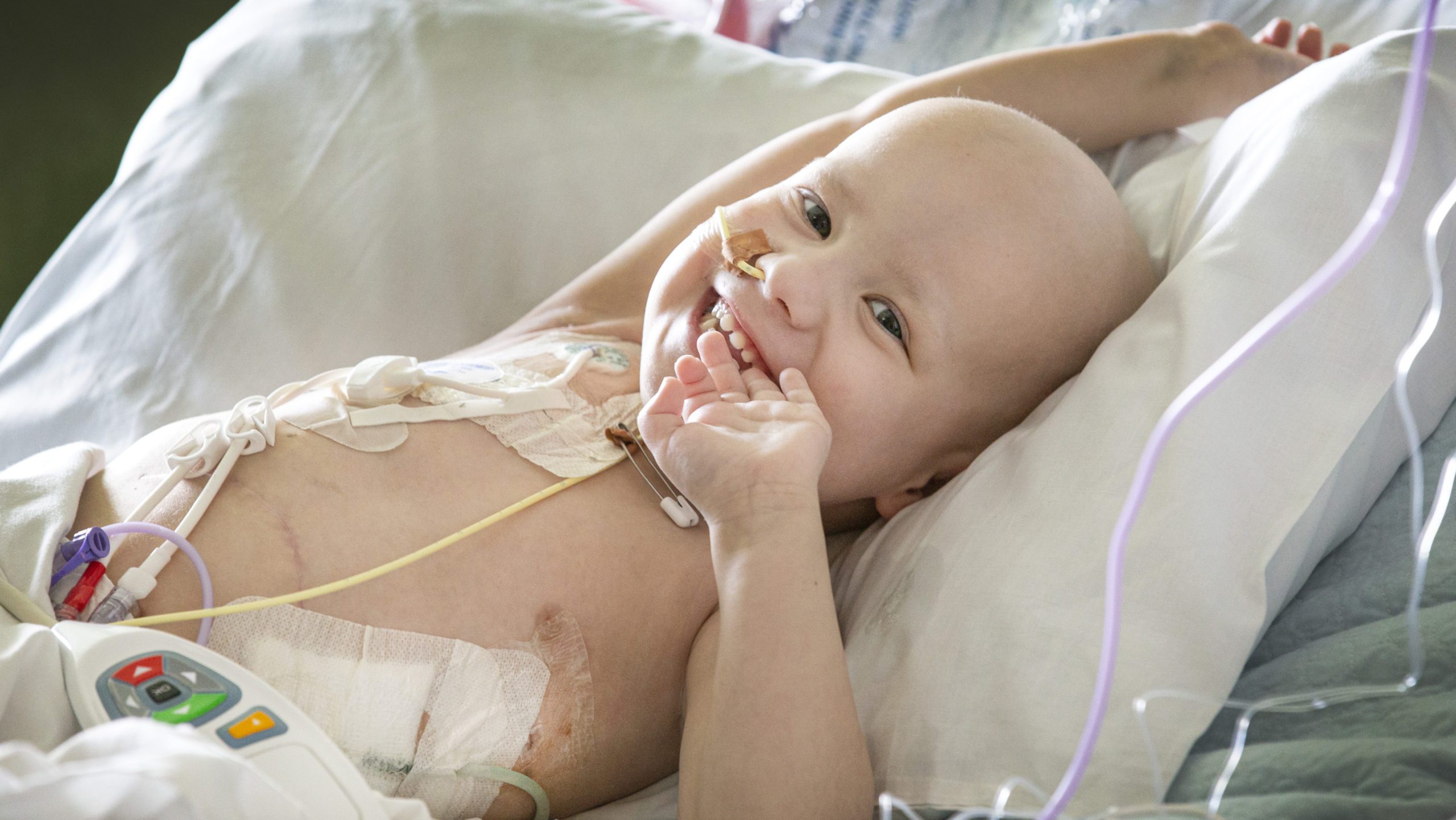
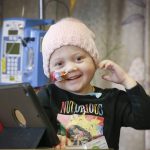
Kids like Oli, 3, who is being treated for neuroblastoma, will be helped by nanoString Technology

Luckily for patients at the RCH, the hospital is home to an expert team of pathologists who are able to utilise cutting edge technology to molecularly confirm the diagnosis.

“Kids get a very specific group of tumours that you don’t see in adults. While we can begin to narrow down the tumour type via a microscope, we need to complete testing at a molecular level to provide an integrated diagnosis,” said Colleen D’Arcy, Paediatric Pathologist at the RCH.

“The new nanoString technology allows us to test for up to 100 different genetic alterations within a tumour in one assay, which means we can get a diagnosis faster, with minimal amounts of tissue and provide molecular information to guide therapy,” said Dr D’Arcy.

The new nanoString technology works by taking a tissue sample from the patient’s tumour and comparing it against a panel of tumour-specific RNA sequences labelled with coloured ‘barcodes’, in the hopes of finding a diagnostic match.

The ability to screen for multiple tumour-specific RNA sequences at once as part of a panel is a major advancement from the previous process which required pathologists to test for only one genetic alteration at a time.

The new nanoString technology is also much faster than those previously used, cutting down the diagnosis time from weeks to just three days.

The best part is, it’s not just helping patients at the RCH, but also those from across Australia and New Zealand. 

“This is a really exciting advancement for not only the RCH, but for children in the Asia Pacific Region. Through the support of Good Friday Appeal funding, the nanoString technology will enable our team of pathologists to test up to 24 tumour samples from other paediatric hospitals in the region every week,” said Bronwyn Christiansen, Principal Scientist, Anatomical Pathology, Laboratory Services.

Thanks to support from the Good Friday Appeal, nanoString technology is providing faster pathways to diagnosis, which means patients can receive the best care possible, and enrol in dedicated clinical trials, giving them the greatest chance of successfully fighting their cancer.  

Last updated February 2024.

Our Newsletter

Everything Good Friday Appeal, straight to your inbox. Get more information about your impact and how to get involved.

Clinician Scientist Fellowships

The Royal Children’s Hospital (RCH) attracts the best medical minds from across the world to create a brighter future for children’s healthcare. Thanks to the Good Friday Appeal, the Clinician Scientist Fellowship Program offers clinicians protected and funded research time to find new cures, treatments and medications for the biggest health problems facing children. In any given year there are approximately 20 fellows at various stages of their five-year fellowship.  

Professor Rick Leventer is one of the Clinician Scientist Fellows. As a paediatric neurologist, Rick sees patients with all types of neurological disorders and has particular research interests in genetic diseases of the central nervous system that affect how the brain develops during pregnancy and in the first years of life.

“Before the fellowship, I was doing most of my research in my spare time and after hours as it was a struggle to find the time to do it effectively whilst trying to balance all of my clinical duties,” said Rick.

The face of the 2021 Appeal Malu has epilepsy

Thanks to your support of the Good Friday Appeal, Rick was able to further his work as both a clinician and scientist with protected time to focus on his research. Through the Clinician Scientist Fellowship, Rick is able to offer patients and families seen in his neuro-genetic clinic, including those with epilepsy, the opportunity to be part of research on early brain development, making direct impact on his patient’s care.

Part of Rick’s research involves analysing the brain tissue collected during a hemispherectomy – a surgery to disconnect or remove parts of the brain that are causing seizures – to find the cause of epilepsy.

“With the parent’s permission, some of the brain tissue that is removed is saved and snap frozen in the operating theatre. We then take it directly to the laboratory for genetic and microscopic analysis where we try and understand why the brain may have developed abnormally to cause seizures.”

Through the fellowship, Rick and his team have already made some exciting breakthroughs, including identifying specific nerve cells that carry a genetic error which trigger epileptic seizures. This has been a significant finding not only for medical professionals, but also to help families understand the cause of their child’s condition.

Rick’s discoveries are also important for the future of children’s health, creating opportunities for further research into precision medicine to target the genetic error and guide the best surgical approaches aimed at the smallest amount of tissue necessary to control seizures.

Rick is one of 20 fellows at the RCH who are able to mentor younger clinicians interested in research.

“The funds put in to support one clinician scientist are actually multiplied many times by the influence we can have on other researchers on campus,” said Rick.

Thanks to generous support from the Good Friday Appeal, the Clinician Scientist Fellowship program offers clinicians across the Melbourne Children’s Campus protected and funded research time to find new cures, treatments and medications for the biggest health problems facing children. It also nurtures the next generation of clinician researchers.  

The program is unique. Few centres across the world can provide the same protected time for clinicians to engage in research. It supports individuals who are fluent in both science and medicine to ensure the translation of research into clinical care.

In 2024, six new fellows were appointed with their research studies spanning improving care for children with sepsis – a common and devastating condition that can result in organ damage and death, demonstrating the cost effectiveness of precise surgical intervention for drug-resistant epilepsy, and improving support for parents and carers to navigate end of life decision making.

Over the past two years, 25 fellows have also been supported with their research spanning new cancer treatments, reducing hospital admissions for young cancer patients with a fever, and understanding brain microstructures in child development to guide tailored treatments for mental health and attention difficulties, such as injury prevention.  

Since 2016, fellows have written over 2,000 publications and secured over $70 million in further grant funding, thanks to support from the Clinician Scientist Fellowship program.

Last updated March 2025.

Our Newsletter

Everything Good Friday Appeal, straight to your inbox. Get more information about your impact and how to get involved.

Virtual Care Program

Thanks to the support of the Good Friday Appeal, The Royal Children’s Hospital is set to become a world leader in the principle of great care everywhere with a new Virtual Care Program.

This ambitious, multi-year strategy will enhance the care available to patients throughout Victoria.

In what is set to be a state-wide collaborative model, Virtual Care brings together families, regional care facilities, paediatricians and allied health staff to deliver a joint approach to care.

With patients at the focus, the new model of care aims to treat patients beyond the four walls of the Hospital and closer to home.

Using a range of technology-driven projects connecting patients at home to specialists at the RCH and training healthcare workers across the state, the project will create new ways of diagnosing, treating and monitoring children without the need to come into the Hospital.

This exciting new model of care is leading the way in paediatric healthcare and is possible thanks to your support of the Good Friday Appeal.

Last updated February 2024.

Our Newsletter

Everything Good Friday Appeal, straight to your inbox. Get more information about your impact and how to get involved.

RCH TV Program for Patients and Families

Made possible thanks to support from Woolworths and the Good Friday Appeal, The Royal Children’s Hospital (RCH) is keeping patients engaged, connected, and educated through RCH TV. 

Through the in-house TV shows Be Positive and Hospital Lingo, RCH TV helps to promote children’s understanding of hospital and healthcare experiences, while also empowering children and creating a positive hospital experience. 

In the past year, hundreds of patients have tuned in each week to watch Hospital Lingo from their hospital beds, with 731 winners since July 1 2024.  A child’s guide to hospital videos have received 86.6 million views on YouTube and they are watched in 176 countries (there are only 195 countries in the world). 

Be Positive (B+) is the Hospital’s in-house TV program helping kids find out more about the RCH. Host Carlie and her two curious puppet friends, Jazz and Rocco, help children and young people learn and understand more about hospital, including what might happen during their stay. It includes video series like A child’s guide to hospital, Get to know the people, and Get to know the RCH.  

In our video, A child’s guide to hospital: CAR T Cell Apheresis, the RCH TV team had the honour of featuring a remarkable young patient. This courageous individual took centre stage to provide firsthand insights into CAR T Cell Apheresis, offering a unique perspective from a child’s point of view. The involvement of this talented patient not only enriches the video content but also serves as a source of inspiration and comfort for other children facing similar medical journeys. 

Following the filming, the patient’s mother provided this quote: 

“Thank you again for offering my daughter such a wonderful opportunity today. There were times during her first relapse when she was in the depths of hell and had absolutely zero joy in her life. And yet, here she was today, recreating some of her treatment with such a big smile on her face. On the way home she was reflecting about all the great opportunities she’s had because of her cancer. I strongly believe that the positive opportunities she’s had at the RCH (like pursuing her passion for acting/film) have been a tonic for some of that trauma. So, I hope you know how much we appreciate your support and encouragement.” 

Hospital Lingo is a live game show that airs three times a week directly to patient rooms. This educational game, which is like bingo but with the weird and wonderful things found in hospital, keeps patients engaged, connected and distracted while allowing them to win prizes. 

Since July 1 2024, there have been 731 winners of Hospital Lingo.

“Hospital Lingo is a game show that brings so much joy to children who find themselves in hospital. It is wonderful to witness how Hospital Lingo has helped many children who are initially scared about being in hospital to become empowered, confident and knowledgeable about their healthcare experience.  How lucky am I to be a part of a TV show that can change the experience of children in hospital for the better.” 

Carlie Alicastro, Child Life Therapist and Host, RCH TV.

As well as patients accessing the RCH TV resources in hospital, both via their TV and through the Child Life Therapy team, the resources are available and widely accessed by patients and families across Australia through the RCH website and YouTube.   

A child’s guide to hospital videos have received 86.6 million views on YouTube.  They are watched in 176 countries (there are only 195 countries in the world).

Impact Milestones

2026 Project update:

Over the past year, RCH TV was able to achieve the following successes:

  • RCH TV was able to successfully deliver over five new videos which have helped educate both children and families about important healthcare topics, from prosthetics to apheresis cell collections.
  • To help maximise the reach of this content, RCH TV strategically promoted its videos across the hospital, ensuring that families were empowered to learn about specific procedures when needed most. For instance, relevant QR codes were placed on posters in specialist clinics.
  • TV segments attracted close to 4.7 million video views, resulting in close to 100 million total video views reached.
  • Hospital Lingo, the program’s live game show, also continued to air three times a week directly to patient rooms. This educational game, continued to keep patients and their families engaged, connected, and distracted.
  • The program uses a Bingo format to demystify hospital equipment, with medical patients and their siblings able to engage in the live show from their rooms and phone in when they are winners.
  • During this period, there were 1,521 winners of Hospital Lingo, and on 19 occasions a patient joined the show as a co-host.
  • RCH TV has been in production for 34 years, having evolved and expanded over time. The project remains the RCH’s most visible and utilised child-centred content with significant global reach, helping alleviate anxiety and promote understanding for sick children all over.
2023/2024
  • Five educations A child’s guide to hospital… videos were created and published on topics including EEG, VEM, the Burns Clinic, and the MOCK MRI.  
  • One video was produced specifically for nurses around confidentiality  
  • A QR Code to access medical imaging specific A child’s guide to hospital videos were added to all medical imaging appointment letters. Data collection showed that with the QR Code, engagement increased by 38.2 per cent. Due to this success, a QR Code will now be added to all specialist clinic appointment letters.  
  • Since July 1 2024, there have been 731 winners of Hospital Lingo  
2022/2023
  • Seven educational videos were created and published for Be Positive (B+). They were published on the inpatient TV channel, the RCH TV website and the RCH YouTube channel.   
  • Across this period, RCH TV segments attracted approximately 8.4 million views on the RCH YouTube channel.   
  • Hospital Lingo continued to be broadcast every Tuesday, Wednesday and Thursday. On several occasions, inpatients were invited to come into the studio and guest host the show. Multiple parents wrote to the RCH TV team to share how impactful Hospital Lingo is for their children.  
  • The content produced through RCH TV remains the most visible and utilised child centred content available from the RCH.   
2021/2022
  • Five educational videos were created and published for Be Positive (B+). They were published on the inpatient TV channel, the RCH TV website and the RCH YouTube channel.   
  • Across this period, RCH TV segments attracted approximately 14.5 million views on the RCH YouTube channel.   
  • Hospital Lingo continued to be broadcast every Tuesday, Wednesday and Thursday. On several occasions, inpatients were invited to come into the studio and guest host the show, where possible with ongoing COVID-19 restrictions. 

Last updated February 2026.

Program proudly supported by the Woolworths team and customers

Our Newsletter

Everything Good Friday Appeal, straight to your inbox. Get more information about your impact and how to get involved.

A National Centre of Excellence in Speech Genetics: Transforming Patient Care

Even with intense therapy, children with apraxia have severely impaired speech development, which has lifelong impacts on literacy, educational and employment outcomes. 

Thanks to funding provided by the Good Friday Appeal, clinician researchers from The Royal Children’s Hospital and the Murdoch Children’s Research Institute are establishing a speech genetics clinic for speech apraxia.

The new clinic will draw on expertise in speech pathology, neurology, neuropsychology and clinical genetics.

The centre will transform standard practice for children with debilitating speech apraxia, moving from the current ‘watch and wait’ surveillance, or ‘trial and error’ symptom-based therapies, toward precision medicine, with a focus on genetic testing, advancing detection, diagnosis, genetic counselling, earlier targeted intervention and even prevention. 

This will improve life outcomes for children at the Royal Children’s Hospital and across the country.

Posted June 2020

Our Newsletter

Everything Good Friday Appeal, straight to your inbox. Get more information about your impact and how to get involved.

Transforming Clinical Care to Improve Mental Health for Patients: Phase Two

Hospital stays can be scary times for both children and their parents, regardless of age and experience. New people, strange equipment and an unfamiliar environment are a lot to take in.

Supported by the Good Friday Appeal, this hospital-wide project will utilise evidence about emotional development and behavioural responses to stress, to up-skill clinicians to consider the mental health impact of every procedure and interaction they have with a child.

The project, which focuses on the zero to five-year age group was successfully piloted on the Koala (Cardiac Surgery) and Cockatoo (Surgical and Neuro Care) wards. It uses evidence-based strategies to equip clinicians to deliver great care by training them to:

  • communicate with young children
  • approach care in ways that reduce psychological harm
  • recognise deterioration in mental health in patients and their families
  • engage distressed parents to support their child

Thanks to your generosity, supporting the mental health of infants and young children at the Royal Children’s Hospital will become part of routine care.

Posted June 2020

Our Newsletter

Everything Good Friday Appeal, straight to your inbox. Get more information about your impact and how to get involved.

Children’s Cancer Centre Tissue Bank

The Children’s Cancer Centre (CCC) Tissue Bank collects solid tumour, blood and bone marrow samples from oncology patients to learn more about cancer in children.

The tissue bank staff work in collaboration with hospitals, laboratories and researchers both locally and internationally to translate those findings into potentially life-saving treatments.

“Samples are preserved with the utmost care and dignity for future clinical and research purposes. Over 50 staff including consultants, surgeons, haematologists, oncologists, specialist pathologists, researchers and research enablers work together as part of the team,” said Louise Ludlow, CCC Tissue Bank Coordinator.

“Together we are committed to improving the survival rate and long term health outcomes for children diagnosed with cancer.”

In addition to the processing of samples for clinical trials, the CCC Tissue Bank also prepares clinical samples for further molecular testing (testing for certain genes, proteins, or other molecules in a tissue sample) as standard of care.

Thanks to donor support, the CCC Tissue Bank has also participated in important research projects outside of the Melbourne Children’s campus, including research conducted by St. Jude Children’s Research Hospital in the Memphis USA, The Hospital for Sick Children in Toronto, Canada, and the Kid’s Cancer Centre, Sydney Children’s Hospital.

“The Tissue Bank is an invaluable resource which allows us to collaborate in adequately powered international studies through sample and knowledge sharing, ensuring that we remain at the forefront of cutting edge paediatric cancer research,” Louise said.

Posted June 2020

Our Newsletter

Everything Good Friday Appeal, straight to your inbox. Get more information about your impact and how to get involved.

Pathology Tissue Processors

Thanks to the generous support of the Good Friday Appeal and 3AW’s Neil’s Wheel participants, the Royal Children’s Hospital (RCH) Lab Services has a new tissue processing machine.

Featuring an upgraded model for preserving tissue samples and a highly specific microtomy device for slicing and setting the samples for analysis, these new technologies will greatly increase the speed an accuracy of processing tissue samples. 

For RCH patients, this means faster and more accurate diagnoses and a reduction in need for unnecessary and painful surgeries, with the new ability to do more with smaller tissue samples.

The two parts of the machine have been named ‘Neil’ and ‘Mitchell’ by the RCH Lab Services Team to thank Neil Mitchell, 3AW radio presenter, for his ongoing support of the Hospital.

The 2020 Neil’s Wheel fundraiser raised $213,000 for the Good Friday Appeal to fund this machine. 

Posted June 2020

Our Newsletter

Everything Good Friday Appeal, straight to your inbox. Get more information about your impact and how to get involved.

The Kidney Flagship

Bringing together researchers from the Hospital and the Murdoch Children’s Research Institute (MCRI), the Kidney Flagship aims to reduce the burden of genetic kidney disease on patients and their families by improving diagnosis and treatment, and the development of new targeted therapies.

The new clinical pipeline will see kidney patients with suspected genetic disease undergo a genomic test that can easily be added to routine blood tests. In many cases this test will be able to find the genetic change and identify how or why kidney disease occurred.

It will also reduce the need for unnecessary biopsies and mean less time in hospital for patients.

Following this test, researchers will be able to grow or ‘model’ the disease in a lab and aim to identify targeted treatments for the patient.

Ultimately, this could lead to the development of a drug or treatment that could improve outcomes for all kidney patients.

Posted May 2020

Our Newsletter

Everything Good Friday Appeal, straight to your inbox. Get more information about your impact and how to get involved.

Neurosurgery Microscope

For the highly trained neurosurgeons at The Royal Children’s Hospital (RCH), operating microscopes are essential tools during these procedures for providing light and magnification during surgery.

Thanks to the generous community of the Good Friday Appeal supporters on Giving Tuesday, the RCH Neurosurgery Department will upgrade its equipment with a new operating microscope that includes the latest technological features to help save children’s lives.

The new hybrid microscope has advanced functions including an endoscope attachment which surgeons can use to identify tumours that are out of the normal field of view and improve access to regions of the brain that were previously difficult to reach.

It also features 3D technology so surgeons can operate in ergonomic positions and enhance educational opportunities in theatre.

Posted May 2020

Our Newsletter

Everything Good Friday Appeal, straight to your inbox. Get more information about your impact and how to get involved.