Melbourne Children’s Campus Mental Health Strategy

Ensuring access to mental health prevention and early intervention for this cohort has been an ongoing challenge. The Melbourne Children’s Campus Mental Health Strategy is on a mission to change this and is predicted to impact more than 600,000 children beyond the strategy’s proposed five year period.

The Melbourne Children’s Campus Mental Health Strategy is an ambitious multi-year project that aims to provide a uniform and evidence based approach to mental health prevention, care and advocacy for all children, young people and their families across the Melbourne Children’s Campus, which includes The Royal Children’s Hospital (RCH), the Murdoch Children’s Research Institute and The University of Melbourne Department of Paediatrics.

Supported by the Good Friday Appeal and their partner Decjuba Foundation, this multi-year strategy is making strides in transforming child and youth mental health care, education, and research. Over the past three years, it has increased engagement with lived experience advisors, launched a world’s first evidence-based Clinical Practice Guideline for children and young people with anxiety, developed staff training programs in mental health literacy, and skills and has six active research projects on the go.

Led by Professor Harriet Hiscock (pictured below) and Belinda Horton, the strategy is ensuring a holistic approach to mental health across the campus.
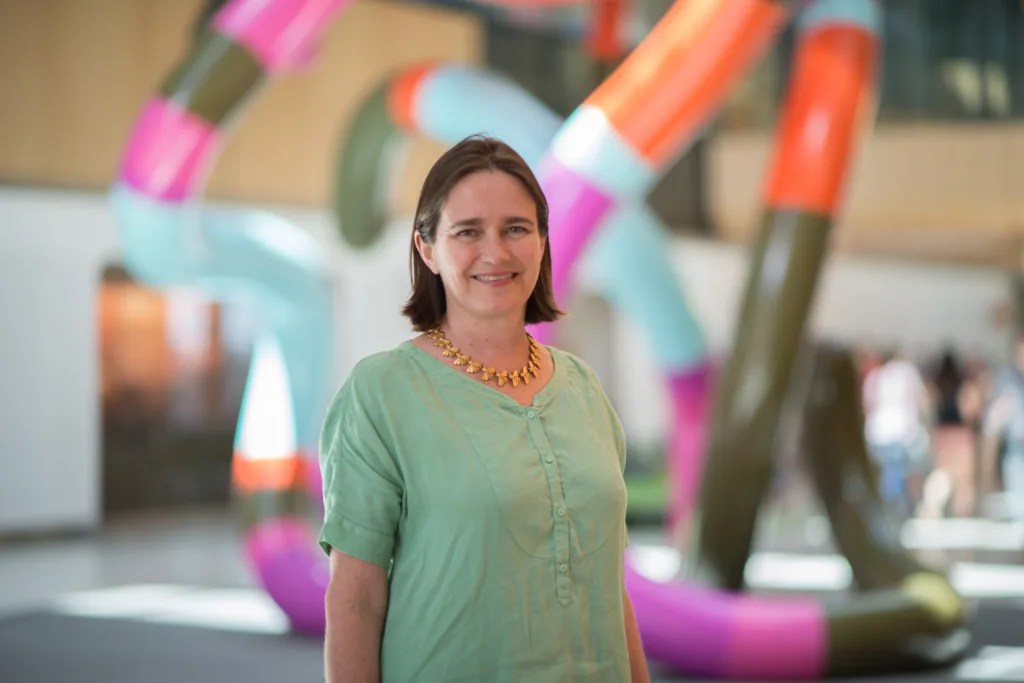
Professor Harriet Hiscock

“One of the objectives of the strategy is to advocate for and equip staff to see children’s health and wellbeing as integrated physical and mental health. Our tagline – ‘mental health is everyone’s business’ – conveys this collective responsibility. We’re very grateful to the Good Friday Appeal for supporting this vital work.” 

Professor Harriet Hiscock and Belinda Horton, Program Directors of the Melbourne Children’s Campus Mental Health Strategy. 

“Our tagline – ‘mental health is everyone’s business’ – conveys this collective responsibility and our strategy activities have facilitated new conversations about this,” Harriet and Belinda shared.

Both Harriet and Belinda shed light on the pivotal role that engagement with campus stakeholders has played in guiding the strategy towards success. The collaboration with the Steering Committee, and advisory, working and focus groups, has been instrumental in shaping the strategy’s approach to mental health, fostering a collective commitment to its objectives.

“These ‘pockets of awesomeness’ across the campus are about bringing together the people who are already doing exceptional work, to integrate and build on this work and to identify gaps.

It has also been wonderful to equally privilege children, young people and families’ lived experience of mental health and recovery and the lived experience of campus clinicians, researchers, and educators,” they recalled.

With over 100 individuals actively participating in advisory and working groups and many more engaging with strategy communications and activities, Harriet and Belinda shared the significance of this broad engagement across the Melbourne Children’s Campus.

“We have been privileged to work with many people from across the campus from multi-disciplinary backgrounds and the full range of research, education, clinical and non-clinical expertise.

“We see this as a privilege because the contributions of these very busy people have been provided in kind from their commitment to improving research, education and care of the mental health of children, young people and their families,” they shared.

“In line with our initial strategy planning, the final two years will be focused on ensuring that the outputs of each part of the strategy are embedded where they need to be across the campus and embraced by staff and campus leaders,” Harriet and Belinda explained.

Through innovative approaches, collaborative partnerships, and a commitment to inclusivity, the Melbourne Children’s Campus Mental Health Strategy seeks to shape a future where mental health challenges are met with effective, compassionate, and readily accessible support for every child and young person across the Melbourne Children’s Campus.

Impact Milestones

2026 Project update:

Over the past year, the strategy has made a significant impact in the following ways:

  • The family-centred care model was piloted across three sites at the RCH to support staff in identifying and responding to the wellbeing concerns of children, parents/carers, and siblings.
  • This model of care was incorporated into the RCH’s electronic medical record system to support its use during routine clinical care and data collection during the pilot.
  • Staff also engaged in e-learning, surveys, interviews, and focus groups as part of the pilot, with feedback collected to assess feasibility, acceptability, confidence, and overall competence.
  • Preliminary findings from the pilot identified workforce, organisational, and environmental factors affecting uptake. This informed planned refinement and future scaling of the model in 2025.
  • Trauma-informed mental health literacy resources were developed and promoted, including a co-designed family resource for childhood anxiety and work underway on resources for medically unexplained symptoms.
  • A Measurement Based Care pilot was completed to explore the routine use of mental health outcome measures in outpatient settings, with findings informing future implementation planning.
  • Clinical practice guidelines for anxiety were completed and disseminated, with development commenced on additional guidelines addressing medically unexplained symptoms and suicide and self-harm in children and young people.
  • Clinically driven mental health research projects were completed, and two large-scale research projects commenced, contributing to the Strategy’s research objectives.
  • Governance arrangements, including a multidisciplinary Steering Committee and Strategy Leadership Group, supported the oversight of progress, risks, planning, and decision-making was also implemented.
  • There was ongoing engagement with families, lived experience advisors, clinicians, educators, researchers, and external stakeholders who supported the co-design, implementation, and dissemination of Strategy outputs.
2024-2025
  • Conclusion of pilots and projects, moving to scaling and sustainability beyond the life of the strategy.
2023
  • Launched the world’s first evidence-based Clinical Practice Guideline for Anxiety in Children and Young People. 
  • Continued development of Mental Health Central, the strategy website. 
  • Engaged over 60 lived experience advisors in various strategy activities, including the Children’s Mental Health Gallery. 
  • Strengthened collaboration between the Strategy Implementation Team, Steering Committee, and advisory groups. 
2022
  • Development of the Lived Experience Advisor Network (LEAN). 
  • Active engagement of over 100 people from across the Campus in advisory and working groups. 
  • Completion of two funded research projects. 
  • Models of care and program evaluation for better detection and support of child and family mental health. 
  • Close to a full complement of staff in the Strategy Implementation Team (SIT) with 20 part time staff. 

2021

  • Recruitment and onboarding of 14 staff to develop and build the Strategy Implementation Team.
  • Development of an Interim Lived Experience Engagement Strategy to lay the foundations for seamless engagement of children and young people with lived experience of mental health concerns and recovery, and their parents, carers, and families.
  • Soft launch of the Mental Health Central website with continued uploading of content throughout the life of the strategy.
  • Integration of the strategy with the Mental Health Transformation Program within specialist RCH Mental Health Teams
  • Implementing the recommendations of the Royal Commission into Victoria’s Mental Health System, including establishment of an integration team, regular meetings, and communications to stakeholders.

Last updated February 2026.

Our Newsletter

Everything Good Friday Appeal, straight to your inbox. Get more information about your impact and how to get involved.

Chronic Illness Peer Support (ChIPS) Program

The ChIPS story doesn’t just encapsulate the program’s growth and longevity; it also shows the difference it has made in the lives of young people with chronic illnesses.

ChIPS was born out of a vision to provide a support system for young people who were navigating the complex and often isolating world of chronic illness.  

“Thirty years ago, the idea of ChIPS came about because it was witnessed on the wards. The young people with chronic illness, who were regular patients of the hospital, were building friendships,” Harry Lengelsen-Brown, Program Manager of ChIPS shared.  

“Over the thirty years, the core of the program has been asking young people what they want. So, everything that has changed and developed has happened organically because we’ve always asked young people what they wanted.”  

Thanks to the Good Friday Appeal, ChIPS provides a supportive community for those navigating the complex world of chronic illness. It offers young people the opportunity to connect with each other through organised activities and twice yearly camps. There are currently 135 young people registered with ChIPS and up to 700 young people have participated in the program since 1993.

One of the most significant milestones in the ChIPS program took place in the early 2000s when the idea to organise the first ChIPS camp emerged.  

“Some of the ChIPERS said they wanted to have a camp because they wouldn’t normally get to go on school camps. The staff were a bit taken aback at the time, so they said, ‘If you can raise $5,000, you can have a camp,’ and I’m told they chose a number that they thought could never be raised.”

“But it was – they went out with the support of their families and fundraised $5,000 and went back to the staff and said, ‘When are we going on camp?’ There’s been an annual camp ever since then,” Harry recalled.  

“When the RCH Foundation said they were going to support the program, it changed the whole mindset of how we went about things. Knowing we could keep growing and implementing things was great,” said Harry.  

“With the support of the RCH Foundation, we’ve been able to look at our calendar year and say we can run all of these events. I had a conversation with a young person, and he was never able to perform in a school musical, but he loves the performing arts.  

“So, he wanted to run a musical production and we’re able to say ‘Yes, let’s do it!’ Without that funding and support, we wouldn’t have been able to say yes.”  

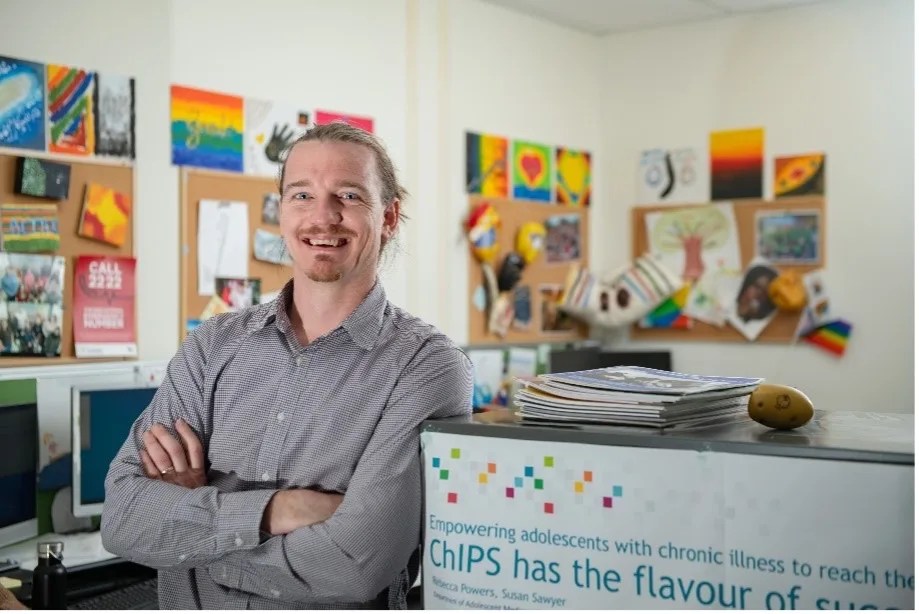
Harry Lengelsen-Brown, Program Manager of ChIPS

“When people from other hospitals across the world hear about the ChIPS program, they say, ‘How have you managed to do that?’”, Harry shared when reflecting on the ChIPS program’s incredible journey.

“The program is such a simple idea when you think about it: here’s a bunch of young people supporting each other, let’s put them into a program and see what happens. I wish the supporters of the program could meet some of the young people and hear from them and their families what this has meant for them because it’s genuinely life-changing.” 

The longevity of ChIPS is not just measured in numbers but in the countless stories of resilience, hope and transformation. 

“A particular story that stands out to me is a young person who said she wouldn’t be here if it wasn’t for ChIPS. When she first joined the program, she was in a very dark place. And now, she’s finished her degree and is just killing it,” Harry shared. 

As the ChIPS program continues to go from strength to strength, its future is full of possibilities. 

“Thirty years ago, they said, ‘Let’s listen to the young people and what they want, and we’ll do what we can to make that happen!’. And that’s still what we’re doing now, so as long as we remember that we can’t go wrong,” said Harry. 

I want to say a massive thank you to all our supporters, including the Good Friday Appeal! It’s hard to capture in words what ChIPS means to the young people who have been in the program.” 

Harry Lengelsen-Brown, Program Manager of ChIPS.  

Impact Milestones

2026 Project Updates:

Over the past year, ChIPS has been able to make a profound difference in the lives of young people in a variety of ways. 

  • This year, 572 young people participated in a ChIPS event, meeting or activity, with 125 formally registered in the program.
  • The Reference Committee included 23 members who supported program planning across four subcommittees.
  • The Social Subcommittee delivered three activities attended by 15–30 young people and supported additional meet-ups, including the Run for the Kids 5km and a gaming convention.
  • The ChIPS Holiday Vacation Camp was held twice, with one camp organised by the Reference Committee, and each camp supported over 30 young people with the assistance of volunteer mentors, hospital staff and medical professionals.
  • ChIPS members were supported to explore creativity through a short film, weekly songwriting sessions and the release of an annual magazine.
  • The Peer Leader Team, comprising 12 young people, received additional training and co-facilitated intake groups, with a focus on developing communication, conflict resolution and leadership skills.
  • An anti-racism workshop for young people, staff and volunteers was delivered in 2024 and attended by 11 participants.
  • The ChIPS evaluation framework concluded this financial year, with program data published in a research article, while interview analysis and anonymous event feedback continue to inform improvement.
  • ChIPS participants represented RCH at national conferences, sharing lived experience and delivering workshops in Adelaide, Brisbane and at RCH.
  • In partnership with the RCH Allied Health Education team, ChIPS participants delivered a youth-led training workshop for healthcare professionals in October 2024 and March 2025, receiving highly positive feedback.
2025
  • 45 ChIPERS signed up for the January camp. 
2024
  • Completed filming of a short film project that was entered into the Focus on Ability Film Festival.  
  • 36 young people, 16 volunteers and medical staff attended yet another successful January Camp. 29 ChIPERS also attended the program’s September camp.  
  • After the impact at ACAH, ChIPERS were invited to present their guidelines to 20 allied halth staff at the RCH. This workshop is the first of its kind and will be an ongoing component of allied health professional development.  
  • Young people were invited to present and run workshops throughout the year at forums such as the Health Education Learning and Parents (HELP) in Adelaide and the Australian Association of Adolescent Health conference in Brisbane.  
  • The peer leadership team, which consists of more experienced program participants, received extra training. This included a Racism 101 Leadership Training, which saw five peer leaders in attendance.  
  • The socials subcommittee organised bi-monthly games night and four social events.  
  • The publications subcommittee released their latest version of their magazine.
2023
  • Successfully achieved intake goals, engaged new referrals, and maintained a hybrid model for program activities. 
  • Staff participated in relevant professional development meetings and supervision sessions.  
  • Advocated for peers across the RCH hospital departments and participated in community events.  
  • Released an annual magazine and conducted leadership training for Peer Leaders.  
  • Organised and facilitated various social events, including the successful January 2023 camp post-COVID restrictions.  
  • Engaged in community events such as the Melbourne Pride March. 
2022
  • Continued virtual operations in the first half of the year.  
  • June 2022 – Slow reintroduction of face-to-face events.  
  • November 2022 – Presented at the Australian Association for Child and Adolescent Health (ACAH) conference.
2021
  • Continued virtual operations to ensure safety, facing and overcoming the challenges posed by the pandemic. 
2020
  • In response to the COVID-19 Pandemic, the team successfully adapted and delivered core programs in a hybrid format.  
  • Ensured patient engagement through a blend of virtual and face-to-face activities. 

Last updated February 2026.

Our Newsletter

Everything Good Friday Appeal, straight to your inbox. Get more information about your impact and how to get involved.

Garden Program Vision: A Breath of Fresh Air

The Royal Children’s Hospital (RCH) Therapeutic Garden Program delivers dedicated programs for patients and families at three specialised garden spaces at the hospital.

  • The Kelpie Garden Space – accessible to children and adolescents with acute and chronic health issues.  
  • The Therapy Garden South – accessible to RCH staff, and both inpatients and outpatients accompanied by staff.  
  • The North Court Garden Space – accessible to patients, visitors and RCH staff.  

The programs include a combination of individual and group horticulture activities and creative experiences designed to distract from pain, decrease stress and provide relief. The gardens also offer a quiet, calming environment for patients, families and staff, providing an alternative space to the hospital wards.  

The RCH Therapeutic Garden Program is funded by philanthropy, including support from Woolworths through the Good Friday Appeal. Drawing on extensive research demonstrating the physical, mental and social benefits of providing patients with access to garden spaces, the RCH is extending the program, resources and accessibility of its gardens to reach more patients across the hospital. On average, approximately 60 patients per month benefit from the program. This extension is made possible with thanks to the generous funding support this program receives. 

This educational and therapeutic initiative is led by a multidisciplinary team including child life therapists, garden staff, and volunteers and aims to decrease stress for patients and their families, which helps to improve patient recovery. Beth Dun, Manager, Child Life Therapy at the RCH said that garden programs have great benefits for patients and families.

“The Garden Program will be incredibly beneficial for patients at the RCH. As well as giving them a place to breathe in fresh air, it can also be a welcoming space for children and young people from regional areas, who often find the city very intimidating,” said Beth.

Studies show that 95% of people who walk through hospital gardens report a therapeutic benefit. When hospitals provide easy access to nature, patients experience a reduction in stress, blood pressure and pain, while also experiencing an increase in pain tolerance, and faster recovery times. The social element of garden therapy allows users to feel empowered and more engaged.

Contact with nature helps hospital staff and family members more effectively deal with the stress of providing care, which enables them to better serve those they are caring for. Gardening provides a range of mental health benefits, including significant reductions in depression and anxiety, and improved social functioning.

“Gardening itself has many benefits for patients, including offering a safe, natural setting to participate in a non-clinical, fun activity that provides a welcome distraction from their illnesses. The use of familiar garden tasks that are simple and diverse offers patients the chance to feel successful as well as tasks that cater to different levels of capacity or energy.”

Impact Milestones

July 2023
  • Employed a Therapeutic Garden Program Coordinator and a new full-time Therapeutic Garden program staff member. These staff members are developing the workplan to deliver the new vision, including increasing wheelchair accessibility, increasing shaded garden spots to create calm spaces for therapies, and increasing the number of patients who can access the program and garden spaces.  
  • Commenced diversifying the plant species to provide sensory experiences for all patients – providing colour, touch, smell and feel.  
  • Undertaken consultation with clinicians and treatment teams to tailor the garden spaces to meet the therapeutic goals of a diverse range of patient needs.  
  • Received volunteer support from corporate teams and the RCH volunteer program.
November 2024
  • The program has provided and hosted sessions for patients across five different wards: cardiac, oncology, rehabilitation and two for eating disorder patients. 
  • Patient referrals have been received from a further five wards: Cockatoo, Kelpie, Sugar Glider, Koala and rehabilitation outpatients. 
  • Mindfulness and wellbeing sessions for staff have been run in conjunction with key events like wellness weeks.  
  • Ongoing maintenance and upkeep of the three therapeutic garden spaces.  
  • Installation and commencement of the Kitchen Garden Project which has meant food may be picked by patients and herbs are picked by the hospital’s food services.  
  • Commenced a research project in conjunction with the Allied Health Research team on transforming allied health with nature, resulting in a presentation at an Allied Health symposium.  
  • Continuation of diversifying the plant species to provide sensory experiences for all patients – providing colour, touch, smell and feel.  
  • Strengthened partnerships with clinical teams to encourage outdoor clinical sessions.  
  • Continued receiving volunteer support from corporate teams and the RCH volunteer program. 

Last updated March 2025

Our Newsletter

Everything Good Friday Appeal, straight to your inbox. Get more information about your impact and how to get involved.

Children’s Cancer Care

Through the Children’s Cancer Centre, the leading provider of paediatric cancer services in Victoria, The Royal Children’s Hospital is committed to providing comprehensive cancer care for children and adolescents, which addresses not only treatment of their disease, but also holistic aspects, including psychosocial, financial, mental health and wellbeing, as well as educational and vocational needs.

Thanks to Good Friday Appeal support, the Children’s Cancer centre will utilise the latest learnings and best practice in cancer care through the funding of an integrated multidisciplinary team of specialist oncology medical, nursing, allied health, supportive care and research staff to provide holistic care to children, adolescents and their families.

Dr Di Hanna, Paediatric Oncologist at the Children’s Cancer Centre, said the medical treatment of cancer went hand in hand with the holistic care to best support patients and their families.

“The cancer journey needs a really holistic approach to support the patient and their family through and that involves the whole team, allied health professionals, neuropsychology, psychology, child life, play, everything,” Dr Hanna said.

“Without the generous support from the Good Friday Appeal, we couldn’t do what we do to provide the world class care.”

“The Appeal has been critical for every piece of the cancer journey. We need the latest and best research. We need diagnostic tools and the best clinical trials and the patient and family support networks. The Good Friday Appeal has been a cornerstone for each part of that.”

Last updated February 2024.

Our Newsletter

Everything Good Friday Appeal, straight to your inbox. Get more information about your impact and how to get involved.

Virtual Care Program

Thanks to the support of the Good Friday Appeal, The Royal Children’s Hospital is set to become a world leader in the principle of great care everywhere with a new Virtual Care Program.

This ambitious, multi-year strategy will enhance the care available to patients throughout Victoria.

In what is set to be a state-wide collaborative model, Virtual Care brings together families, regional care facilities, paediatricians and allied health staff to deliver a joint approach to care.

With patients at the focus, the new model of care aims to treat patients beyond the four walls of the Hospital and closer to home.

Using a range of technology-driven projects connecting patients at home to specialists at the RCH and training healthcare workers across the state, the project will create new ways of diagnosing, treating and monitoring children without the need to come into the Hospital.

This exciting new model of care is leading the way in paediatric healthcare and is possible thanks to your support of the Good Friday Appeal.

Last updated February 2024.

Our Newsletter

Everything Good Friday Appeal, straight to your inbox. Get more information about your impact and how to get involved.

RCH TV Program for Patients and Families

Made possible thanks to support from Woolworths and the Good Friday Appeal, The Royal Children’s Hospital (RCH) is keeping patients engaged, connected, and educated through RCH TV. 

Through the in-house TV shows Be Positive and Hospital Lingo, RCH TV helps to promote children’s understanding of hospital and healthcare experiences, while also empowering children and creating a positive hospital experience. 

In the past year, hundreds of patients have tuned in each week to watch Hospital Lingo from their hospital beds, with 731 winners since July 1 2024.  A child’s guide to hospital videos have received 86.6 million views on YouTube and they are watched in 176 countries (there are only 195 countries in the world). 

Be Positive (B+) is the Hospital’s in-house TV program helping kids find out more about the RCH. Host Carlie and her two curious puppet friends, Jazz and Rocco, help children and young people learn and understand more about hospital, including what might happen during their stay. It includes video series like A child’s guide to hospital, Get to know the people, and Get to know the RCH.  

In our video, A child’s guide to hospital: CAR T Cell Apheresis, the RCH TV team had the honour of featuring a remarkable young patient. This courageous individual took centre stage to provide firsthand insights into CAR T Cell Apheresis, offering a unique perspective from a child’s point of view. The involvement of this talented patient not only enriches the video content but also serves as a source of inspiration and comfort for other children facing similar medical journeys. 

Following the filming, the patient’s mother provided this quote: 

“Thank you again for offering my daughter such a wonderful opportunity today. There were times during her first relapse when she was in the depths of hell and had absolutely zero joy in her life. And yet, here she was today, recreating some of her treatment with such a big smile on her face. On the way home she was reflecting about all the great opportunities she’s had because of her cancer. I strongly believe that the positive opportunities she’s had at the RCH (like pursuing her passion for acting/film) have been a tonic for some of that trauma. So, I hope you know how much we appreciate your support and encouragement.” 

Hospital Lingo is a live game show that airs three times a week directly to patient rooms. This educational game, which is like bingo but with the weird and wonderful things found in hospital, keeps patients engaged, connected and distracted while allowing them to win prizes. 

Since July 1 2024, there have been 731 winners of Hospital Lingo.

“Hospital Lingo is a game show that brings so much joy to children who find themselves in hospital. It is wonderful to witness how Hospital Lingo has helped many children who are initially scared about being in hospital to become empowered, confident and knowledgeable about their healthcare experience.  How lucky am I to be a part of a TV show that can change the experience of children in hospital for the better.” 

Carlie Alicastro, Child Life Therapist and Host, RCH TV.

As well as patients accessing the RCH TV resources in hospital, both via their TV and through the Child Life Therapy team, the resources are available and widely accessed by patients and families across Australia through the RCH website and YouTube.   

A child’s guide to hospital videos have received 86.6 million views on YouTube.  They are watched in 176 countries (there are only 195 countries in the world).

Impact Milestones

2026 Project update:

Over the past year, RCH TV was able to achieve the following successes:

  • RCH TV was able to successfully deliver over five new videos which have helped educate both children and families about important healthcare topics, from prosthetics to apheresis cell collections.
  • To help maximise the reach of this content, RCH TV strategically promoted its videos across the hospital, ensuring that families were empowered to learn about specific procedures when needed most. For instance, relevant QR codes were placed on posters in specialist clinics.
  • TV segments attracted close to 4.7 million video views, resulting in close to 100 million total video views reached.
  • Hospital Lingo, the program’s live game show, also continued to air three times a week directly to patient rooms. This educational game, continued to keep patients and their families engaged, connected, and distracted.
  • The program uses a Bingo format to demystify hospital equipment, with medical patients and their siblings able to engage in the live show from their rooms and phone in when they are winners.
  • During this period, there were 1,521 winners of Hospital Lingo, and on 19 occasions a patient joined the show as a co-host.
  • RCH TV has been in production for 34 years, having evolved and expanded over time. The project remains the RCH’s most visible and utilised child-centred content with significant global reach, helping alleviate anxiety and promote understanding for sick children all over.
2023/2024
  • Five educations A child’s guide to hospital… videos were created and published on topics including EEG, VEM, the Burns Clinic, and the MOCK MRI.  
  • One video was produced specifically for nurses around confidentiality  
  • A QR Code to access medical imaging specific A child’s guide to hospital videos were added to all medical imaging appointment letters. Data collection showed that with the QR Code, engagement increased by 38.2 per cent. Due to this success, a QR Code will now be added to all specialist clinic appointment letters.  
  • Since July 1 2024, there have been 731 winners of Hospital Lingo  
2022/2023
  • Seven educational videos were created and published for Be Positive (B+). They were published on the inpatient TV channel, the RCH TV website and the RCH YouTube channel.   
  • Across this period, RCH TV segments attracted approximately 8.4 million views on the RCH YouTube channel.   
  • Hospital Lingo continued to be broadcast every Tuesday, Wednesday and Thursday. On several occasions, inpatients were invited to come into the studio and guest host the show. Multiple parents wrote to the RCH TV team to share how impactful Hospital Lingo is for their children.  
  • The content produced through RCH TV remains the most visible and utilised child centred content available from the RCH.   
2021/2022
  • Five educational videos were created and published for Be Positive (B+). They were published on the inpatient TV channel, the RCH TV website and the RCH YouTube channel.   
  • Across this period, RCH TV segments attracted approximately 14.5 million views on the RCH YouTube channel.   
  • Hospital Lingo continued to be broadcast every Tuesday, Wednesday and Thursday. On several occasions, inpatients were invited to come into the studio and guest host the show, where possible with ongoing COVID-19 restrictions. 

Last updated February 2026.

Program proudly supported by the Woolworths team and customers

Our Newsletter

Everything Good Friday Appeal, straight to your inbox. Get more information about your impact and how to get involved.

Transforming Clinical Care to Improve Mental Health for Patients: Phase Two

Hospital stays can be scary times for both children and their parents, regardless of age and experience. New people, strange equipment and an unfamiliar environment are a lot to take in.

Supported by the Good Friday Appeal, this hospital-wide project will utilise evidence about emotional development and behavioural responses to stress, to up-skill clinicians to consider the mental health impact of every procedure and interaction they have with a child.

The project, which focuses on the zero to five-year age group was successfully piloted on the Koala (Cardiac Surgery) and Cockatoo (Surgical and Neuro Care) wards. It uses evidence-based strategies to equip clinicians to deliver great care by training them to:

  • communicate with young children
  • approach care in ways that reduce psychological harm
  • recognise deterioration in mental health in patients and their families
  • engage distressed parents to support their child

Thanks to your generosity, supporting the mental health of infants and young children at the Royal Children’s Hospital will become part of routine care.

Posted June 2020

Our Newsletter

Everything Good Friday Appeal, straight to your inbox. Get more information about your impact and how to get involved.

RAPID Model of Care

With over 86,140 patients in 2017-18, the RCH ED responds to a range of complex clinical situations and often responds to the State’s biggest emergencies. Through support from the Good Friday Appeal, the ED is trialling a new model of care. The Rapid Assessment, Planning, Investigations and Discharge (RAPID) program is designed to support senior staff and streamline care by initiating consultations in the waiting room.

This pilot program will see the RAPID team, comprised of a paediatric emergency physician as team leader, nurse practitioner, junior doctor and nurse, initiate consults and care plans in the waiting room of the ED, to streamline communications and patient care. The program aims to reduce patient wait times, enhance patient access and improve communication with families.

Posted April 2019

Our Newsletter

Everything Good Friday Appeal, straight to your inbox. Get more information about your impact and how to get involved.

Clinical Nutrition Service

Poor nutritional status can lead to an increased risk of surgical complications, prolonged stays in hospital and increased mortality. 

With a larger team including a consultant, nurse consultant and pharmacist, the Nutrition Service will grow their dedication to the treatment and care of patients who are receiving nutrition intravenously, and look to establish the Intestinal Rehabilitation and Clinical Nutrition Service as a nationally recognised Centre of Excellence for the care of children and adolescents with complex nutrition problems.

Posted June 2018

Our Newsletter

Everything Good Friday Appeal, straight to your inbox. Get more information about your impact and how to get involved.

The RCH Childhood Stroke Program

Bailey spent 11 days in intensive care and the family was referred to The Royal Children’s Hospital’s Childhood Stroke Program where Dr Mark Mackay “made everything less daunting”.

Belinda said Dr Mackay “explained things in a way that made us more relaxed and gave us hope”.

As the twins approach their second birthday it is mainly physical differences that mark their development. Bailey has been diagnosed with cerebral palsy which affects his walking and some movement on one side of his body. He also has some vision problems.

Although Bailey does need constant extra supervision, nothing stops the rough and tumble of daily toddler life for the twins. And the family’s on-going association with the Childhood Stroke Program provides peace of mind with help and advice whenever issues rise.

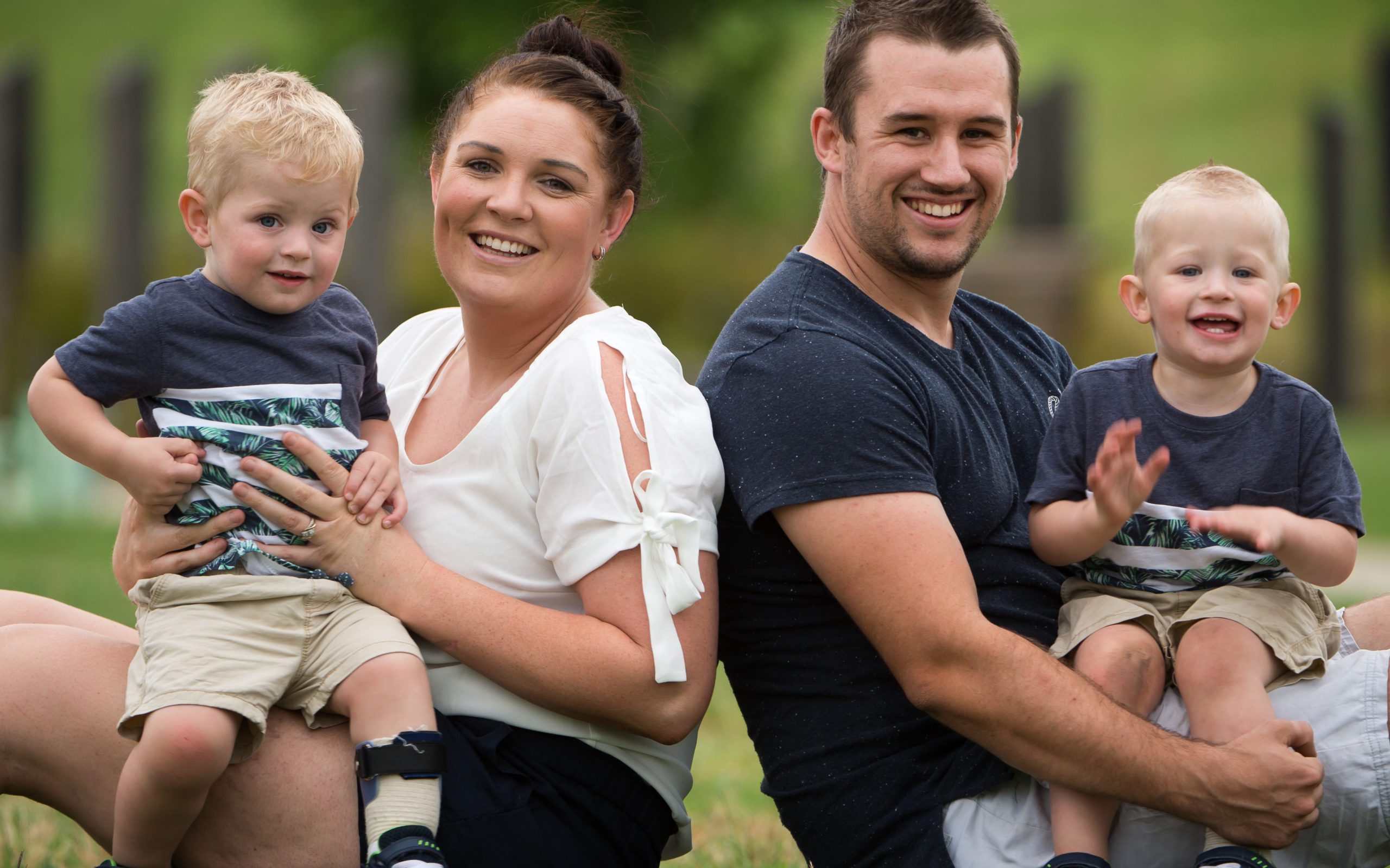
Mum, Natalie Reynolds, with Bailey, and dad, Tim Clarkson with the Beau.

The program is an international leader in childhood stroke care and research. Dr Mackay said it is the third largest contributor of data to the International Stroke Study Group’s registry that involves 88 centres worldwide. The RCH is the only Australian paediatric institution that meets all National Stroke Foundation criteria for a comprehensive stroke centre.

“We know (from feedback) that we are having a direct and positive impact on the families we see, but through our research we are also having a huge impact internationally,” Dr Mackay said. “This research translates into helping many other people too.”

Funded by the Good Friday Appeal, the program was set up in 2004 by Dr Mackay, a paediatric neurologist. In 2011, also due to the support of the appeal, the nation’s only Stroke Nurse Coordinator, Belinda Stojanovski, was employed.

The pair work seamlessly together to improve the outcomes for children affected by stroke, providing medical, practical and emotional support for the young patients and their families.

“When families are referred to our clinic Mark gives them all the technical information then I step in to try to answer their questions and provide the support they need to deal with the different hospital departments and link them into rehab,” Belinda said. “We are really the link between the families and the hospital.”

In 2012 the Childhood Stroke Program had 13 referrals but that had increased significantly to 41 in 2016. There are about 400 families on the program’s registry.

The program also aims to improve care by educating medical, nursing and allied health professionals in best practices; and to improve awareness of childhood stroke in the community.

Paediatric stroke facts:

  • Stroke is among the top 10 causes of death in childhood with the highest mortality in the first 12 months of life
  • Stroke affects one in 2300-5000 newborns
  • The cause of stroke in newborns is usually unknown
  • Every year about two children in every 100,000 will have a stroke
  • 50-85% of survivors of stroke will be left with long term problems which may include seizures, physical disability, speech or learning difficulties

Last updated February 2024.

Photos: Jay Town

Our Newsletter

Everything Good Friday Appeal, straight to your inbox. Get more information about your impact and how to get involved.