Paediatric Oncology Grant for Research Excellence and Trials Support
Thanks to the Good Friday Appeal, the Children’s Cancer Centre at The Royal Children’s Hospital is reinforcing its position as a national and international leader in paediatric cancer research — enabling more children to access innovative, cutting-edge treatment options.
This support powers the Paediatric Oncology Grant for Research Excellence and Trials Support (PROGRESS) platform, which accelerates clinical research that directly improves outcomes for children diagnosed with cancer. By sustaining and expanding investment in research, the Centre can continue delivering discoveries that translate into real-world care for young patients and their families.
The PROGRESS platform brings together leading expertise from across the Melbourne Children’s Campus, including Murdoch Children’s Research Institute and The University of Melbourne, alongside the hospital. This coordinated and integrated approach enables faster, more connected and higher-impact research – supporting innovative models of care while accelerating access to groundbreaking treatment options.
This collaboration has already significantly expanded the clinical trials portfolio. It has enabled the development of Australia’s first paediatric teletrials model, allowing children to participate in research and receive elements of their care closer to home. Hospital-led trials – including those led by psycho-oncology teams – are also broadening access to supportive care interventions and emerging therapies.
As a result, nearly every newly diagnosed child treated at the Children’s Cancer Centre now benefits from clinical research. Participation in clinical trials can provide earlier access to cutting-edge medications and supportive care approaches that may otherwise be unavailable, helping families feel confident they are receiving the most advanced care possible.
Continued investment from the Good Friday Appeal will build on this momentum by expanding trial access, accelerating discoveries and strengthening collaborative research. This vital support helps improve patient outcomes, ensures critical care innovations reach children sooner, and gives more young patients the best possible chance for a healthier future.
By advancing research and expanding access to innovative treatments, this program supports children facing cancer not only to survive their illness, but to ultimately thrive.
Everything Good Friday Appeal, straight to your inbox. Get more information about your impact and how to get involved.
GEMSTone Study
The Royal Children’s Hospital (RCH) and the Murdoch Children’s Research Institute (MCRI) will be launching the Genetics Evaluation for Management and Support of low Tone (GEMStone) Study, thanks to the generosity of the Good Friday Appeal. This life-changing study will focus on infants with hypotonia, also known as low muscle tone, a symptom that can signal a wide range of underlying conditions affecting the brain, nerves, or muscles.
This novel study will have a significant impact on the lives of babies battling rare genetic conditions – specifically those with low muscle tone – through the use of genomic technology. This transformative technology can provide children battling these conditions and their families answers sooner, allowing them to access the right care and support.
“The diagnosis is challenging because many different types of underlying conditions can present with low muscle tone,” explained Professor Zornitza Stark, clinical geneticist at the Victorian Clinical Genetics Services, co-lead of the Translational Genomics Research Group at the Murdoch Children’s Research Institute, and one of the leads of the GEMSTone Study.
“By doing the dynamic testing upfront and getting to an answer earlier, we are actually sparing babies a number of other investigations and providing certainty for families with some information about outlook,” she continued.
Currently, only about half of affected babies receive a clear diagnosis. Many families are left facing uncertainty and invasive testing, such as MRIs or muscle biopsies, without any answers. By pooling expertise and patient data, the study aims to identify genetic causes much faster.
Impressively, it will aim to deliver results in as little as three weeks – dramatically reducing the current three- to four-month wait.
“By getting results back in a couple of weeks, families don’t have to wait months wondering what their child has. Even if there isn’t a treatment available, knowing the diagnosis allows families to plan, access the right services, and understand what to expect,” explained Zornitza.
Over the next two years, the RCH aims to enroll around 80 babies through the GEMStone Study, with similar numbers across its world-leading partner hospitals, including the Boston Children’s Hospital, SickKids Toronto and the Great Ormond Street Hospital. This international collaboration will allow researchers to share knowledge, improve testing techniques, and generate meaningful data faster than would be possible at a single site.
“We get to learn from each other’s experience, which is really exciting. Genomic technology is evolving fast, and collaboration helps us make progress more quickly for families,” explained Zornitza.
While only a small proportion of rare conditions currently have approved therapies, early knowledge of a child’s genetic condition is critical for timely intervention when options are available.
Initiatives like GEMStone ensure the RCH remains at the forefront of rapid genomic testing, reshaping the future of care for children with rare genetic conditions. Zornitza and the entire GEMStone team are profoundly thankful to the community whose generosity has turned this vision into reality.
“We are deeply grateful to the Good Friday Appeal for their support and look forward to the study’s outcomes as we work hard to advance this life-changing technology,” she concluded.
Professor Zornitza Stark, Clinical Geneticist at the Victorian Clinical Genetics Services.
“The GEMStone Study is helping strengthen the hospital’s position as a global leader in genomic testing. It aims to ensure that children with rare and genetic conditions receive the treatments they need to thrive, through faster, less invasive, and more accurate diagnoses. We are deeply grateful to the Good Friday Appeal for their support and look forward to the study’s outcomes as we work hard to advance this life-changing technology.”
– Professor Zornitza Stark, Clinical Geneticist at the Victorian Clinical Genetics Services; Clinical Lead, Australian Genomics; and is a Co-Lead of the Translational Genomics Research Group at the Murdoch Children’s Research Institute
Everything Good Friday Appeal, straight to your inbox. Get more information about your impact and how to get involved.
Generation Victoria (GenV): Establishment and Campus Value
The primary objective of GenV is to enroll every child born in Victoria, along with their parents, into this study. This ambitious initiative aims to create a state-based research platform to accelerate the ability of researchers in addressing complex health and wellbeing challenges affecting children and young people by 2035.
Led by the Murdoch Children’s Research Institute, GenV looks at how children grow and develop, how people age, and how health changes across generations. GenV is the only birth and parent cohort launched internationally during the COVID-19 pandemic, and it includes families who are often underrepresented in research, such as those living in regional and rural communities, culturally and linguistically diverse families, and First Nations families.
Made possible through philanthropy, including support from the Good Friday Appeal, the Victorian Government, and the Paul Ramsay Foundation, this project aims to improve the prediction, prevention, and treatment of various child health issues such as preterm birth, allergies, and anxiety. GenV is helping researchers, communities and policymakers improve health and wellbeing of families at the RCH, throughout Victoria and across Australia in the long term.
To date, over 115,000 participants have joined the study, which includes families and babies from every birthing hospital in Victoria.
Through research and testing, GenV supports a wide range of conditions, both common and rare, affecting children and adults today. GenV is involved in 16 active research studies and supports a wide range of collaborative observational and interventional research.
From reducing the unprecedented rate of chronic adult diseases to developing improved predictive tools, this initiative is helping to ensure the next generation is as healthy as possible.
Everything Good Friday Appeal, straight to your inbox. Get more information about your impact and how to get involved.
The RCH Neuroscience Advanced Clinical Imaging Service (NACIS)
Over the last decade, The Royal Children’s Hospital (RCH) and the Murdoch Children’s Research Institute (MCRI) have worked to deliver an advanced neuroimaging program that has revolutionised neurosurgical practice and improved surgical outcomes for children with epilepsy and selected brain tumours.
This resulted in the establishment of Neuroscience Advanced Clinical Imaging Service (NACIS) under the Department of Neurosurgery at the RCH.
The Neuroscience Advanced Clinical Imaging Service (NACIS) is a one-of-a-kind service at The Royal Children’s Hospital (RCH). Through advanced brain imaging technology and image processing techniques, this service has been able to help make the invisible appear visible, going further than commercial magnetic resonance imaging.
Thanks to the support of the Good Friday Appeal, NACIS is improving long term outcomes and quality of life for young patients with brain tumours and epileptic disorders.
The NACIS team can help to identify particular lesions in the brains of patients with epilepsy, which were unable to be accurately detected before the establishment of the service. Across 2024, NACIS has helped clinicians deliver personalised and safer brain surgery to over 120 children.
NACIS uses sophisticated image processing techniques to produce a detailed map of a child’s brain vessels, functional brain regions and the underlying nerve fibre connections, which control functions like language, vision and movement.
They also use the technology to assist surgeons in identifying safe “surgical road maps” for precise brain mapping and surgical execution, as well as assessing patients’ post-surgery to ensure the best possible outcomes The map is used by surgeons to precisely plan and perform their operations, allowing them to avoid injuring these critical functional brain structures, thus ensure the best possible functional outcomes.
NACIS is a one of kind service, working to perform more high-risk and complex surgical cases, and in selected cases, offering surgery as a treatment to children previously considered inoperable.
2026 Project Update
Since its launch in 2020, NACIS has supported hundreds of children, including high-risk cases that would not have been safely operable without its input.
NACIS is a nationally and internationally unique service that has been embedded within the RCH Neurosurgery department. Since its launch, it has translated cutting-edge neuroimaging into clinical care, enabling safer, more precise, personalised brain surgery for children.
The service fills a critical gap in paediatric care by integrating advanced brain imaging into real-time surgical care. This makes high-risk or inoperable brain surgeries safer and possible.
Since its inception, NACIS has supported 588 children with pre-surgical planning, contributing to over 200 epilepsy and brain tumour surgeries, including 122 high-risk cases.
The outcomes of these surgeries are also noteworthy. Thanks to this innovative and cutting-edge machine, over 80% of drug-resistant epilepsy patients are now seizure-free, and most brain tumour surgeries achieved complete tumour removal without deficits.
As a result, clinical demand for this service has increased from 40% to 200% since 2020.
The NACIS team also developed and successfully implemented a streamlined, child-friendly workflow from telehealth preparation to scan quality control, processing and analysis and advanced reporting. This has increased the success of certain imaging, helping reduce the epilepsy MRI waiting list and expanding access to safe, image-informed surgery for more children.
Thanks to the continued and generous support shown by the Good Friday Appeal, NACIS will be able to continue its vital service as standard care and expand its reach.
This will mean that three NACIS team members will be able to receive further support – a group lead/lead clinical scientist (1.0 FTE) and 2 postdoctoral clinical scientists (1.0 FTE and 0.6 FTE).
Each member of this team will play a critical role in strengthening the multidisciplinary care and improving access to personalised, image-guided care.
Overarchingly, NACIS has made care possible for children who would otherwise have been deemed inoperable. This is improving outcomes for children with epilepsy, brain tumours, stroke and vascular conditions.
It has reduced diagnostic delays for subtle epilepsy lesions from years to weeks and continues to reduce long-term disability, invasive tests, repeat surgeries and hospital stays.
NACIS continues to position the RCH as a global leader in paediatric neurosurgical imaging and is an investment in the future of paediatric brain surgery.
Everything Good Friday Appeal, straight to your inbox. Get more information about your impact and how to get involved.
The Melbourne Children’s Trials Centre
The Royal Children’s Hospital (RCH) already conducts many high quality clinical trials and with a dedicated centre on campus, better co-ordination and an improved facility, the RCH is performing more clinical trials, more often. Some of these trials include screening, early treatment and new important therapeutics or improved clinical management and medical procedure.
Thanks to the Good Friday Appeal, the Melbourne Children’s Trial Centre (MCTC) has been able to increase the capacity to support clinical trials across The Royal Children’s Hospital (RCH) and Murdoch Children’s Research Institute (MCRI), also known as the Melbourne Children’s Campus. This is helping to drive healthcare innovation and support sick children all across the hospital.
Importantly, the centre has also helped support and oversee close to 400 clinical trials across last year alone. Professor Andrew Davidson, the Medical Director of the MCTC, knows first-hand the impact this program has had campus wide.
Professor Andrew Davidson
“The MCTC ensures that we have the best environment to support and perform trials across campus. This ensures that our trials are more powerful and efficient,” said Andrew.
The MCTC supports all types of trials, including commercially sponsored trials which aim to test the success of a new drug or medical device. Since the MCTC began, the centre has helped support over 250 of these types of trials, helping change countless lives.
Andrew was especially proud to share the recent impact this type of trial has had on a three-year-old boy living with a rare metabolic condition called phenylketonuria. This condition typically requires a lifelong restrictive diet, as a sudden increase in protein can risk neurological impairment and intellectual disability.
Fortunately, however, the toddler was able to participate in a clinical trial at the RCH, leading to a breakthrough in his treatment. This allowed the sick child to enjoy something many take for granted – his first birthday cake.
“Often these rare diseases have no treatment option other than a clinical trial – and most of the time, these trials are lifesaving, and it completely changes the child and family’s life,” Andrew explained.
The MCTC also supports investigator initiative trials. These trials respond to academic or clinician research questions, helping change the way that children are cared for globally.
“With investigator initiative trials, we want to continue to be at the forefront of innovative ways of doing them. We’re already very successful as a campus and we want to continue to be very successful,” Andrew said.
With over 100 investigator initiative trials running at any time, the MCTC is helping promote the advancement of medical knowledge, all while changing the lives of young people.
Looking forward, the MCTC aims to further advance paediatric healthcare innovation on both a regional, national and global scale.
“This funding has allowed us to work more closely with the Sydney Children’s Hospital, Monash Children’s Hospital and the Queensland Children’s Hospital. This has been particularly important for rare diseases, where we needed a national approach to trials,” Andrew shared.
The MCTC is revolutionising healthcare for children and young people across the world. Thanks to the Good Friday Appeal, the centre will be able to further establish themselves as leaders in enabling efficiency and high-quality paediatric trials.
“The Good Friday Appeal’s support is helping provide an environment so that children at the RCH and sometimes around Australia can get access to whatever treatments they need that can completely change their lives,”
Professor Andrew Davidson, the Medical Director of the Melbourne Children’s Trials Centre
“The MCTC makes a huge difference to children all over,” Andrew concluded.
Example Trials
Positive end-expiratory pressure levels during resuscitation of preterm infants at birth (POLAR) trial
Almost all premature babies receive help with their breathing using a treatment called positive end-expiratory pressure (PEEP). The device used can give air and oxygen to the lungs between each breath to stop their lungs from collapsing.
Currently, due to a lack of evidence, doctors around the world give different amounts of PEEP to premature babies.
The POLAR trial explores the right amount of PEEP to give at birth.
2026 Update
Over the past year, the impact of the MCTC was as follows:
Trial spaces were upgraded and well-equipped, making it easier, safer, and more comfortable for children and families to take part in research.
As of 31 December 2025, 337 open clinical trials were supported, showing the scale and activity of the paediatric trials program.
The MCTC delivered large, high-impact trials across a wide range of patient groups and therapeutic areas, generating evidence to improve paediatric health.
MCTC and the Clinical Research Development Office strengthened clinical trial quality through targeted mentoring, operational support, and regularly updated training programs and resources.
Further, the initiative continues to build a skilled pipeline of junior and experienced trial coordinators and clinician-researchers to support long-term research capacity.
The MCTC also continued to show an increased commitment to consumer and family involvement in trial planning and design, ensuring research reflected patient and family priorities.
CEBU (Clinical Epidemiology and Biostatistics Unit) expanded its team, establishing the RCH as a national leader in its field, while also growing a world-class team of trial biostatisticians.
Innovative trial models, including adaptive platform trials and embedded trials, were designed and delivered, improving efficiency and integration with hospital care.
Advanced trial data systems were implemented, enabling early-phase regulatory trials and more sophisticated trial designs. This will help improve efficiency, maximise cost recovery, and drive outcomes faster.
The RCH achieved full accreditation under the National Clinical Trials Governance Framework, demonstrating compliance and organisational maturity – and its world-leading impact.
MCTC further strengthened its international partnerships with leading children’s hospitals, including Boston Children’s Hospital, Great Ormond Street Hospital, and Toronto SickKids, promoting shared knowledge across countries.
Trial spaces were upgraded and well-equipped, making it easier, safer, and more comfortable for children and families to take part in research.
Everything Good Friday Appeal, straight to your inbox. Get more information about your impact and how to get involved.
TOTAL XVII – TOTAL Therapy Study
Thanks to the Good Friday Appeal’s Run for the Kids initiative, newly diagnosed patients with acute lymphoblastic leukaemia (ALL) and lymphoblastic lymphoma at The Royal Children’s Hospital (RCH) have been able to access the latest in personalised medicine.
The trial, known as the TOTAL Therapy Study XVII or TOTAL 17, is an international collaboration led by St Jude Children’s Research Hospital in America.
Over the past two years, 62 patients at the RCH have been enrolled in the innovative program, far exceeding the initial aim of enrolling 20 patients per year. Recruitment for the trial ceased in mid-2023 due to reaching the trials capacity limit, with patients enrolled continuing with follow up therapy and treatments including neurocognitive assessments.
Once enrolled, the child’s blood and bone marrow samples were sent to St Jude. There, clinicians used state-of-the-art tools and gene mapping to identify the specific cancer-causing gene combinations, providing patients with the opportunity to receive treatment that is specifically designed to fight their type of cancer.
Additionally, the study offers an opportunity to identify the likelihood of cancer impacting patients and their families again in the future, while also providing information about the suitability of different drugs to help minimise side effects.
Currently, the RCH is the only hospital in Australia participating in the TOTAL Therapy Study XVII, providing access to the best outcomes globally.
This would not be possible without support of the Good Friday Appeal and Run for the Kids, something Dr Di Hanna, a Paediatric Oncologist at the RCH Children’s Cancer Centre, is grateful for.
Dr Di Hanna
“The Good Friday Appeal fundraising is critical for every piece of the cancer journey. We need the latest research, diagnostic tools, best clinical trials, and patient and family support networks, and the Good Friday Appeal has been a cornerstone for each part of that.
“Importantly, thanks to the Good Friday Appeal, we are also able to provide children with leukaemia and lymphoma access to one of the best clinical trials in the world,” said Dr Hanna.
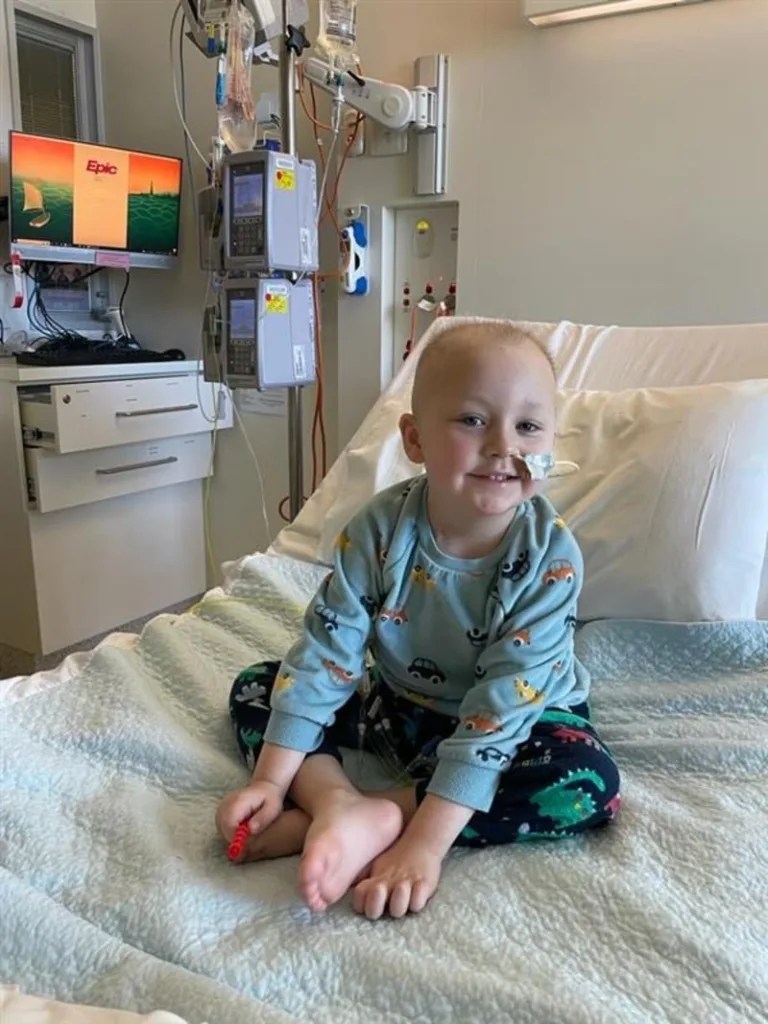
One of the patients enrolled in the trial is five year old Bobby, who was diagnosed with B-cell ALL when he was three.
For patients like Bobby, the long term impacts of the TOTAL Therapy Study XVII are life changing.
Bobby Marr in hospital
“One of the best things the trial has offered us is the additional supports, including the neurocognitive and physio assessments. It has been invaluable for us when considering things like getting Bobby ready for school, including any adjustments we need to make,” said Trudy, Bobby’s mum.
“Additionally, the idea that we could be part of that larger pool of research is significant to us. Being able to contribute to future developments to benefit other families made our decision an easy one,” she added.
Impact Milestones
2023 – 2024
By the end of April 2023, 48 out of the 62 enrolled patients completed baseline tests to determine how the brain works in terms of thinking, learning, remembering and problem solving.
The tests provided valuable data and insights for early interventions and referrals to relevant departments.
Samples from patients were sent to St Jude Children’s Hospital for comprehensive genomic profiling of leukemia cells. Out of the 52 patients profiled, 16 received targeted therapy.
Thanks to the new and targeted therapies, some patients who entered the trial avoided having a bone marrow transplant.
Based on sampling, St Jude’s has also helped identify two patients with a variant that may influence cancer predisposition.
Patients and their families have been linked with RCH Genetic Counselling services.
Beyond immediate treatment, patients were also offered assessments that look at how treatments affect the brain and thinking abilities.
As of September 2024, the study remained close to recruitment, with 45 patients still participating in the study. Meanwhile, three have completed the study and are in follow-up therapy.
Everything Good Friday Appeal, straight to your inbox. Get more information about your impact and how to get involved.
Type 1 Diabetes Immunotherapy Program at MCRI/RCH
Type 1 diabetes is diagnosed in two to three children per week at The Royal Children’s Hospital (RCH) and is currently incurable. However, thanks to the support of the Good Friday Appeal, a science and research program conducted by the Murdoch Children’s Research Institute (MCRI) and the RCH is offering new hope.
Now in its fourth year, the program which also works closely with the Australasian Type 1 Diabetes Immunotherapy Collaborative, is investigating immune-based therapies to both prevent and treat type 1 diabetes in existing patients. This important trial aims to improve developmental outcomes, quality of life and mental health outcomes while reducing suffering and mortality rates.
Type 1 diabetes is one of the largest disease groups within the hospital. It is also currently incurable. Despite current therapies, it predisposes affected individuals to adverse kidney, nerve, eye, heart and brain outcomes and is also associated with a high mental health burden for patients and their parents.
The RCH and Murdoch Children’s Research Institute (MCRI) are working together to develop the Type 1 Diabetes Immunology Program, in a collaborative effort with the Australasian Type 1 Diabetes Immunotherapy Collaborative.
This program will involve a specialist research centre, designed to understand and treat type 1 diabetes.
It will leverage immune-based therapies and recent breakthroughs in the field, to implement new therapies that come from the area of stem cells, immunology or a combination of both. The program has the potential to radically change the outcomes of children and adolescents with the type 1 diabetes. It can reduce morbidity and mortality rates and improve quality of life and mental health outcomes as well as developmental outcomes.
Everything Good Friday Appeal, straight to your inbox. Get more information about your impact and how to get involved.
Healthy Trajectories: A Child and Youth Disability Research Hub
Children with disability are among the most complex patients at The Royal Children’s Hospital (RCH). This means it is important to develop an innovative and research-based approach when it comes to the management of disability related health and social issues. Thanks to the support of the Good Friday Appeal, the RCH has been able to develop Healthy Trajectories; a child and youth disability research hub at the Melbourne Children’s Campus.
This hub harnesses the strengths of the campus partners to put in place a new vision for children with disability, their families and carers, with the potential for significant Victorian, national and international impact. It aims to increase inclusion and participation for children and young people with disability by targeting potential barriers and inequalities and addressing the research priorities they identify as crucial.
Themes like building a sense of belonging for students with disability and designing learning spaces for diversity, inclusion and participation have been explored through hub research. This interdisciplinary research addresses practice and policy gaps, helping to build a more sustainable National Disability Insurance Scheme and making a life-changing difference to patients.
Everything Good Friday Appeal, straight to your inbox. Get more information about your impact and how to get involved.
Creating evidence for telehealth-delivered neurodevelopmental assessments
Thanks to the Good Friday Appeal, The Royal Children’s Hospital (RCH) and the Murdoch Children’s Research Institute (MCRI) are coming together to undertake research to provide clinicians with guidance and evidence-based information on how to best deliver telehealth developmental assessments.
Patients accessing healthcare via telehealth appointments have increased following the COVID-19 pandemic.
It is vital children and young people with complex neurodevelopmental needs are given accurate and timely diagnoses and appropriate plans to manage their symptoms. This funding will ensure the quality and accuracy of assessments, so patients receive the best possible care.
For most children, the gift of learning, communicating with others, developing friendships, and engaging in day-to-day activities comes naturally. Yet for many children with a developmental disability, this is not the case.
Effective diagnosis and treatment plans for developmental disabilities traditionally rely on a series of in-person assessments that look at social and communication skills, speech and language abilities, and behaviour and brain function. Clinicians have shifted parts of these assessments to telehealth to treat vulnerable or disadvantaged patients.
Currently, the reliability of telehealth developmental assessments is not known. This makes a study in the area crucial in preventing incorrect diagnoses, unsafe clinical practices, and substandard clinical outcomes.
The Royal Children’s Hospital (RCH) and the Murdoch Children’s Research Institute (MCRI) are working together to develop evidence-based telehealth assessments.
The study will provide clinicians with guidance and guidelines on how to deliver high-quality telehealth assessments. This will result in positive health outcomes across the fields of neuropsychology, clinical psychology, developmental paediatrics and speech pathology.
The outcome of this study will be published in journals, discussed at national and international conferences, and shared in workshops to allow clinicians globally to deliver greater care and provide best practices.
This research can lead to high-quality telehealth-delivered assessments. It can also increase access to accurate assessments for vulnerable patients, such as those with immune deficiency, reduced mobility, mental health and neurodevelopmental problems, and those in regional or rural areas.
In 2024, the project team focused on the groundwork. This includes ongoing consultations with RCH staff to ensure the success of the project, creating recruitment and workflow protocols, obtaining preliminary data and establishing assessment protocols.
As of January 2025, the team’s protocols have been fully optimised, and recruitment has commenced—setting the stage for an active and productive year ahead.
“Thanks to the Good Friday Appeal, we will be able to create a new level and higher standard of care for neurodevelopmental assessments delivered via telehealth. This has the potential to remove barriers and ensure more accurate and timely diagnoses and clinical results, helping change children and young people’s lives.”
Associate Professor Jonathan Payne, Principal Research Fellow at the Murdoch Children’s Research Institute
Impact Milestones
2026 Project Update:
Since January 2024, the project team has made strong progress in establishing and refining telehealth assessment methods and preparing for large-scale data collection.
Over the first year of this three-year study, researchers successfully developed and refined telehealth neurodevelopmental assessment procedures, ensuring they align with best practice and real-world clinical needs.
40 children and families have participated to date, helping demonstrate that telehealth assessments are feasible and acceptable across diverse geographical locations.
Early findings show that telehealth assessments for neuropsychology and speech measures produce accurate and reliable results, comparable to face-to-face assessments.
In autism assessments, early testing led to important refinements, improving clinicians’ ability to observe behaviours and make confident diagnostic decisions through telehealth.
The project has worked closely with clinicians across the RCH to ensure that telehealth methods are practical, ethical and ready for everyday clinical use, helping bridge the gap between research and practice.
Looking forward, once recruitment for participants has been finalised and study results have been formally analysed, findings will be disseminated locally at workshops for staff and students across the Melbourne Children’s Campus, at national and international conferences as well as high impact peer-reviewed journals.
2024
Actively collaborated with RCH clinical leads to align the study protocols with the needs and demands of clinical practice. This is important so the methods the team are aiming to validate will be feasible for RCH clinicians to put into everyday practice.
Results of the consultation have guided detailed assessment protocols and the procedural manual for the study so that telehealth assessments will be readily implementable into daily clinical practice.
Recruitment strategies and workflows have been created.
Preliminary data from all study arms have been obtained and are proving very valuable:
In the neuropsychology arm, the methods we are using for telehealth assessment of learning challenges and intellectual ability appear to be produce accurate results and have been acceptable to clinicians and families.
In the autism arm, preliminary assessments revealed that our adapted telehealth procedure, based on current best practices, required a minor modification to gather additional information from the child. This adjustment ensures the assessment process is more comprehensive and clinically meaningful.
Everything Good Friday Appeal, straight to your inbox. Get more information about your impact and how to get involved.
Cardiology Research
Thanks to support from the Good Friday Appeal, researchers at the Murdoch Children’s Research Institute (MCRI) are helping to ensure a brighter future for children with cardiac conditions.
Associate Professor Jonathan Mynard is a bioengineer and cardiovascular researcher at the MCRI, specialising in paediatric hypertension, medical devices, cardiovascular modelling, blood pressure and flow dynamics (haemodynamics), and congenital heart disease. Jonathan’s current research project is looking at the difference in blood pressure measurements between a child’s arms, and the impact this may have on a child’s diagnosis. It is the first study worldwide to determine the size and frequency of inter-arm blood pressure differences in children and adolescents.
Initial findings revealed that even a small difference in blood pressure measurements between one arm and the other could lead to a wrong diagnosis. “Children with high blood pressure, many of whom appear to be healthy, have a greater risk of developing hypertension in adulthood, a major risk factor for cardiovascular disease,” said Jonathan.