Creating evidence for telehealth-delivered neurodevelopmental assessments
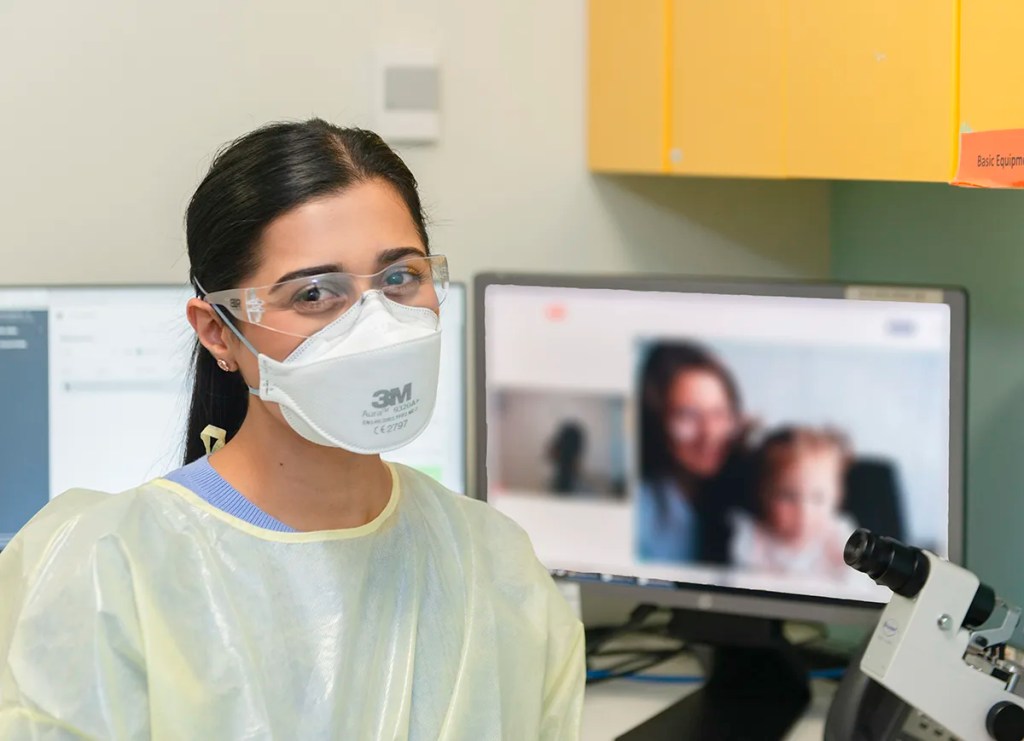
The Royal Children’s Hospital (RCH) and the Murdoch Children’s Research Institute (MCRI) are coming together to undertake research to provide clinicians with guidance and evidence-based information on how to best deliver telehealth developmental assessments.
Thanks to the Good Friday Appeal, The Royal Children’s Hospital (RCH) and the Murdoch Children’s Research Institute (MCRI) are coming together to undertake research to provide clinicians with guidance and evidence-based information on how to best deliver telehealth developmental assessments.
Patients accessing healthcare via telehealth appointments have increased following the COVID-19 pandemic.
It is vital children and young people with complex neurodevelopmental needs are given accurate and timely diagnoses and appropriate plans to manage their symptoms. This funding will ensure the quality and accuracy of assessments, so patients receive the best possible care.
For most children, the gift of learning, communicating with others, developing friendships, and engaging in day-to-day activities comes naturally. Yet for many children with a developmental disability, this is not the case.
Effective diagnosis and treatment plans for developmental disabilities traditionally rely on a series of in-person assessments that look at social and communication skills, speech and language abilities, and behaviour and brain function. Clinicians have shifted parts of these assessments to telehealth to treat vulnerable or disadvantaged patients.
Currently, the reliability of telehealth developmental assessments is not known. This makes a study in the area crucial in preventing incorrect diagnoses, unsafe clinical practices, and substandard clinical outcomes.
The Royal Children’s Hospital (RCH) and the Murdoch Children’s Research Institute (MCRI) are working together to develop evidence-based telehealth assessments.
The study will provide clinicians with guidance and guidelines on how to deliver high-quality telehealth assessments. This will result in positive health outcomes across the fields of neuropsychology, clinical psychology, developmental paediatrics and speech pathology.
The outcome of this study will be published in journals, discussed at national and international conferences, and shared in workshops to allow clinicians globally to deliver greater care and provide best practices.
This research can lead to high-quality telehealth-delivered assessments. It can also increase access to accurate assessments for vulnerable patients, such as those with immune deficiency, reduced mobility, mental health and neurodevelopmental problems, and those in regional or rural areas.
In 2024, the project team focused on the groundwork. This includes ongoing consultations with RCH staff to ensure the success of the project, creating recruitment and workflow protocols, obtaining preliminary data and establishing assessment protocols.
As of January 2025, the team’s protocols have been fully optimised, and recruitment has commenced—setting the stage for an active and productive year ahead.
“Thanks to the Good Friday Appeal, we will be able to create a new level and higher standard of care for neurodevelopmental assessments delivered via telehealth. This has the potential to remove barriers and ensure more accurate and timely diagnoses and clinical results, helping change children and young people’s lives.”
Associate Professor Jonathan Payne, Principal Research Fellow at the Murdoch Children’s Research Institute
Impact Milestones
2026 Project Update:
Since January 2024, the project team has made strong progress in establishing and refining telehealth assessment methods and preparing for large-scale data collection.
- Over the first year of this three-year study, researchers successfully developed and refined telehealth neurodevelopmental assessment procedures, ensuring they align with best practice and real-world clinical needs.
- 40 children and families have participated to date, helping demonstrate that telehealth assessments are feasible and acceptable across diverse geographical locations.
- Early findings show that telehealth assessments for neuropsychology and speech measures produce accurate and reliable results, comparable to face-to-face assessments.
- In autism assessments, early testing led to important refinements, improving clinicians’ ability to observe behaviours and make confident diagnostic decisions through telehealth.
- The project has worked closely with clinicians across the RCH to ensure that telehealth methods are practical, ethical and ready for everyday clinical use, helping bridge the gap between research and practice.
- Looking forward, once recruitment for participants has been finalised and study results have been formally analysed, findings will be disseminated locally at workshops for staff and students across the Melbourne Children’s Campus, at national and international conferences as well as high impact peer-reviewed journals.
2024
- Actively collaborated with RCH clinical leads to align the study protocols with the needs and demands of clinical practice. This is important so the methods the team are aiming to validate will be feasible for RCH clinicians to put into everyday practice.
- Results of the consultation have guided detailed assessment protocols and the procedural manual for the study so that telehealth assessments will be readily implementable into daily clinical practice.
- Recruitment strategies and workflows have been created.
- Preliminary data from all study arms have been obtained and are proving very valuable:
- In the neuropsychology arm, the methods we are using for telehealth assessment of learning challenges and intellectual ability appear to be produce accurate results and have been acceptable to clinicians and families.
- In the autism arm, preliminary assessments revealed that our adapted telehealth procedure, based on current best practices, required a minor modification to gather additional information from the child. This adjustment ensures the assessment process is more comprehensive and clinically meaningful.
Last updated February 2026.
Read More
Explore More