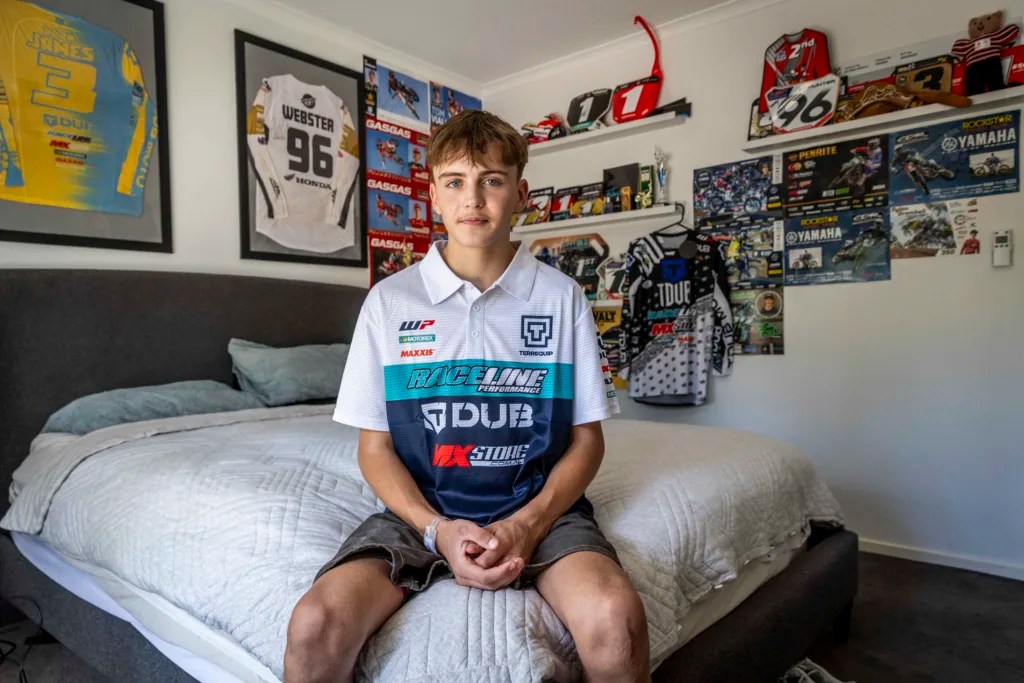
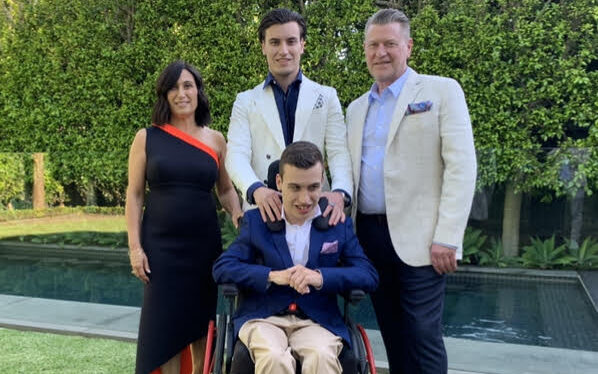
But the 15-year-old knows things could have been much worse. “Noah’s injuries looked similar to people who become paraplegic. It was bad,” his father, Trent said.
Noah added: “I was grateful to be told I would walk — and ride my bike — again. I’m the luckiest kid alive.”
Noah fell from his bike while training for a motocross event. He shattered his T5 vertebrae, broke his T4 and T6 vertebrae, and also broke two ribs.
He was treated at the Royal Children’s Hospital.
Initially, Noah wore a brace to stabilise the fractures, but scans found his injuries were still applying pressure to his spinal cord, and he underwent surgery. Noah now has two rods and internal screws in his spine.
But the motocross champion, who competes at a state level in the under-16s, and on the Pro MX circuit in the 14-to-18-year-old division, won’t race again until 2026.
“Noah is super passionate, and motivated, with a really strong work ethic,” Trent said. “He wants to get back on his bike, but we have to be patient and make sure he is 110 per cent right.” Noah thanked clinicians at the RCH for helping him stay positive.
“I have big goals (in motocross) and I want to achieve them,” he said. “But we’ll ease back into it.”
Written by Nui Te Koha
Images by Jake Nowakowski
Published in the Herald Sun April 2025
Updated August 2025
Everything Good Friday Appeal, straight to your inbox. Get more information about your impact and how to get involved.
How Lucas ‘Fired Up’ To Beat Cancer
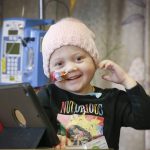
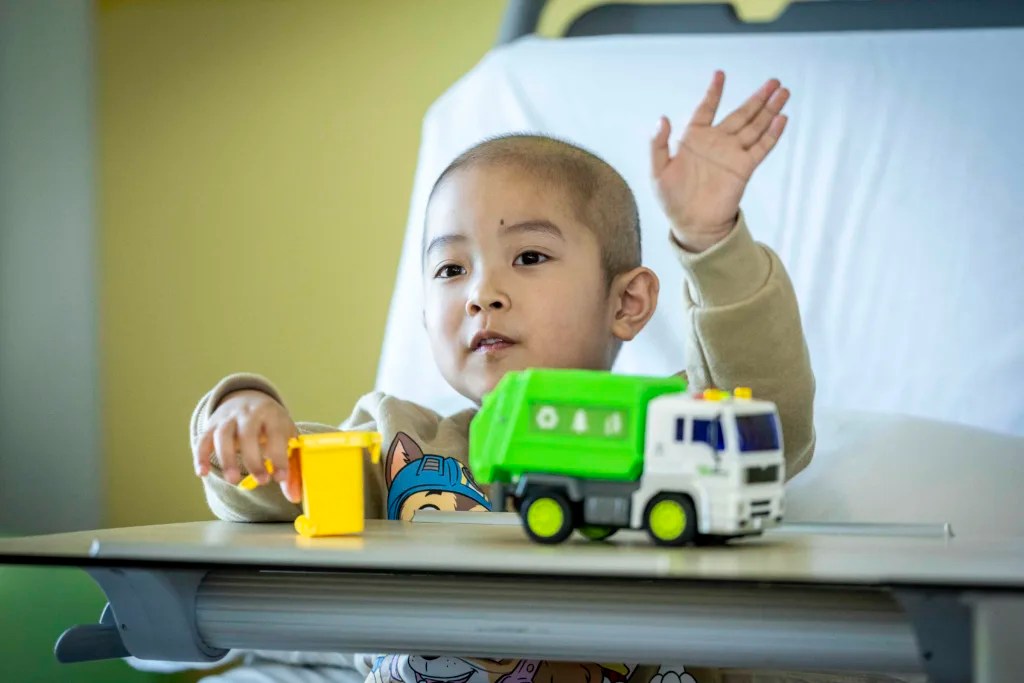
Lucas, 5, found a similar motivation and strength to his cartoon canine hero, during treatment at The Royal Children’s Hospital for Burkitt lymphoma, a fast-growing, aggressive type of non-Hodgkin lymphoma.
His health ordeal began after Lucas’s mother, Phuong, noticed a lump on her son’s neck. Tests and a biopsy at the RCH confirmed Lucas had cancer.
“It was a nightmare,” father, Le, said. “Phuong collapsed on the floor when she was told.
Phuong nodded. “I didn’t want to say the word cancer.”
RCH oncologist Claudia Toro said Burkitt lymphoma was “quite aggressive, so we match the aggressiveness of the tumour itself with intensive therapy, and multiple cycles of chemotherapy”.
Lucas stayed in hospital for four months for treatment.
“He missed his birthday,” Dr Toro said. “He had back-to-back rounds of chemotherapy, he was attached to infusions for his nutrition … and pain relief. He needed multiple blood transfusions and he was sick with fevers. He really had a rough trot.”
Phuong said: “He was very brave. I explained to him, ‘We’re here to fight the lump, and get the lump away from your body.’ He listened to us and he coped with the treatment.”
She said it was difficult to see their boy go through intensive treatment.
“We had to stay strong for him,” Phuong said. “Do we have any other choice? Do we have any other option? He needed us to be strong.”
Dr Toro said Lucas was brave, and added: “He’s been a really active participant in his own health care. When the doctors do their rounds every morning, and we ask him how he is, he’s the first one to pipe up and explain how he’s feeling.”
Phuong said teams at the RCH supported Lucas, as well as she and her husband.
Le added: “It’s an unlucky event, and it’s been unlucky for Lucas, but in other ways, we are very lucky because (the diagnosis) happened here, at the RCH.”
Lucas completed his treatment, and after four months at the RCH, finally went home. He was also fired up for a belated birthday party.
Written by Nui Te Koha
Images by Jake Nowakowski
Published in the Herald Sun April 2025
Updated August 2025
Everything Good Friday Appeal, straight to your inbox. Get more information about your impact and how to get involved.
Liana is turning Adversity into Inspiration
“We see the worst of the worst,” Dr Alexander said.
Liana, 15, crushed her hand in a motor vehicle accident, and suffered partial amputation of her left hand, as well as multiple fractures.
“She came in with only the thumb still attached and viable and the rest of her fingers were cold and didn’t have any blood flow in them. There was missing skin, bone, tendons, nerves and arteries,” Dr Alexander said.
“It was one of the worst hand injuries I’ve ever seen.”
Dr Alexander, a specialist in hand and microsurgery, treated Liana at The Royal Children’s Hospital.
The first surgery was complicated.
“We cleaned the hand and had to get some blood flow back into the fingers. We ran vein grafts from her wrists, then bridged the gap between each finger individually and got the fingers back alive and flowing,” Dr Alexander said.
Liana had 20 surgeries to save her hand. The treatment also included regular cleaning “mud, gunk and grass” from the limb, and skin transplants to resurface the back of Liana’s hand.
Dr Alexander said Liana slowly regained function to her thumb and four fingers, but sadly lost her index finger due to infection.
“It’s taken a lot of surgeries to get it all back together. She’s got all the components to have a good hand,” Dr Alexander said.
“The next step is to take what is, in our minds, a good aesthetic hand – a thumb and some fingers – and make it more functional for her in the real world.”
Liana, a vivacious sports-loving teenager, is turning her battle from adversity into an inspirational journey.
She plays netball, competes in dragon boating events and is an avid skier. Liana is also on the long list for the Australian Paralympic Ski Team for the 2026 Winter Games in Italy. She trains with the Falls Creek Race Club and is involved in the Australian Institute of Sport green-to-gold youth development program.
“My message is, even if it seems like the darkest time, it’s not forever,” she said. “Once you get to the other side, you can do anything. My injury hasn’t stopped me from doing anything in my life. I’ll never give up. I can do anything. ”
Liana said her pathway to the Paralympics has boosted her determination to live her best life.
“I feel so grateful and empowered,” she said.
Dr Alexander said: “Liana has been so mature and brave. She asked hard questions like, whether it’s all worth it, or whether we should chop fingers off if it went wrong”.
“She was very open about it all. She was smart enough to understand the nuance behind everything. I think that helped.”
He said RCH resources, teams and therapists contributed to Liana’s journey.
“We were very lucky to have the resources, theatre space, doctors and nurses to get a kid back to surgery that many times,” Dr Alexander said.
“The RCH is amazing.”
Written by Nui Te Koha
Images by Jake Nowakowski
Published in the Herald Sun April 2025
Updated July 2025
Everything Good Friday Appeal, straight to your inbox. Get more information about your impact and how to get involved.
Harrison & Archie: Brothers in Arms Digging In
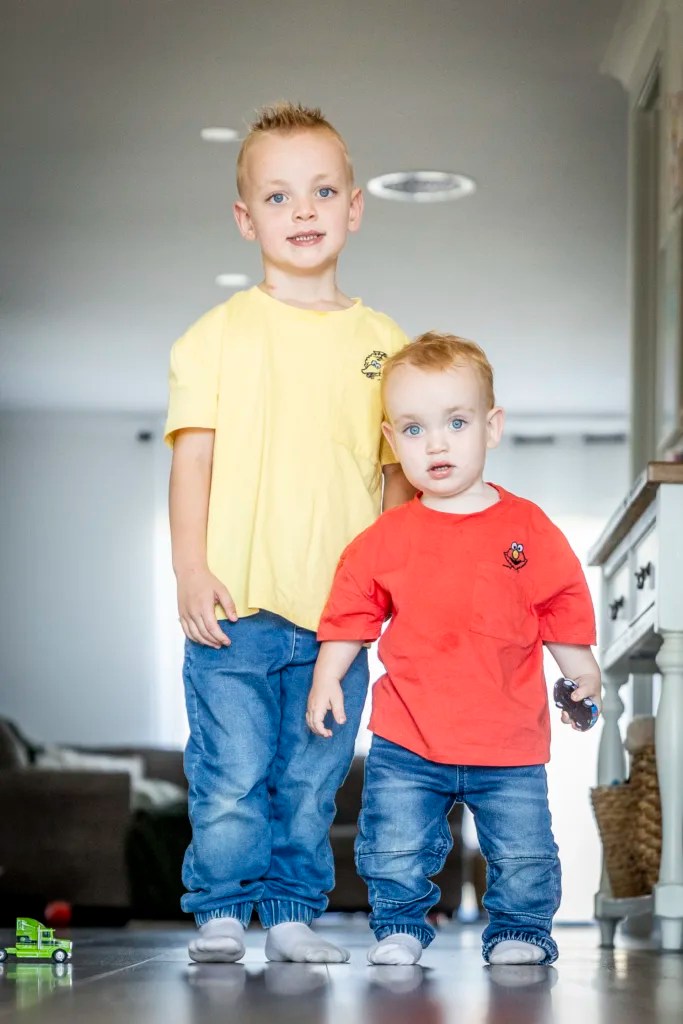
And Harry, 4, and Archie, 18 months, will no doubt need that sibling strength for a lifetime of infusion treatments ahead of them.
Harry and Archie have atypical haemolytic uraemic syndrome (aHUS), which is characterised by the formation of clots in small blood vessels, leading to kidney damage and other organ dysfunction.
The boys get treatment at the Royal Children’s Hospital, and have infusion-based therapies to stabilise their blood, every eight weeks, in regional Victoria.
Their clinician, Dr Tom Forbes, said: “Harry and Archie will need to do the infusions for the rest of their lives. Patients with this condition can progress towards severe kidney disease and failure.”
Mum Lisa said the boy’s health woes came out of nowhere. She said Harry was five months old when he suddenly appeared really sick, lethargic and pale.
She took him to a hospital near their home in the state’s northeast where doctors decided Harry should be flown to the RCH for urgent care. He spent six weeks there for treatment.
“They thought it was a blood condition, but they soon crossed that off the list and moved us to nephrology (pediatric medicine related to kidneys).”
Archie’s health issues were apparent at five weeks of age.
Harrison (4yrs) & Archie (18months)
“He was very lethargic. I knew something was wrong because he was never an easy baby to get to sleep. The next morning he was visibly yellow.”
She rushed him to hospital. “Archie was lifeless,” Lisa said. “They put him on oxygen and got some blood into him.”
He was also flown to the RCH for immediate care. After Harry and Archie were diagnosed with aHUS, the brothers needed infusions every two weeks, and later, every four weeks.
Their sister, Isabella, 6, does not have aHUS.
Lisa is thankful for the treatments and especially grateful they now take place at a clinic close to home.
“We’re on a lifelong journey of managing their health,” Lisa said. “You look at the boys and think that they’re healthy – and they are, because the treatment keeps them that way.”
Written by Nui Te Koha
Images by Jake Nowakowski
Published in the Herald Sun April 2025
Everything Good Friday Appeal, straight to your inbox. Get more information about your impact and how to get involved.
Levi Ablett
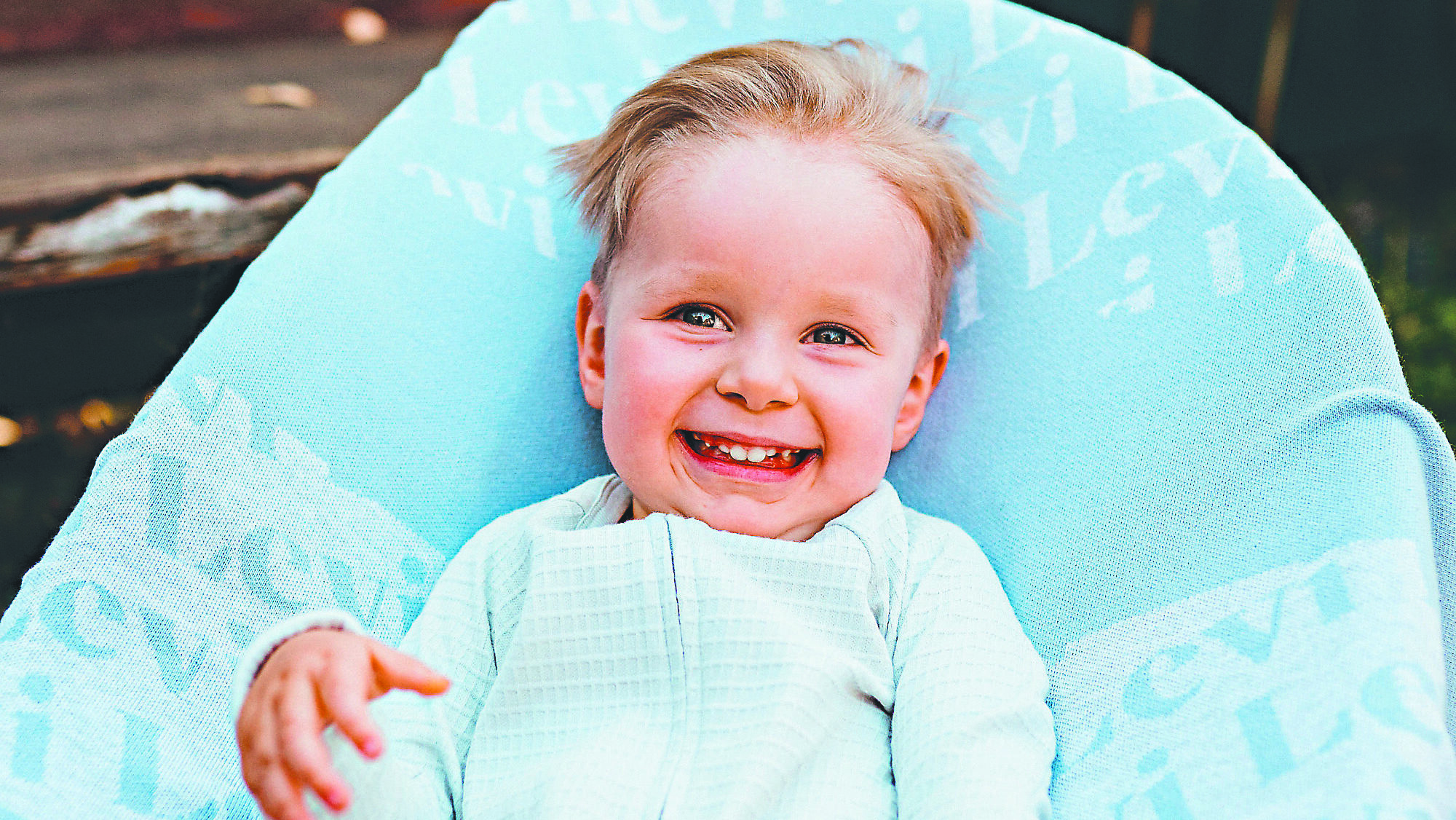
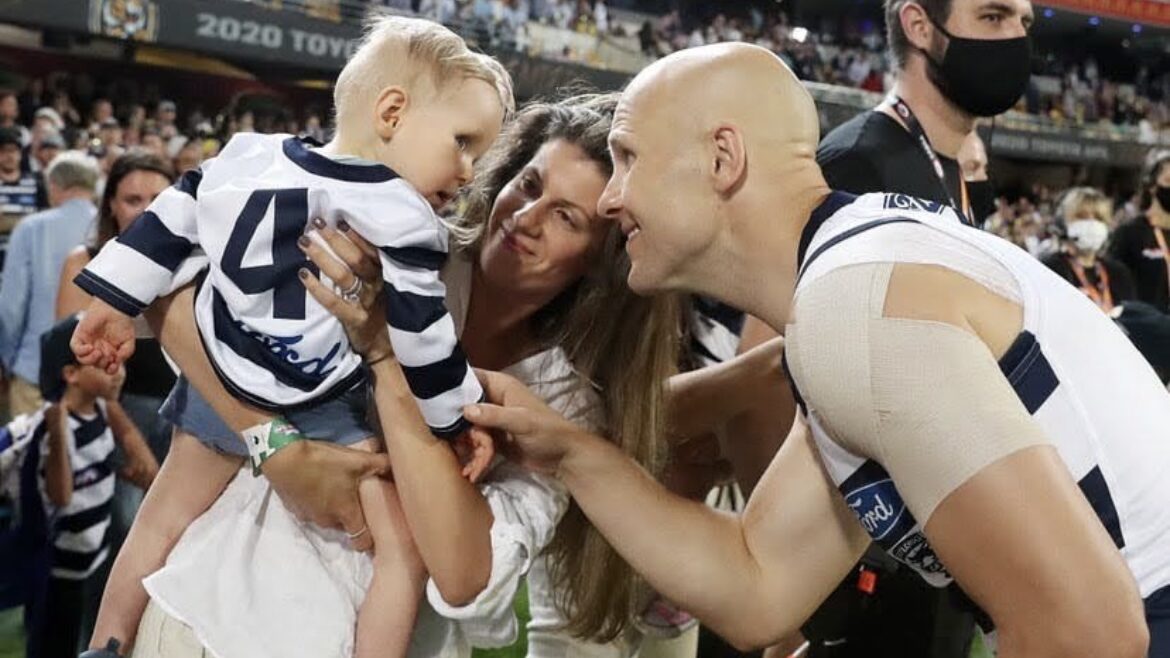
Jordan Ablett has spoken in depth about the heartbreaking medical conditions affecting their first child, Levi, revealing he has never spoken.
Jordan Ablett says doctors have told her and her husband, dual Brownlow medallist Gary Ablett, that while there’s no guarantees, it is now highly likely that he will never talk.
But Jordan says although Levi hasn’t said a single word, “his life has been a constant message”.
“It’s really difficult from a practical point of view but also really difficult just being his mum and not being able to hear his voice or know what he needs. When he gets upset, I have to guess what the problem is,” Jordan says.
“Although I will say, despite him not being able to communicate, I do feel as though I’ve really learnt to understand him over the years – I have had to put a lot of confidence in my parenting.
“It’s also difficult because I’d love to just hear his thoughts, have conversation with my boy and for us to know that he understands how much we love him.”
Jordan and Gary Ablett’s, son Levi.
Three-year-old Levi is also vulnerable to aspirating, whereby food, drink, or stomach contents can make their way into the lungs. They are in regular communication with Melbourne’s Royal Children’s Hospital, where Levi receives ongoing treatment and consultations.
Jordan Ablett is again an ambassador for the RCH Good Friday Appeal, as someone who understands the need and value of receiving the best care and advice.
“We are in what feels like constant communication with the RCH,” Jordan says.
“He’s had a lot appointments the past couple of months but gratefully, these have been via Telehealth and haven’t always required Levi to be physically present.
“He has a wide team who monitor his health. Due to his condition, one of the biggest concerns for Levi is his respiratory health. Low muscle tone and a few other contributing factors (mean) he is far more prone to picking up viruses and unfortunately, doesn’t have the capacity to fight them as well as others his age.
“He also is at high risk of aspirating which can be detrimental to him. Because of this we’ve always had to blitz every bit of food for him, making sure it’s as smooth as possible so that it goes down correctly. Aspirating causes lung damage and increases your risk of pneumonia.
“It has been (difficult). Levi’s a magnet to any infections within close proximity to him. Because of this we just need to be extra vigilant.”
Jordan and Gary Ablett with their son Levi.
Jordan says despite their son’s illness, she lives for the moment: a smile, a laugh, a glimmer of hope can all brighten the day and offer hope of improvement.
She and husband Gary have shared their inspiring and heartbreaking journey since Levi was diagnosed with a rare degenerative disease in 2020. It was news that would rattle any parents but they have not only bravely adapted to their new world, they have also shared it publicly as they support and uplift others.
Giving an insight into life with a three year-old and a newborn, Jordan has gained a new perspective. For others who are in a similar situation, she says it is an all-encompassing diagnosis.
“It will be the hardest thing to hear,” Jordan says. “It will completely change you and you will no longer be able to live how you used to.
“As hard as it is, your child will unlock things inside you, things that matter and that are of value. They will help you see the world with different lenses. You’ll learn to see others before yourself … You won’t live like you used to, but you won’t want to either.”
Jordan stresses that her way of living has changed because “he’s changed me”.
It’s not an inconvenience to have a child with a disability and a shorter life expectancy; it’s a love that is palpable in every sense.
For the Abletts a different dimension, but a welcome one, has been the addition of a second baby.
Jordan and Gary announced the arrival of their “angel” daughter Grace in November. The pregnancy was kept a secret until birth and has been a joy for the family and also Levi, who has relished having a little sister at home.
“Levi’s doing really well at the moment,” Jordan says.
“I guess it’s hard to measure where exactly he’s at. We haven’t necessarily seen a great deal of improvement, but we also haven’t seen regression either, so that’s a win as far as we’re concerned. He’s loving being a big brother and having a constant companion around.
“Time is flying and we can’t recall life without her. She has slotted into this family perfectly, her sparkly smile and personality are really starting to shine through.
“It’s beautiful seeing Levi with his little sidekick.
“I don’t think my perspective has changed necessarily. It’s mostly just trying to navigate the juggle of having a three year old with a disability and a baby who are both heavily dependent in their own right.
“Although it’s been the best thing being able to welcome a new family member, it’s been really challenging also. It also already feels like a completely different parenting experience than when I became a mum for the first time.”
Jordan Ablett with her son Levi. Picture: Supplied
Jordan says you need a village of love and support to make things work but she wouldn’t have it any other way.
As another way of sharing and giving back, last year she unveiled a new forum to help parents with special needs children.
Called the House of Hope, she says it’s a place for all to connect and relate with the daily challenges.
She hopes people dig deep for the Good Friday Appeal.
“Before learning of my son’s diagnosis, I never anticipated that I would become so familiar with the RCH,’’ she says.
“Levi requires a great deal of care that ultimately stems from the hospital, so we’re always grateful to everyone involved there and how they go about helping the children.
“For the hospital to continue to provide its patients and families with world-class care (it) relies heavily on the generosity of the community. I have no doubt that we will rise to the occasion, as we do every year.
“As an ambassador for the Good Friday Appeal, I’m ready and available for where the need is.”
Give to help kids like Levi
Originally published in the VWeekend Magazine in the Saturday Herald Sun, 9 March, 2022
Words: Jackie Epstein
Photos: Supplied
Everything Good Friday Appeal, straight to your inbox. Get more information about your impact and how to get involved.
Meet Alexander
The 17-year-old was diagnosed with cerebral palsy when he was 12 months old, and he also has epilepsy and intellectual disabilities.
Alexander has had hundreds of hospital visits and stays for treatments, surgeries, check ups and interventions to help loosen muscles, including a 10 hour surgery to loosen the hamstrings and calves.
He has been such a special part of the Hospital that when the new hospital was being built, one of the cranes was named after him. Alexander was also invited to meet the Queen when she opened the new Hospital in 2011.
Thanks to the treatment and care Alexander has received at the RCH, his parents say he is able to live his best possible life.
Alexander has a love for music and singing in choir. He will try anything from rock climbing to riding a giant swing.
“The RCH gives children and their families the best opportunities to live their best lives,” Alexander’s dad Robert said.
“His future life, regardless of how often or little we come back, has been established through what the Children’s (Hospital) has done.”
Alexander and his mum Sandra, brother Thomas and dad Robert
Alexander’s family is grateful to the Hospital for the wonderful care and support he has received.
“You automatically feel comforted when you walk through the doors because you know he’s going to receive the best care,” Alexander’s mum Sandra said.
“It’s been amazing. It’s an amazing hospital. We’re so fortunate to have it. The support you get is outstanding, she said.
Alexander is transitioning to adult care at another Hospital as he turns 18 early next year.
Robert and Sandra said they would be sad to leave the RCH, which had been like a second home to the family.
Robert, Sandra and big brother Thomas have been great supporters of the RCH and Good Friday Appeal, raising funds through business and family networks.
Everything Good Friday Appeal, straight to your inbox. Get more information about your impact and how to get involved.
Meet Caleb
As the adults hurried about their chores just before dinner, Caleb Sinaga had his eye on his next plaything.
The 11-month-old was a speedy crawler, and had mastered hoisting himself into standing position by pulling himself up on the couch or table.
So when a freshly made cup of tea was sitting in reach on the coffee table, he had poured it over himself before anyone could intervene.
“Initially Caleb wasn’t too close to the tea. But everyone is busy, it’s the end of the day, everyone is rushing around. We weren’t looking and when you look he’s already grabbing the cup of hot tea,” said mum Ramona Attamimi.
“I rushed to run water over it,” she said.
“My mother-in-law, who was there, brought some ointment to put on it.
“It was red by then. I didn’t know what to do with burns. I’d never had them before. I didn’t know how severe it was.
“I called the maternal child health nurse. They said because it’s on his face and he’s a baby, it’s better to bring him to ED.”
Caleb and his parents
After taking him to their local hospital, they were transferred to The Royal Children’s Hospital for ongoing outpatient care for the second degree burns.
Specialist nurses and plastic surgeons work with each child until the wounds have sufficiently healed, ahead of physiotherapists managing their longer term care – usually over months or years – to reduce the scarring and improve movement as much as possible.
Originally published in the Herald Sun on Tuesday, 5 April
Words: Brigid O’Connell
Images: Alex Coppel
Everything Good Friday Appeal, straight to your inbox. Get more information about your impact and how to get involved.
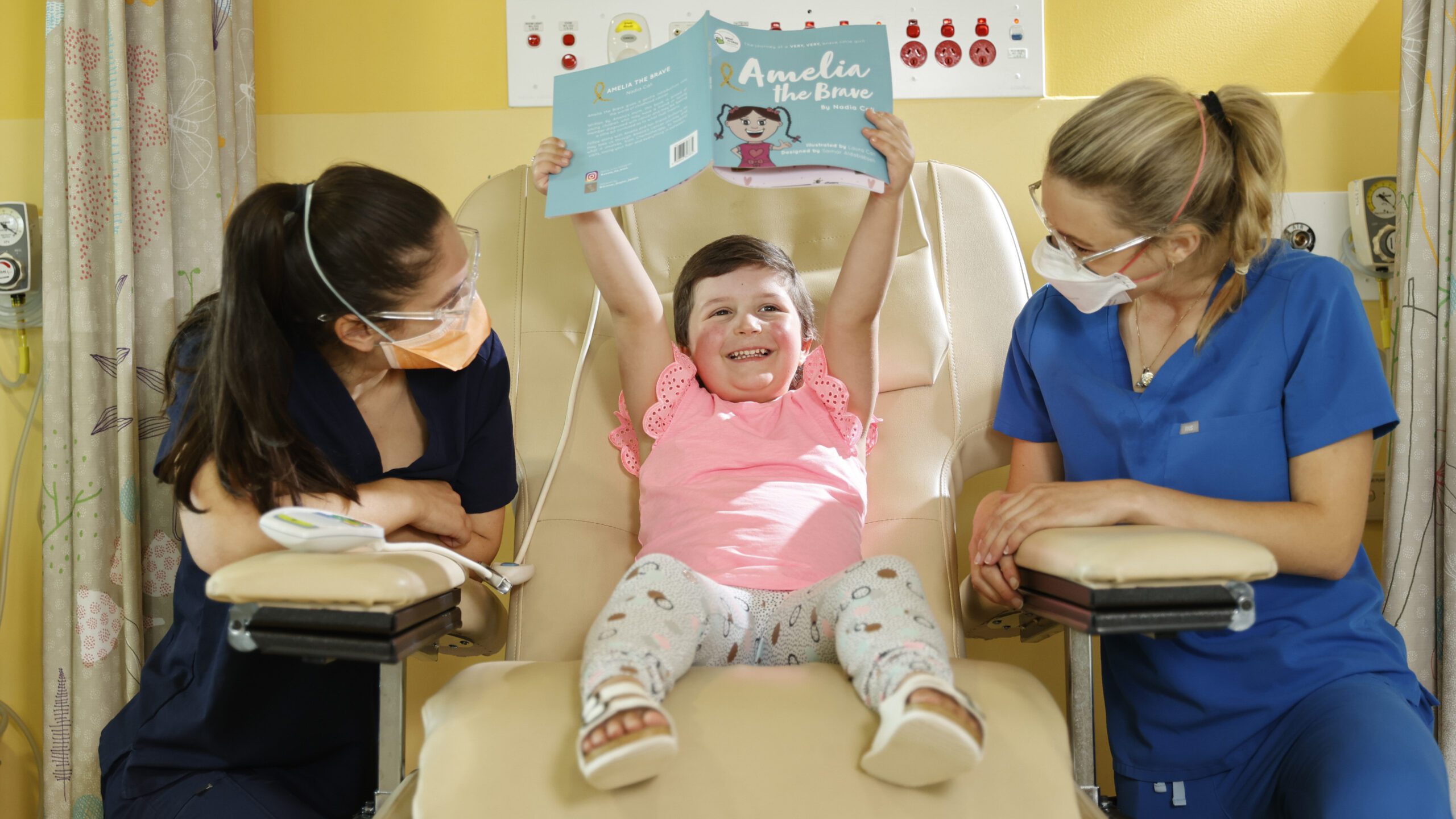
Amelia the Brave
It’s a simple happy snap in the daycare playground. A three-year-old looks straight into the camera lens, her eyes crinkled with excitement.
Amelia’s perfectly white toddler teeth peek out from a wide, full-cheeked smile. Her waist-length brown hair has been tamed into two neat plaits. Perched atop play equipment, it is the epitome of childhood live-in-the-moment happiness.
But for the Nesci family, the photograph is so much more. It captures a moment in time, after which nothing would ever be the same.
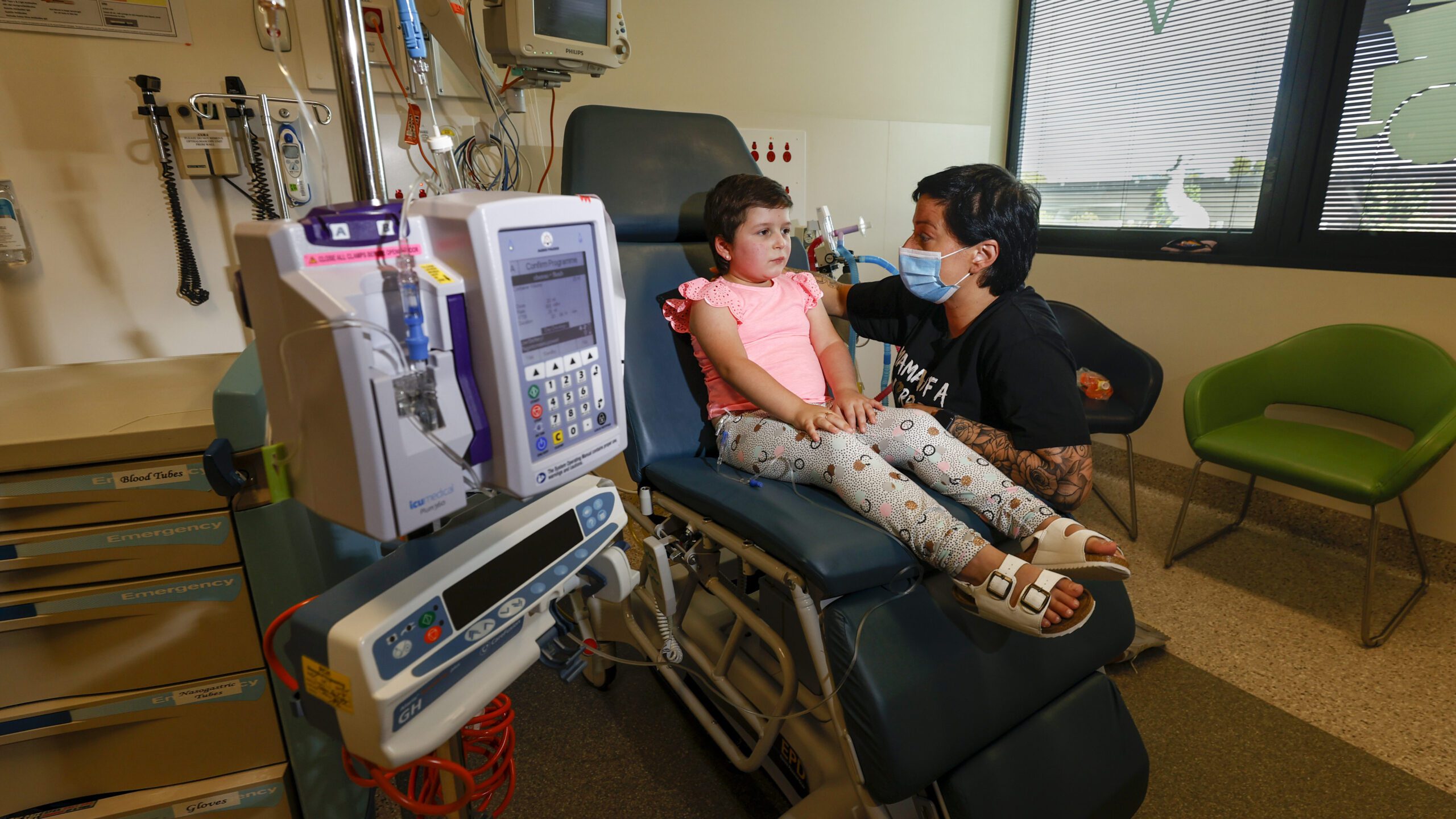
Following this photo (right), Amelia suffered a month-long health deterioration and merry-go-round of doctors visits. What started as a suspected lingering daycare cold, ended 25 days later with her being carried – passed out – into the emergency department of The Royal Children’s Hospital.
She was then diagnosed with acute lymphoblastic leukaemia.
But instead of being a heartbreaking photo of good times and what might have been for parents Nadia and Anthony, the image of their darling daughter and second youngest child has instead been transformed into a positive project – children’s book Amelia the Brave.
This cartoon alter-ego has one mission; to give a child-friendly and gentle look into the world of childhood leukaemia.
Nadia’s original idea was to write a book and print one copy at Officeworks to help explain to Amelia’s daycare and kindergarten friends why she had suddenly disappeared.
More than 500 copies later and a second print run, plus the family’s fundraising efforts, will see them soon top $20,000 in donations to the Good Friday Appeal.
Amelia the Brave is not only spreading awareness that each day more than two Australian children will be diagnosed with cancer, it is also empowering Amelia to step up to this superhero role.
“When she was crying in those early days and asking, ‘Why me?’, all we kept telling her was, ‘You’re so brave, baby’. It just stuck,” Anthony says.
“With each hospital visit and each time she finishes her medicine, I think she believes the brave part now.
“Just with her demeanour and the way she carries herself, especially in the hospital now, she knows what’s expected, what’s going to hurt and what isn’t going to hurt.
“For her, at age four, to go ahead and do it the way she’s doing it, she is our hero.”
Amelia’s little brother, Marcello, had not long started daycare last year when lingering sickness entered the Nesci household.
No sooner than Amelia would get over a cold, another one would hit. But on May 1, she woke up with a stomach ache, one so bad that she couldn’t get up from the couch.
Anthony took her to the emergency department, where an ultrasound showed constipation was the likely culprit.
Amelia and mum Nadia
From that day, over the next month, her health declined. They saw five GPs in that time, with each suggesting a different diagnosis as varied as worms to an iron deficiency.
On May 25, Amelia – who by this stage was crying each day and a shell of herself – got a blood nose at 9am that could not be stopped. At 10am, they drove straight to the RCH. She fainted as she got out of the car. Barely two hours later the cancer diagnosis came.
“I remember asking one of the oncologists: ‘Are you sure? Is it possible that you may have made a mistake?’” Anthony says.
“I was just clinging onto something. It was surreal. I’ll never forget that day and I want to forget that day.”
The ripples of a cancer diagnosis reach far beyond just the child being treated and the parent who needs to be by their side in hospital.
Given cancer therapy typically takes several years to administer – even when everything goes to plan – a family often survives on begged and borrowed favours for everything from helping care for siblings, getting a meal on the table, looking after pets, and even paying bills.
For the Nesci family, it saw sisters and sisters-in-law step in to look after the other three children, a tough task given Marcello was just one when his parents and closest sister disappeared from his life for lengthy periods.
A fundraising drive by family and friends raised enough money to ensure Nadia could extend her maternity leave to be with Amelia.
It has meant relying on the generosity of Anthony’s workplace for extra time off, which allowed him to keep his family together and the household functioning while Amelia endured the most intensive treatment phases isolated in hospital.
Amelia and her parents Anthony and Nadia
A cancer diagnosis can also change relationships.
Amelia has always been a “Daddy’s girl”, with the family joking father and daughter had always been “joined at the hip”.
But after she got sick – like many children – Amelia only wanted her mum for comfort.
“That’s one thing that Anthony, still now, he struggles with,” Nadia says.
“She was angry a lot. She wanted me all the time. That was even weird for me. Because she was always with him previous to that. Now she’s come a long way, she’s back to being Daddy’s girl again.”
When Nadia would return home from hospital periodically during the first few months of treatment, baby Marcello would refuse to let go of his Mum.
Aaliyah, 11, still has weekly counselling. “She needs to vent and talk to someone other than us. There are always lots of questions,” Nadia said.
In the early days of diagnosis and treatment, Amelia refused to talk about it. It was her way of coping.
Her family needed to pick their moments, and find a way of being honest and upfront with what has happening, without overwhelming her.
Nadia read a children’s book to her about a boy who had leukaemia. This book sparked the idea that she needed to write her own version with a female lead character. But it was the page where the character loses his hair that made her daughter start crying.
“Amelia, because she didn’t understand the connection between cancer and death, she was more focused on the hair loss,” Nadia says.
“She was worried people would laugh at her for having no hair.
“Aaliyah was more focused on the death side of things. That was the first question she asked me: ‘Is Amelia going to die?’
“I remember there were a lot of tears and saying along the lines of: ‘We will do everything we can to make sure that doesn’t happen. That’s all I can promise.’
“I said, ‘I don’t know what’s going to happen’. At that stage we didn’t know what type of leukaemia it was, what genes were involved, because that makes a big difference in terms of the percentage of survival rate.
“Luckily Marcello has no idea. He’s too young. He won’t remember any of this.
“We’re very open and very honest with our kids, and we don’t sugar coat things and we don’t hide things. They are very aware of everything. I don’t want them to be surprised by things. The more they know, the better.”
THERE is a bright green sticker on the bag of IV liquid dripping into Amelia’s bloodstream that Nadia can barely look at. It makes her too furious.
“For intravenous use only,” it reads. “Fatal if given by other routes.”
And yet this chemotherapy – deadly if it enters the body another way – is Amelia’s lifeline.
A big driver for the couple’s fundraising and awareness raising is to see pediatric cancer treatments improve so they can be more effective and less toxic on little bodies.
“So much more needs to be done for childhood cancer,” she says.
“Our kids are receiving chemos and dosages that were created in the 1960s. It needs to change because so many children who have cancer aren’t even dying from the cancer, they’re dying from the chemo. It’s that toxic.
“There are significant after-effects of chemo. Amelia will need yearly heart scans until she’s 21. She’s only 4.
“Even though her treatment ends next year in August, we’ve got years of things ahead of us.”
CANCER may be a cloud that will continue to hover over the Nesci family for the foreseeable future, but they are still working hard to find the silver linings.
For Anthony, the experience has confirmed the importance of connecting with their four children.
“It’s made us stronger and tighter. I don’t want to do things with other people at the moment. I just want to keep everyone in my family within reach. That’s all I care about,” he says.
“It’s only the last couple of weeks we’ve had some family birthday parties. We declined Christmas and all family functions, and because we’re Italian there are a lot of events. We’ve done nothing in well over a year.
“It’s a little bit weird, and a little bit relieving to get out again now. The kids have loved it.”
For Nadia, cancer has confirmed to her what is important in life – people and memories.
“When childhood cancer happens, and I’ve discussed this with a lot of the other mums, you look at everything completely different,” she says.
“All the things that used to stress you out and worry over, when I say they mean nothing now, they really don’t.
“I used to get angry and frustrated when the kids would be on the kitchen table painting and making a mess, throwing things on the floor. I’d be frustrated at the cleaning that’s involved.
“Now I don’t care. Taking photos of them doing that, putting those paintings up on the wall, all of that is what matters.
“What matters is the people under this roof; everyone is happy and as healthy as they can be. Nothing else in this world matters, other than that. Cancer puts everything into perspective.”
What they’ve been through in the past year has also reinvigorated their drive to give back to the place that is treating their daughter.
“We’re doing this (telling our story) because The Royal Children’s Hospital saved my daughter. It’s as simple as that,” she says.
“We’ve been told if we didn’t bring her in that day she probably would have just another week or two left.
“All I kept thinking was thank God she got that blood nose, because we were just persisting at home trying to fix her ourselves because that’s what the doctors were telling us to do.
“They have saved my daughter. They continue to save her every day.
“The amount of the kids we’ve met now that they have saved, and continue to save every day, we owe that hospital everything – everything.”
Everything Good Friday Appeal, straight to your inbox. Get more information about your impact and how to get involved.
Ollie takes it in his stride
Ollie Wedding’s family is yet to come across a challenge the Curlewis seven-year-old won’t tackle.
Living with a prosthetic limb, the year 2 student does martial arts, dabbles in golf and loves jumping off things.
Ollie was born with the rare condition fibular hemimelia, which he was diagnosed with in utero.
He was born with a right leg that was missing its fibula, had only two toes and an ankle structure that was not fully formed.
The lower part of that leg was amputated when he was 18 months old at The Royal Children’s Hospital (RCH), and Ollie has grown up using prosthetics.
He continues to visit the RCH to have new prostheses measured.
Ollie and mum Meg
Mum Meg said he received two new prostheses, one for daily life and another for running, twice a year.
“He’s growing very, very quickly,” Mrs Wedding said.
Ollie also goes to a specialist clinic at the RCH annually to monitor his growth and progress and is on the waiting list for corrective surgery to rectify the way his right leg is growing.
Mrs Wedding said Ollie was “very casual” about his differences.
“Ollie knows his leg didn’t grow properly when he was in my tummy,” she said.
“He often is asked about it and just says ‘that’s the way I’m born’.”
The aspiring YouTuberis a constant source of inspiration to his family.
“We haven’t come across anything yet he can’t do,” Mrs Wedding said.
“We never imagined he would be quite as active as what he is.”
Ollie gets things done “with or without” his leg, often choosing to perform martial arts without even using his prosthesis.
Mrs Wedding said her family was so grateful for the support the RCH had given Ollie and the family as his needs changed and grew.
Ollie’s 2019 campaign photo
“We’ve always been impressed it’s so inclusive of all aspects of his life,” she said.
“For us having that support from all angles has been really important for his growth.”
Ollie was the face of the Good Friday Appeal in 2019 and Mrs Wedding said the campaign had been amazing to be a part of.
She urged people to dig deep to support the hospital if they were able to.
Since 1931, the Good Friday Appeal has been dedicated to fundraising for the RCH so that it can continue to provide world class care for kids.
Originally published in the Geelong Advertiser, Friday, 14 April 2022
Words: Tamara McDonald
Images: Mark Wilson
Everything Good Friday Appeal, straight to your inbox. Get more information about your impact and how to get involved.
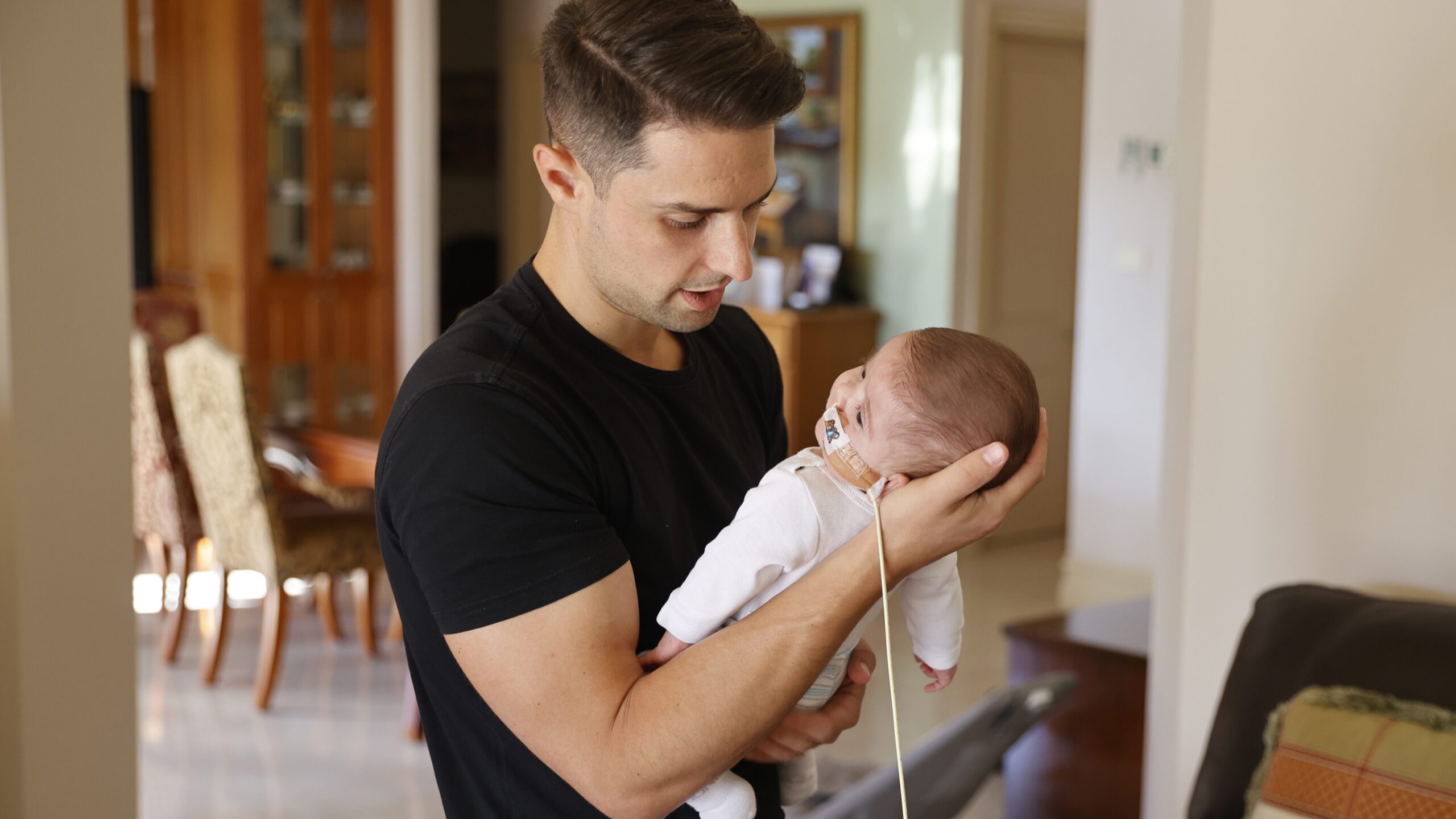
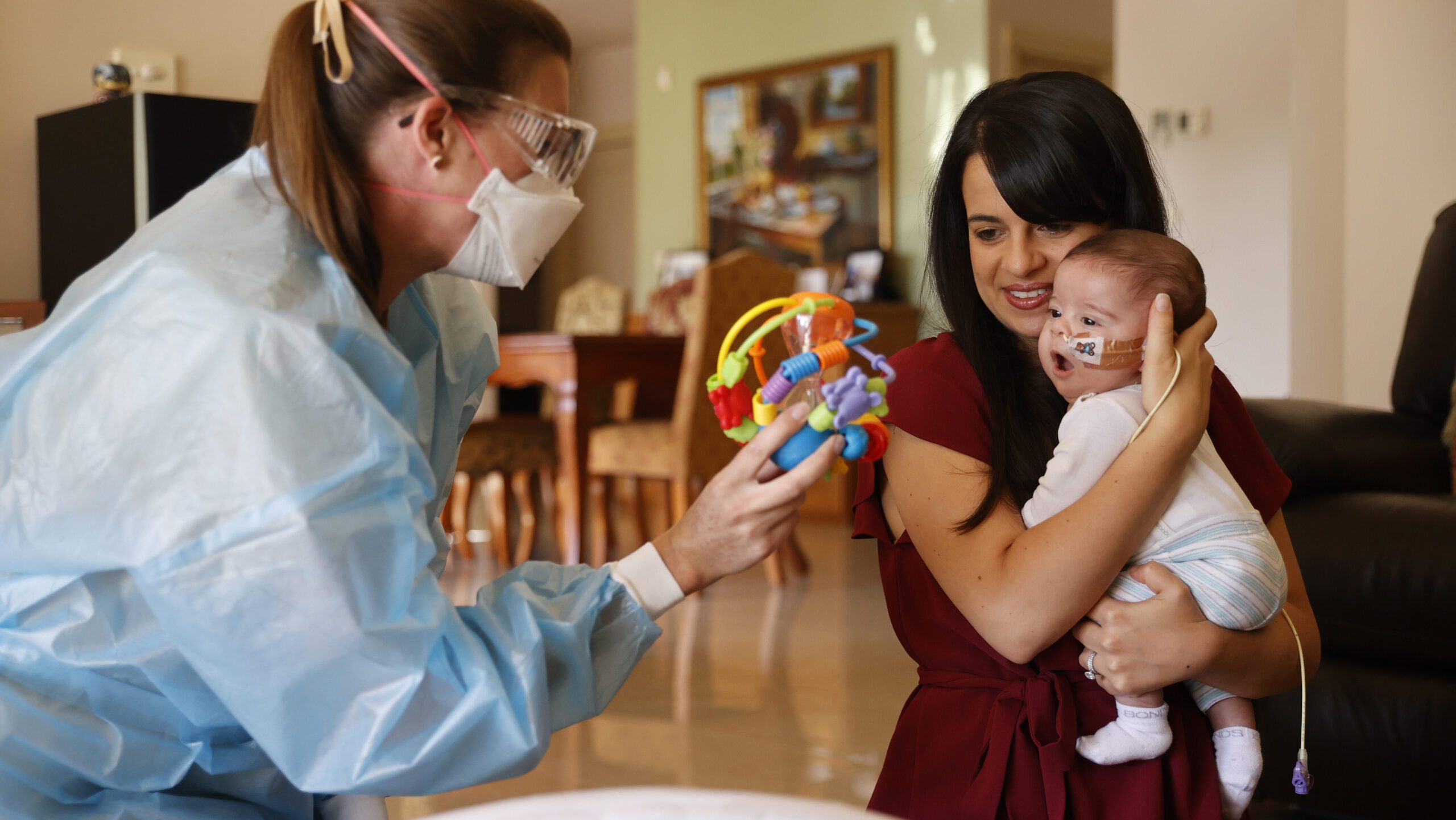
Meet Luca
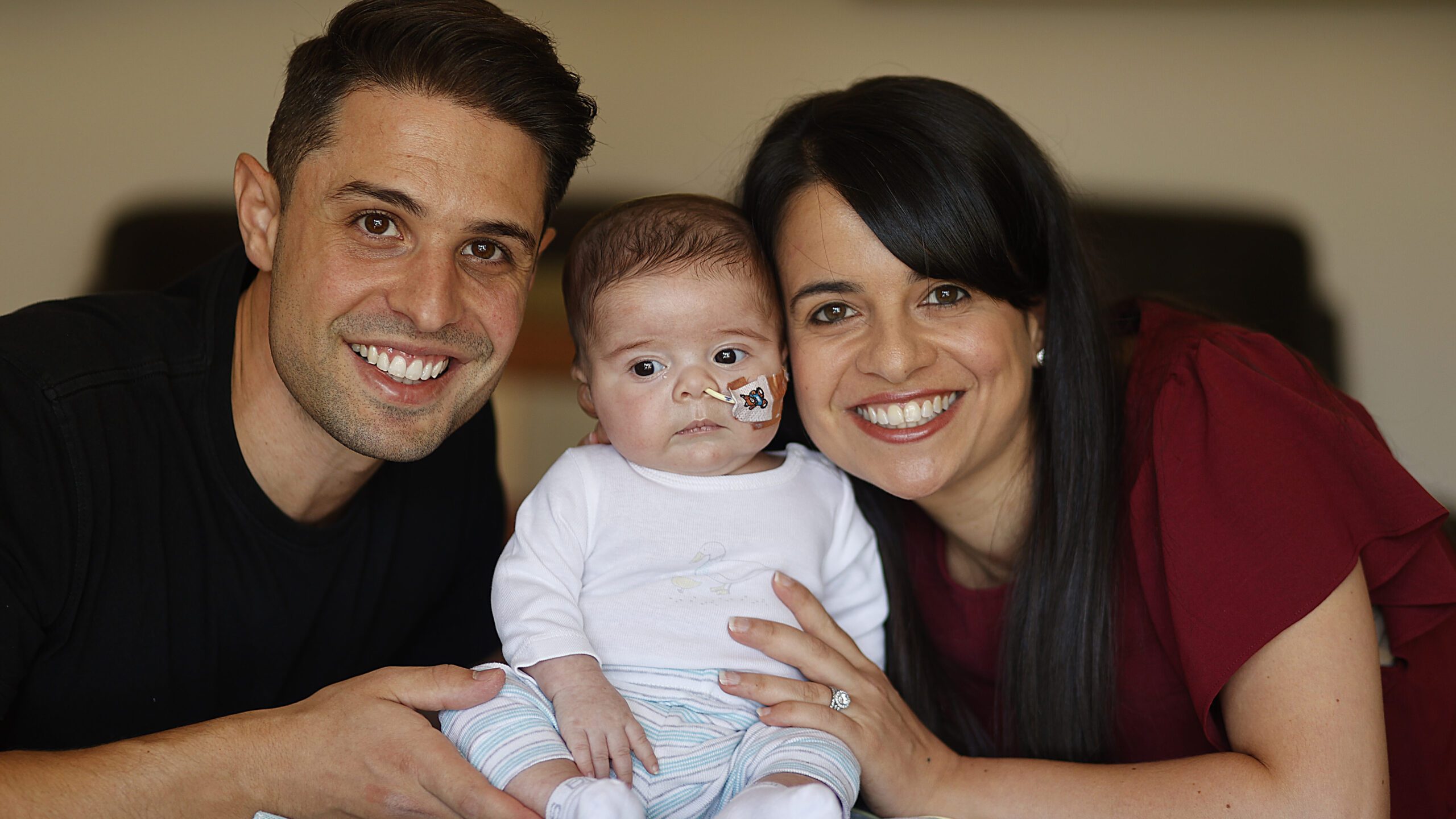
Each hurdle baby Luca Polidano faced seemed insurmountable.
Over six weeks – from 31 weeks’ gestation when the first abnormality was detected, through to his second week in the outside world when he underwent lifesaving surgery – Nadia and Joe Polidano rode a rollercoaster of doomsday scenarios for their son.
They were initially told to prepare for losing their baby before birth, after scans suggested he had the rare abdominal birth defect, congenital diaphragmatic hernia.
Despite being hospitalised for a dangerously high build-up of amniotic fluid in her uterus, it was at this time the couple started wishing Nadia could stay pregnant forever. As long as he stayed inside her, they still had their little boy.
Next, when further scans suggested a more complex problem, they braced for taking home a seriously ill child who faced surgery and a devastating syndrome.
But Luca remained a boy who was put together with puzzle pieces collected from different boxes. There was something unusual about his fragility and the position of his major organs that doctors couldn’t quite work out before birth, given the limitations of scans in utero.
And yet even when Luca’s true diagnosis was revealed to Royal Children’s Hospital surgeons when they could first peek into the newborn’s chest, there would be no guarantees for the Oak Park couple that their premature son would make it through the operation needed to save his life.
“Our hearts stopped that day we got that first bad news,” said Nadia.
“Now four months later, with our boy home, we wish we could have known it would all work out.
“Everyone kept telling us if he makes it to The Royal Children’s, he’s probably going to make it.
“We’re so grateful to the hospital for making this wish come true.”
Luca was in a bad way when he was born, with his heart working overtime.
Luca and dad Joseph
After being transferred to the RCH straight after birth, Luca was wheeled into theatre on day six of life for a two-part investigative surgery with renowned neonatal surgeon Joe Crameri.
His first task was to find out what was happening in Luca’s abdomen to cause the excessive build-up of fluid. Secondly, he planned to repair the hole in the diaphragm, so all the organs could sit back in their proper places and begin developing properly. But as soon as Mr Crameri opened Luca up, it all made sense.
Yes, there was a hole in the diaphragm, but it wasn’t a case of not being formed properly. A big tumour, a teratoma, had burrowed through the back of the diaphragm and was taking up two-thirds of the abdomen and chest cavity.
This mass had disturbed all the developing organs around it – the heart, lungs and major blood vessels in the liver.
Mr Crameri had never seen this type of tumour of this size and in this unusual spot.
Luca was even too unstable for even a biopsy to be taken.
The couple initially felt relieved at the news. This meant there was no scary syndrome to face. There was a surgical fix that could free their son to get on with life.
Luca Polidano and mum Nadia.
But further scans revealed that because the tumour rested behind major organs and was attached to important blood vessels, it was going to be very risky to remove.
“Because of his young age and prematurity, again we were faced with this situation where they weren’t very confident he could pull through,” said Nadia.
“The tumour was still growing, and it could still be malignant. This was the lowest it got for us.“
The ideal situation was to wait until Luca was four weeks old for the surgery. But at 2½ weeks, it was getting harder and harder to support his stressed lungs and heart.
“We knew we had to take the risk and get this out now, otherwise we may be in a position where he wasn’t strong enough at all to tolerate the operation,” said Mr Crameri.
Luca was then placed on a special type of ventilation reserved for the most fragile bubs, which bought him an extra 24 hours. Doctors used the day to plan the surgery for the next day, December 20, while the couple did all their special rituals with their boy one last time.
Joe read Luca books. Nadia sang to him. They gave him his Christmas present; a soft toy called Luca the Lion, named after the daily mantra they would whisper to him about his strength and bravery.
They said goodbye to their son.
“It was so scary to hand him over for surgery, but we were so reassured we were in the best hands,” said Joe.
Nadia remembers: “When we were in the lift we said to him, ‘We’ll see you in recovery’.
“But both of us strongly felt we were saying goodbye.”
Over eight hours, Mr Crameri and paediatric surgeon Michael Nightingale moved all the major organs out of the way to meticulously resect the tumour.
The operating theatre erupted into applause when finally the 200g benign mass was removed all in one lump.
Luca with parents Joseph and Nadia
“As much as it was the worst day of our life, we say it was one of the best days as well,” said Nadia.
“There were so many obstacles and hurdles that had to be overcome, but he made it through. Our boy was tumour-free.”
After almost 10 weeks at the RCH, the Polidanos are soaking up the simple joys of having their precious boy home.
“We’ve always been aunties and uncles. So to be mum and dad, the ones he wants to see and is so comforted by, it just melts your heart,” she said.
“It may be their job at the hospital, but they change lives and they do that day after day.
“In saving Luca’s life they’ve saved our lives, because we were just going to be broken without him.”
Originally published in the Herald Sun on Friday, 15 April
Words: Brigid O’Connell
Images: Alex Coppel and supplied