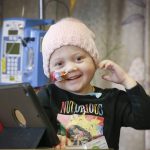
Hailey Wright has five different headbands but, if you ask her, she could do with a few more.
And maybe a bandana, to match her nurse bear.
The bright-eyed six-year-old has been at The Royal Children’s Hospital for more than three months, battling a rare type of leukaemia caused by a condition known as myelodysplastic syndrome.
Hailey’s condition means she has a build-up of defective or “rubbish” cells, which fill her bone marrow and cause cancer.
Hailey and her mum Leah
Hailey’s parents, Leah Wright and Steve Dobe, were nursing a five-week-old baby at the time they got the diagnosis on New Year’s Eve.
“We were told she had probably about nine to 12 months here (in hospital), and that depended on how her treatment went,” Ms Wright said.
The young family had to move 300km from Wodonga to Melbourne, while Hailey’s twin brother, Will, has moved in with family near Bendigo.
“She’ll wake up from her general anaesthetic and she’ll be like, ‘Where’s Will?'” Ms Wright said.
Hailey will now spend weeks in a special isolation unit to prepare her for a bone-marrow transplant.
Doctors said that, without the transplant, her condition would be “incurable”.
“We just tell her it’s the next stop in getting better,” Ms Wright said. “She’s very tough. She’s been a fighter since she was born.”
Originally published in the Herald Sun, April 5, 2020
Everything Good Friday Appeal, straight to your inbox. Get more information about your impact and how to get involved.
Meet Kalani
Strapped to a miniature snowboard, seven-month-old Kalani Chandler is all smiles.
As the tiny tot is helped upright, she laughs and wiggles, despite the contraption keeping her little legs and feet apart. She gazes up at the trees outside the Royal Children’s Hospital with glee, mesmerised by the birds singing.
The bubbly bub will have to wear the “Boots and Bar” until she is four.
Kalani was born with amniotic band syndrome, a rare condition that affects the limbs of a baby in utero.
As a result, she has webbed toes and was born without a left pointer finger and is missing some of her fingernails. She also suffers from left club foot, a condition which has left her foot and leg unaligned and in need of correction.
“It’s like amniotic fluids in the womb that cause limbs to come off,” mum Kimberly Donnelly said.
“She’s like one in 12,000 or 15,000 (diagnosed). She nearly lost both her big toes. And that’s when the club foot came in because that’s associated with ABS.”
Doctors first placed the infant’s lower body in casts for six weeks to keep her tiny joints in place, before moving her into the skateboard-like device, which she has worn for up to 23 hours a day. “Her foot is really good at the moment,” Ms Chandler said.
Kalani has also undergone keyhole surgery to “release” the tendons in her leg, and will soon have the webbing between her toes cut.
“She’s been through a lot,” Ms Chandler said. “But she’s really strong.”
But the future is bright for this bright baby, who her mum hopes will one day be able to walk and run like any other child.
Originally published in the Herald Sun, March 30, 2020
Words: Alanah Frost
Image: Alex Coppel
Everything Good Friday Appeal, straight to your inbox. Get more information about your impact and how to get involved.
Meet Henry
Stitches frame his face, from the top of his head to his right ear.
But it’s his big round eyes that hold your gaze — something Henry has, until now, never been able to do.
The little fighter, from Sale in East Gippsland, has just made it through the biggest battle of his short life — an operation known as a hemispherotomy to “disconnect” half of his brain.
The right hemisphere, the creative half, has been causing Henry’s tiny body to freeze in focal seizures since he was days old — sometimes up to 30 times a day. The seizures meant Henry wasn’t able to develop as expected, focus his eyes or learn words.
“He had seizures daily — day and night,” Ms Ryswyk recalls. “He had his first seizure at home on day three.
“We’d had our first night at home and the next morning it started.
“We went to hospital, Sale hospital. And then we went down to Monash Hospital. They drove him down (in an ambulance) and we had to follow. That was a bit scary.”
In Melbourne, doctors diagnosed Henry with a brain malformation disorder called hemimegalencephaly.
Ms Ryswyk, husband Kase and their eldest son, Leo, 3, were devastated.
Back home, Ms Ryswyk moved into the spare bedroom with Henry to monitor his seizures during the night.
At the end of last year, the toddler managed four months without a seizure after his family independently trialled CBD — or cannabis — oil.
“He started to develop and started to show his little character coming through,” Ms Ryswyk said.
But the break was short lived and the shakes reappeared on Henry’s first birthday.
After months of medications, hospital visits, emergency departments and home care, doctors referred Henry to the Royal Children’s Hospital, where it was decided it was time to operate.
Henry in hospital
A hemispherotomy is where neurosurgeons “disconnect” one half of the brain but leave it inside the head.
It’s a highly delicate operation and fewer than six are performed at the RCH a year.
A team of surgeons, nurses and anaesthetists wheeled Henry in for the marathon operation on February 29.
“They got a whole team together just to do it on a Saturday,” Ms Ryswyk said. “We sent him off at 11am … they started operating at 2pm, and they operated until 11pm.”
After a nine-hour wait, head neurosurgeon Dr Alison Wray delivered the news: everything had gone to plan.
“Since then he’s just made progress,” Ms Ryswyk said.
“Now he has eye contact, which he’s never ever had before. He follows objects, toys. He follows us. He eats by himself, he takes a spoon to his mouth. He could never do those things before.”
Henry’s neurologist, who consulted with the family before surgery, said the operation had been life changing.
“The operation is a cure,” Dr Simon Harvey said. “What our surgeons do is disconnect (one hemisphere) — so they leave it there but cut all the connections.
“Not only did we stop his seizures we stopped any electrical activity going into the other side of his brain.
“He’s cured. He won’t be going in and out of hospital like he was before.”
The operation left Henry paralysed on his left side, meaning he will have to undergo rehabilitation to regain any control and learn how to use his left side of body. But physiotherapist Tanya Harle said by having the operation at such a young age, he has been given the “best opportunity”.
“It is quite a significant road for a kid like Henry,” she said,
“But he’s made significant gains since he’s been with us.”
Ms Ryswyk said the youngster now does it all with a smile. “He’s doing all the right things,” she said.
Originally published in the Herald Sun, March 28, 2020
Words: Alanah Frost
Image: Alex Coppel Read the original story on the Herald Sun website.
Everything Good Friday Appeal, straight to your inbox. Get more information about your impact and how to get involved.
Meet Mackenzie
The 2½-year-old was diagnosed with acute lymphoblastic leukaemia seven months ago, after her parents noticed bruises appearing on her legs.
“She’d been unwell with viruses for a few months beforehand and I just put it down to being at daycare,” Ms Butterworth said.
“(Dad) Brenton googled the symptoms, to the point where he was crying, and they matched leukaemia so I took her to the hospital.”
The diagnosis turned the Ballarat family’s life upside down.
“The first month she spent in hospital, at the Royal Children’s Hospital, and my husband would come and visit on weekends with the kids,” Ms Butterworth said.
“Another phase was eight weeks in Melbourne. And the one she has just finished (the third phase) was probably the worst ever — she spent pretty much all of December in hospital having oral chemotherapy.”
Tomorrow Mackenzie will start another round of treatment, which will continue for the next two years. But running through the grass outside the hospital, dressed in a bright pink tutu and a bunny-ear headband, Mackenzie’s fighting spirit shines through.
“She’s been amazing,” Ms Butterworth said.
“She’s been through a lot. But most of the time she’s happy and playful. It’s really incredible to watch a child that’s being put through absolute hell who still manages to smile.”
The Good Friday Appeal, which runs in the lead-up to Easter, will raise much-needed funds for kids like Mackenzie. The Herald Sun/Transurban Run for the Kids, which raises funds for the appeal, will not go ahead because of public health concerns over coronavirus.
Originally published in the Herald Sun, January 15, 2020
Words: Alanah Frost
Image: Alex Coppel
Everything Good Friday Appeal, straight to your inbox. Get more information about your impact and how to get involved.
Meet Quinnie
Six-year-old Quinnie demands the attention of the room at every chance she gets. It’s hard to imagine that this bubbly and vivacious little girl almost had her life stop before it could even really begin.
In 2014, at 34 weeks pregnant, Quinnie’s mum, Clare, was told the devastating news that one of her twins, Harriet, had passed away in the womb after the umbilical cord had wrapped around her in three places, resulting in the oxygen supply to her surviving sister being cut off.
Quinnie was born by emergency caesarean not breathing and in kidney failure.
She was swollen with fluid, connected to a ventilator and laying in a cot lifeless while doctors figured out what the next steps would be.
The team at The Royal Children’s Hospital (RCH) decided dialysis was Quinnie’s only option, followed by a kidney transplant once she was big enough and strong enough to go through the surgery.
Quinnie spent the first three and half months of her life at the RCH connected to dialysis under constant medical supervision to monitor her condition. When she was discharged, life at home for the next two years consisted of daily dialysis, bound to a machine for hours on end, vomiting up to 30 times a day, while waiting for a kidney to become available.
That came at 33-months-old, when her grandfather, Rod, made the selfless decision to donate his kidney to the Paired Kidney Exchange program.
A unique platform pioneered in Australia that allows families who aren’t a match to their own family member to enter into a pool of kidneys until a match is found.
Quinnie with her dad Jarrod
Organ rejection, high infection-risk and low immune systems are the reality following a transplant, which is why Quinnie takes anti-rejection medication daily. She has ongoing medical complications after a number of years being fed through a tube (peg fed) and will continue to be seen by RCH specialists until she transitions into adult care.
The impact the RCH has had on Quinnie means she now plays with her doll, Cookie, performing kidney transplants at home and is even talking about becoming doctor at the RCH when she grows up.
Thanks to your generous support, we can make a difference to children like Quinnie and help The Royal Children’s Hospital remain a world leader in paediatric care.
Everything Good Friday Appeal, straight to your inbox. Get more information about your impact and how to get involved.
Meet Kira
The New Year means new life for baby Kira Gascoigne.
The 11-month-old has survived one of the most complex heart surgeries performed in Australia, to fix a quintuple of life-threatening cardiac and abdominal abnormalities – including being born with her heart outside her chest.
Now, Kira is preparing to celebrate her first birthday – a milestone her parents Chris and Kim Gascoigne were never confident she would make – in the same year that her saviour, the Royal Children’s Hospital, celebrates its own major milestone – 150 years.
“We are incredibly relieved that Kira finally got to come home with us. We are so grateful for all of the staff at the RCH for helping her get to this point,” Mr Gascoigne said.
Kira with her parents Kim and Chris
Kira had fought against the odds at every step of the way to arrive into the world.
Her conception was the result of multiple IVF rounds, and she was the one embryo to survive genetic testing.
But Kim and Chris’s joy was short-lived.
The 22-week scan revealed a rare and life-threatening problem with the plumbing of their baby’s heart; a defect potentially associated with multiple genetic issues, and requiring a series of open heart surgeries across an entire childhood.
The couple could feel their long-awaited baby moving at this point. They had a shortlist of names by this stage. They had already started daydreaming about the books they would read her, and the family adventures they would have.
The new diagnosis at the next scan was more reassuring; still a heart defect, but one that would require fewer surgeries and give them the first six precious months at home before surgeries started.
When Kira was born via caesarean section on February 22 she was breathing on her own, but she worked overtime to take each breath.
New parents think to count the number of fingers and toes upon first inspection of their newborn. They would never think to check all the organs were inside the body.
Chris followed his daughter to the resuscitation station on the side of the room. He could see her little heart flapping under a piece of skin. He knew it didn’t look right. A buzzer was pressed and the delivery room filled with a dozen extra doctors and nurses.
Kira was sedated and whisked away, ready to be transported down the road to the Royal Children’s Hospital.
“We didn’t even know if she would survive the first night,” Mrs Gascoigne said.
“It happened so quickly, I didn’t feel like I had a baby.
“The paediatrician said it was life threatening, but they didn’t know what was going on and they’d take it one step at a time.”
Kira was diagnosed with pentalogy of Cantrell, a cluster of abnormalities which includes four different heart defects that collectively stop oxygen-rich blood being pumped around the body. She was missing a breast bone, and her heart sat outside her chest, covered by a thin membrane.
Chris would relay the updates to his wife, still a maternity patient herself at another hospital and she would Google the finding, alone in her hospital bed, with heart-wrenching results. An internet search of “ectopic heart” will tell you 95 per cent of babies won’t survive.
But unbeknown to them, Kira was being cared for in a hospital that had performed the highest number of ectopic cardiac repairs in the world – all successfully.
Kira spent her first three months in the world living on the RCH’s Butterfly ward, where the priority was to keep her stable.
During this time Mrs Gascoigne would express breast milk every three hours through the night – a constant reminder of her baby who was not with her – and the couple returned to their daughter’s bedside by 7am.
They read Kira books and cuddled her the whole day, until they left at 8pm – a routine they repeated every day.
It meant a different series of “firsts” to what they had imagined. The first cuddle was with an intubated newborn; a plastic tube running down into her airways to help her breathe. The first walk was a stroll in the pram around the cardiac ward, attached to an oxygen tank and monitor.
Her first bath was at nine weeks of age.
“I felt like I couldn’t bond with her for such a long time, maybe even until we got home,” she said.
“I had all these plans for what this time with our baby would be, and now I was facing planning a funeral.
“There was never talk about what was ahead, it was only ever one day at a time.
“They never wanted to say too much because they couldn’t guarantee the outcome.”
When Kira was three-months-old, cardiac surgeon Yves d’Udekem explained to Chris and Kim his life saving plan.
With paediatric surgeon Joe Crameri, they had successfully put the hearts of children back into their chests four times in the past six years.
“When people see the heart outside the chest, they rush in to put it back to make it look normal,” Prof d’Udekem said.
“What we’ve learnt is if we don’t rush in and we give time to the baby, you have more space in the chest and abdomen.
“If you don’t try to have a perfect result where you have the heart completely in the chest, you may achieve better results.”
They planned to go in when Kira was four months old; firstly fixing the plumbing problems and hole in the heart, and then placing the walnut-sized heart back inside the chest.
But within a week, and with Kira having episodes where she would turn blue, the operation was brought forward.
Again, the odds were against her. Once in the operating room, Prof d’Udekem and Mr Crameri found that her heart was not only outside the chest, it was rotated.
This blocked all access to the abnormal structures underneath they needed to fix and doubled the length of the surgery.
The complexity of the operation and the toll it took on her tiny heart, saw Kira placed on ECMO. The heart-lung bypass machine, reserved for the sickest patients in the hospital.
After three days, they started the staged procedure of closing her open chest, tightening little by little, over 10 days.
“The heart needs time to adapt to work in its new position,” Prof d’Udekem said.
“We take your heart and we sit on it, basically, plus the lungs as well.
“I was confident it would work, but there was a week of doubt after I closed the chest.
“Thankfully she turned the corner and started improving from there.”
And now, as she prepares to ring in the New Year, Kira continues to meet the next milestones.
She is sitting up by herself, has started finding her voice and waving. The nasal gastric tube she has relied on for all nutrition for the past 10 months has just been removed, allowing her to start eating and drinking for the first time.
“I always wanted a happy, healthy baby that I could have as my little best friend. Someone I could go shopping with and travel the world with,” she said.
“Now I just want her to have health and happiness and to not feel disadvantaged in life because of what’s happened to her.”
Originally published in the Herald Sun, January 6, 2020
Words: Brigid O’Connell
Images: Jason Edwards and supplied
Everything Good Friday Appeal, straight to your inbox. Get more information about your impact and how to get involved.
Meet Ollie
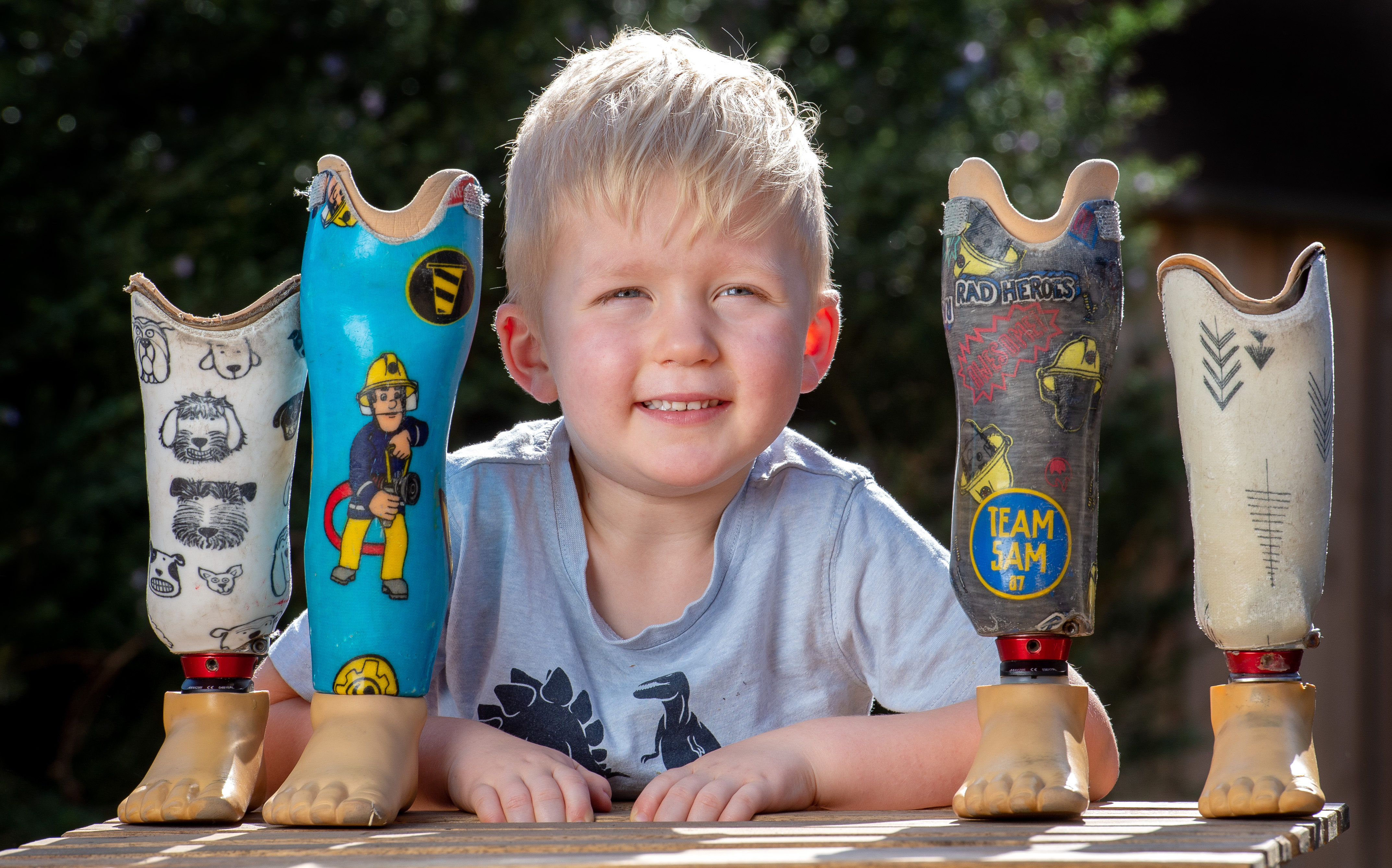
If you saw little Ollie running around, you would think he was like any other four year old. He’s charismatic, full of life and will go exploring at any opportunity he gets. But Ollie faces challenges every day after having the lower part of his leg amputated in 2016.
Ollie was diagnosed with Fibular Hemimelia during gestation. Parents Meg and Andrew were told about the condition at Meg’s 12 week ultrasound and were faced with one of the hardest decisions they would ever have to make – if they should continue with the pregnancy.
They contacted specialists, did hours of research, spoke to other parents of amputees and ultimately decided that there would be no greater gift in life than welcoming their first child and holding him in their arms.
The rare condition occurs once in every forty thousand births and Ollie was born with his right leg missing its fibular, an ankle structure that wasn’t fully formed and only two toes.
Despite facing adversity daily, Ollie’s determination shone through and has never let a challenge stop him. He began crawling, pulling himself up and walking on his leg – just like any toddler would.
The family began attending appointments at The Royal Children’s Hospital to see the Limb Difference Clinic and a team of five specialists – a prosthetist, orthopaedic surgeon, physiotherapist, occupational therapist and social worker. They assessed when would be an appropriate time for an amputation. The decision was made when Meg became pregnant with her second child and Ollie was booked in at 18 months old.
At only six weeks post-surgery, Ollie was fitted with his first prosthetic leg – and he hasn’t looked back since.
Today, Ollie loves riding his balance bike, watching Paw Patrol and playing with his little brother Ethan. But most of all Ollie loves his independence. Putting his leg on is now his responsibility and he is constantly finding creative ways to complete the task efficiently.
At each appointment Ollie sees his prosthetist and the Limb Difference Team who support him to hit targets for his age group and assess any goals he has as he continues to grow.
His favourite part of receiving a new leg is picking the design – changing from a fireman Sam leg to Paw Patrol next.
Meg and Andrew hope that Ollie will do whatever he wants to do in life, that his prosthetic leg becomes the least interesting part of him and it never stops him from chasing his dreams. At this stage that choice is between being a fireman or Super Ollie the superhero.
Thanks to your generous support, we can make a difference to children like Ollie and help The Royal Children’s Hospital continue to be a world leader in paediatric care.
Everything Good Friday Appeal, straight to your inbox. Get more information about your impact and how to get involved.
Amazing Arielle
When you’re around four-year-old Arielle, you can’t help but smile – she’s bright, bubbly, and full of energy!
It’s hard to imagine her parents were once preparing to say goodbye to her forever.
In 2013, at 38 weeks pregnant, after a normal pregnancy, Arielle’s mum, Genevieve, was told there was something wrong with her baby girl’s heart. Arielle was delivered two weeks later by caesarean. Doctors were puzzled and unsure what was wrong with her so she was immediately transferred 30kms away to the Royal Children’s Hospital, separating mother and daughter for the next four days.
“By day two, I just wanted to leap out and be with her. I wanted to hold her but I couldn’t, she was hooked up to so many machines and tubes. Despite that, my mother’s instinct told me she was going to be ok. Whenever she heard my voice, she would look up to me,” Genevieve said.
There were multiple tests that spanned more than a week. It was finally revealed that the left side of Arielle’s heart wasn’t doing anything and Genevieve, and her husband, Carl, were told to prepare for the worst. At that time, a heart transplant wasn’t on the table nor had it ever been performed on a child that young.
Arielle was baptised in preparation for her family to say goodbye.
But then things turned.
The following day, she had a slight improvement so the Cardiology team decided to hook her up to a Berlin Heart, a device that helps the right ventricle of the heart to pump blood to the lungs and the left ventricle to pump blood to the body. Again, a child that young, just two weeks old, had never been fitted with such device.
It was a decision by RCH specialists, and a mother’s perseverance, that paid off. At just five-months-old Arielle received a heart transplant, making her the youngest ever recipient.
“I was so excited, I couldn’t stop crying. But you do think of the other children still waiting, and of course, the donor family. I pray for them every day, and if I could just say one thing it would be thank you, thank you for giving my daughter another chance at life. We are just so fortunate she is still here with us,”
Genevieve said
Arielle was discharged from hospital three months later, and decade-plus relationship with the RCH began. Organ rejection, high infection-risk and low immune systems are the reality following transplant, which is why continued, close follow-up appointments at the RCH every three months is required.
“It’s been up and down because she is prone to infection, especially in winter months. You have to be careful in public, but she’s slowly building up her immune system. We visit the RCH every three months for check-ups but if she’s unwell we’re straight on the phone to our RCH team to get advice,” Genevieve said.
Arielle will remain under the care of the RCH until she transitions into adult care.
“Thank you so much to the RCH team for giving us back our girl. She’s such a giving little girl and we cherish her every day. Had she been born in my home country, Seychelles, she never would have survived. With the amazing technology and research, I can’t fault it [The RCH]…”
Genevieve said
She’s so full of life, she doesn’t stop talking, and even when she’s unwell she’ll still get up and move around. She’s my little hero, I look at her every day and wonder how she does it. She’s inspiring,” Genevieve added.
Everything Good Friday Appeal, straight to your inbox. Get more information about your impact and how to get involved.
Awake during brain surgery
Two very brave patients – Charlie and Zac did just that, staying awake and chatting through surgeries with Wirginia Maixner and neurologist Simon Harvey.
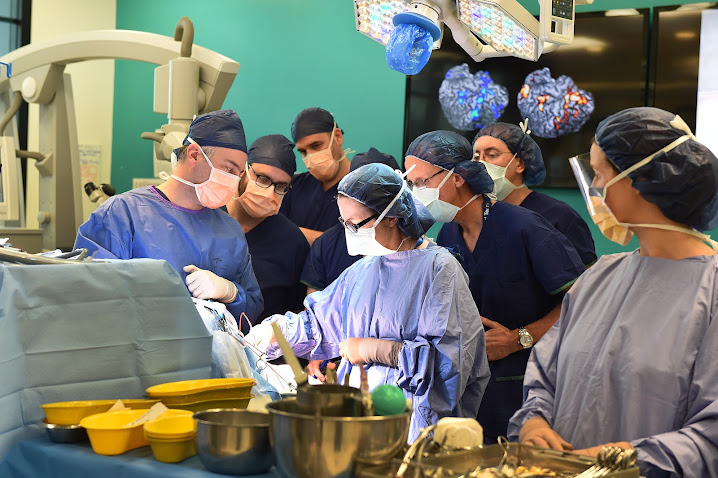
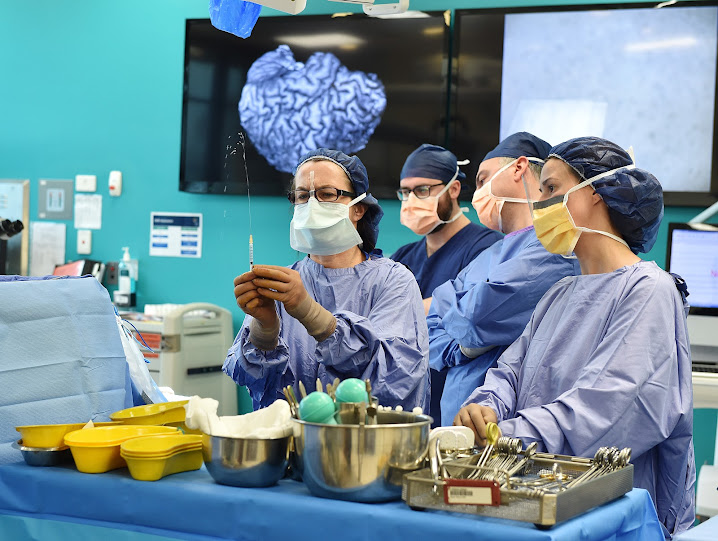
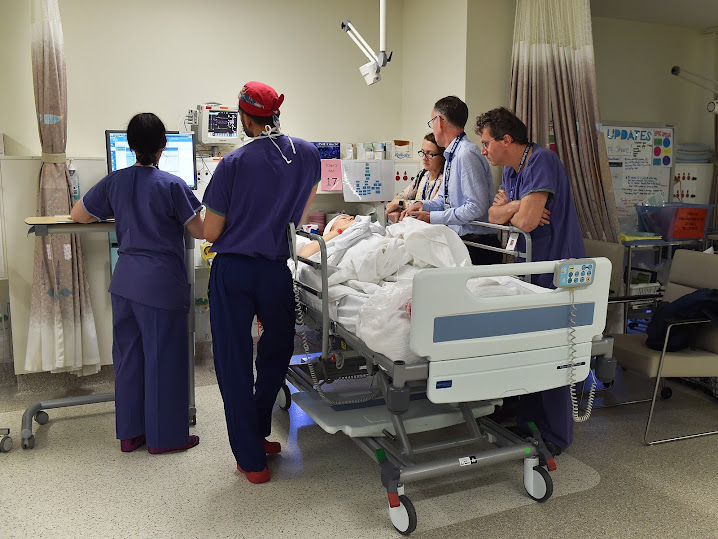
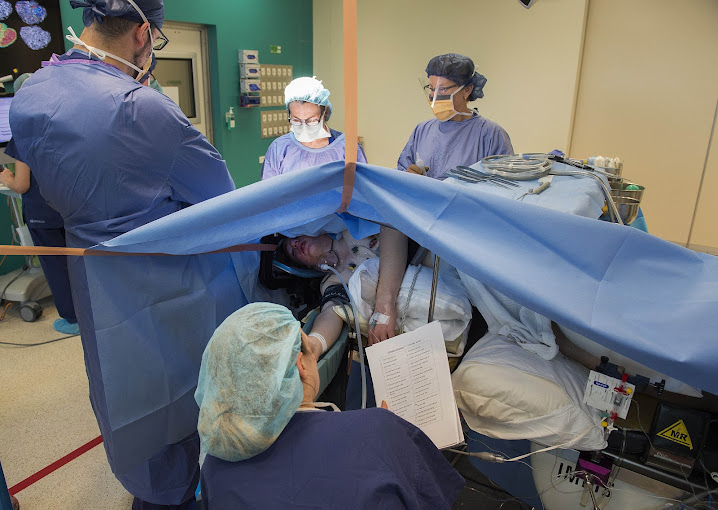
Neurosurgeon Wirginia Maixner (centre) is watched by her team while operating on Charlie.
You don’t get braver than Zac Bos and Charlie Harms. They are the youngest Australians to stay awake during their own brain surgeries so they could guide specialists through the complex networks inside their heads.
Charlie, 14, even takes one of the world’s leading neurosurgeons to task about who’s the best companion in Doctor Who – despite the fact she is cutting deep into his brain at the time.
Three weeks later, Zac, 13, becomes the youngest Australian to face this most delicate of all surgeries. Again the director of neurosurgery, Dr Wirginia Maixner – who successfully operated on conjoined twins Trishna and Krishna in 2009 – has to issue a mid-operation warning when he almost ruins the plot of a cartoon series they both watch.
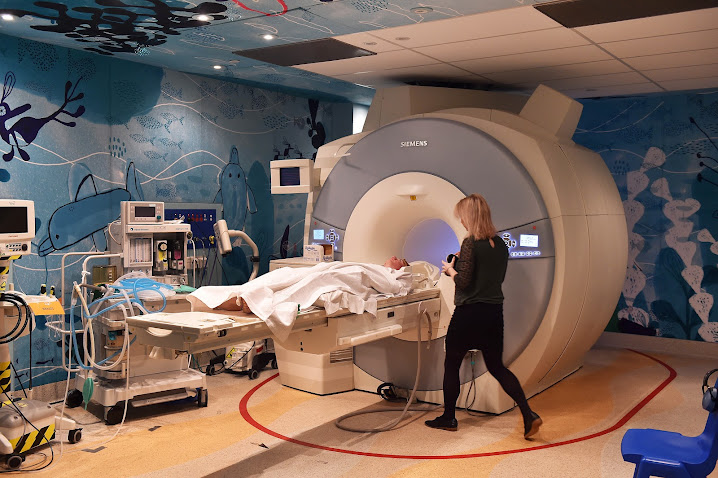
Charlie’s parents, Rod and Maria, and sister Millie wait while he has an MRI.
It’s this breathtaking mix of skills, the ability to be in their patients’ heads both physically and metaphorically at the same time, that means the team from Melbourne’s The Royal Children’s Hospital can go where others dare not.
Charlie and Zac’s cases are remarkably similar. Each has misfiring connections buried in the areas of brain responsible for speech, and attempting to remove them with conventional surgery is too risky for most hospitals.
However, after months of preparation across two states, on July 19 and then August 9, they each come to Melbourne for turns in theatre 14.
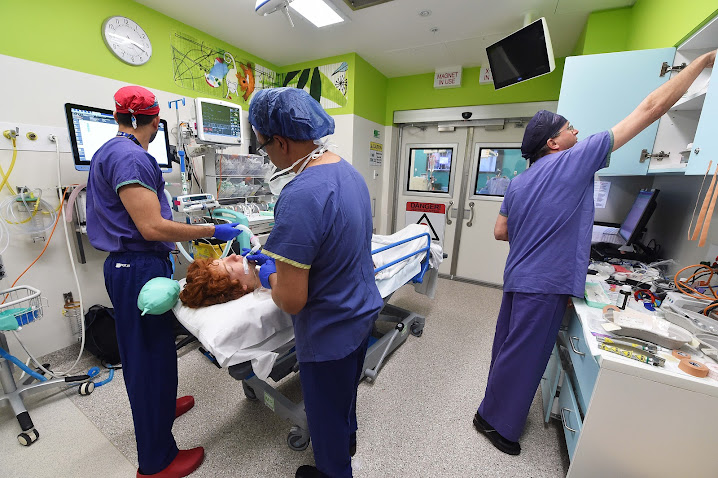
Anaesthetist Professor Andrew Davidson (right) and his team prepare Charlie for the surgery.
Here the neurological team has performed 10 “awake surgeries” over the past decade, though the process has only previously been considered for patients over the age of 16.
With Charlie’s seizures increasing to the point where he violently collapses two or three times a day, he cannot go to school or even cross the street in his hometown of Yeppoon, Queensland, for fear he’ll have a seizure and be run over.
Medication needed to suppress his symptoms had risen to four times the maximum adult dose, which is simply not safe.
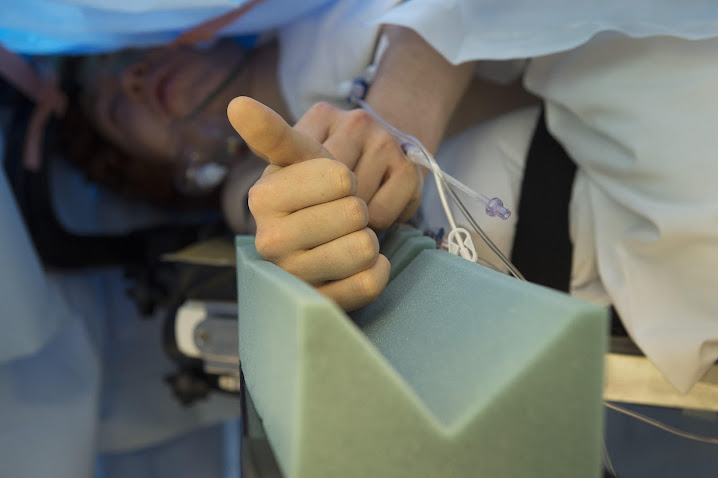
Charlie gives a thumbs up during the surgery.
“When he was seven, they said it came from this part of the brain and they could not operate,” says Charlie’s mum, Maria. “We went back to Brisbane last year [for] more scans… They said they couldn’t do it in Brisbane, but would we consider [awake] surgery? We jumped at the chance because he wasn’t having much of a life as it was.”
“So we came down [to The Royal Children’s Hospital] and they said, ‘We want to help him. If we [can’t], we don’t think there’s anyone else who can.’”
Zac’s first tonic-clonic seizure came in 2013, when cold water shocked him in the shower at his Brisbane home, presenting like a mini stroke that rendered his body frozen. Since then, surprises as simple as a tap on the shoulder or having a drop of sweat drip have caused up to three seizures a day.
Surgeon Wirginia Maxiner (left) and scrub nurse Jessica Allenby during the operation.
For a year leading up to the surgery, neurologists used high-tech scanners to map the boys’ brains and build virtual 3D models.
From this, they can identify the two most important images. One shows parts of the patient’s brain active when they are talking – areas surgeons must not damage. The second shows the areas that are active during a seizure – parts they must remove. When viewed together the problem is obvious – good and bad sections of brain overlap, and the slightest slip could rob Charlie and Zac of their ability to speak or think. This is why the boys must be kept awake to endure what few adults could stomach.
While the images provide a rough map through Charlie and Zac’s brains, it is only by listening to them speak as each section of brain is operated on that surgeons really know whether that area is needed or can be tunnelled through.
After two huge seizures, Charlie is withdrawn and not in great form to try to remain alert as the marathon 12-hour process begins at 7am.
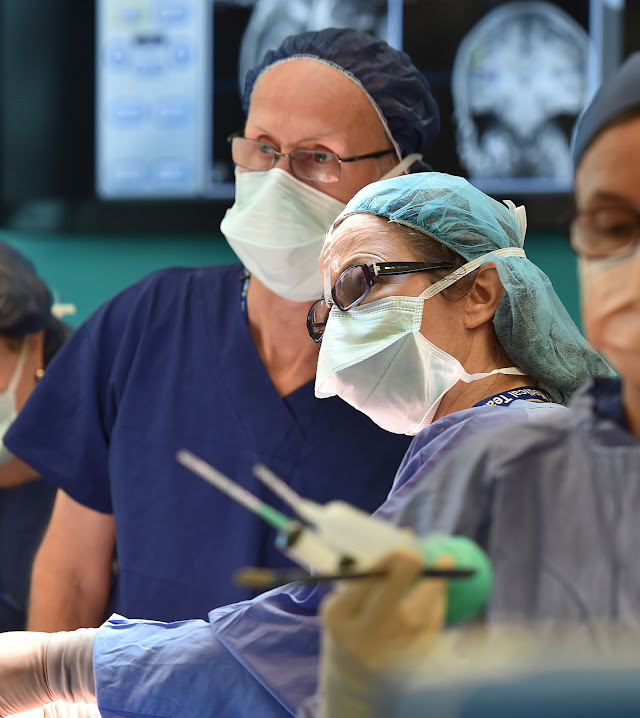
Neurologist Dr Simon Harvey and neurosurgeon Wiriginia Maixner during Charlie’s surgery.
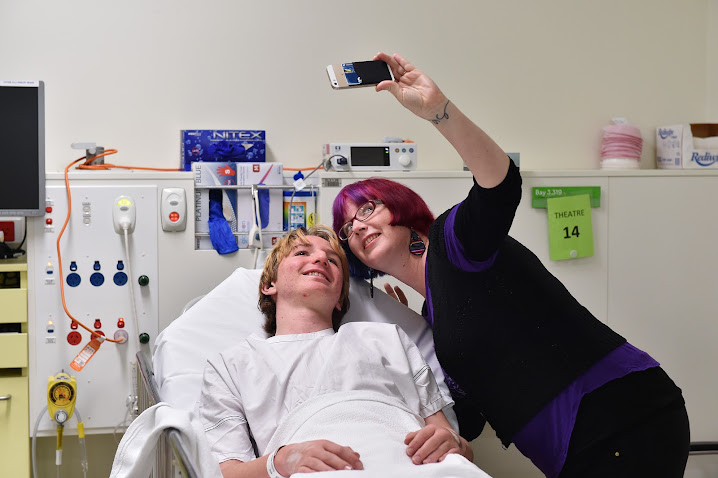
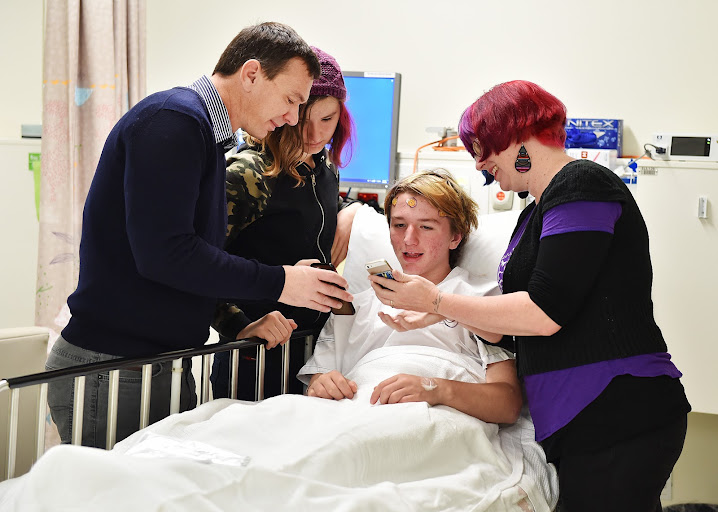
When Zac’s turn comes around, his only concern is hunger and he spends his waiting time taking family selfies.
The absence of pain sensors in the brain make it possible to operate on an awake patient, but superficial relief is needed so a hole can be cut into the boys’ skulls. Light sedation is also used to ease anxiety, however the relief comes from the team’s ability to constantly reassure and connect with the boys.
By 1pm, during both operations, sections of the boys’ skulls are removed and their brains are open to the world. Charlie asks for a message to be taken to his mum: “Tell her I’m all right.” In Zac’s case, it’s time for our photographer to make good on a promise and take a picture of Zac’s brain for his collection. Maixner cleans away any tissue for the snap, declaring, “You have a handsome brain.”
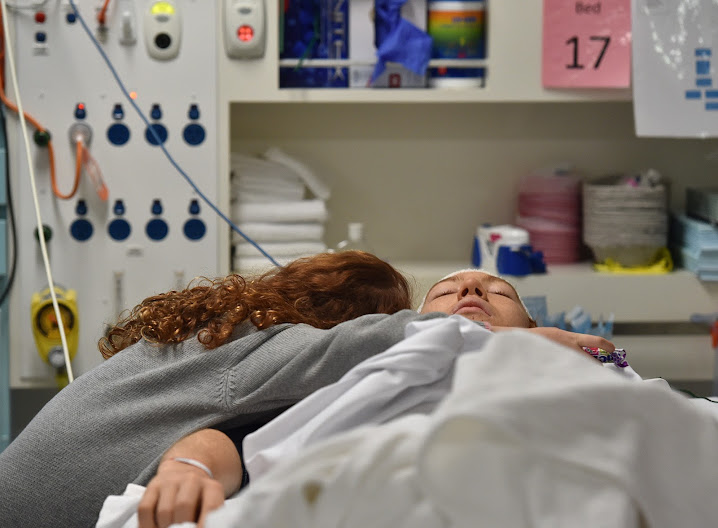
Charlie’s sister Millie, aged seven, hugs him after his surgery.
Neurologist Dr Simon Harvey also takes a photo to compare the virtual MRI scans to reality. Now, with a firmer battle plan, the most vital stage begins.
Speech pathologist Rachel Kerr sits next to the patients and begins a long process of reading simple phrases the boys must try to repeat. “It’s warm, let’s go swimming,” starts Kerr. “It’s warm, let’s go swimming,” says Charlie.
As each line is repeated, a clicking sound can be heard from inside the patient’s head, where the specialists methodically probe each section of the brain with an electrical pulse. They listen intently; if they strike an area where the patient slurs their words, sounds confused, stammers or can’t reply at all, that part is deemed vital and must be kept intact. If the patient continues talking freely, that section is non-vital and can be tunnelled through.
Neurosurgeon, Wirginia Maixner, neurologist Dr Simon Harvey and anaesthetist Professor Andrew Davidson speak to Charlie in recovery after his operation.
Charlie’s exhaustion prolongs the process, but the results reinforce the brain-scan findings: a finger-shaped slither of brain is clear of activity and offers a window to the seizure-causing region, 3cm below. As Charlie nods off to sleep, a microscope is placed above his head and Maixner cuts a slit the width of two fingers.
“You won’t find many neurosurgeons who [can] operate down here and do it comfortably. It’s a scary part of the brain; a difficult part to access,” says Harvey.”
“[They] might go there to take bad tumours out in somebody older, but here we are talking about a 14-year-old boy who has a perfectly good brain if we can stop his seizures.”
Zac and his mum Vicki distract themselves by taking photographs before his brain surgery.
Zac about to have his MRI prior to surgery.
When Zac’s brain is probed, the whole operation is turned on its head. Areas revealed in scans as “devoid of anything” leave him struggling to speak, and the planned path is blocked. Probing another area then causes Zac to have a seizure.
Reviewing the results, two alternative routes emerge: one through an area Maixner calls “the mushroom”, another through “the funny area at the back”.
Zac and his mum Vicki distract themselves by taking photographs before his brain surgery.
As the plan firms, the probes are turned back on to induce a seizure. When it occurs, the plan is certain, and Maixner tunnels through the mushroom-shaped area so it can be removed along the way to the main problem, 3.5cm below.
Zac chats with speech pathologist Rachel Kerr while neurosurgeon Wirginia Maixner continues to operate on his brain.
Zac is surrounded by his dad Michael, mum Vicki and sister Annika before his surgery.
While both boys suffered severe headaches and speech difficulties after their surgeries, a fortnight later the results are stunning: neither has had a seizure and both are considered cured.
A year after Brisbane specialists first got in touch with the neurologists in Melbourne to see if they could help Zac, his mother, Vicki, is overwhelmed at his transformation.
Zac chats with speech pathologist Rachel Kerr while neurosurgeon Wirginia Maixner continues to operate on his brain.
As soon as they said it was a possibility, we jumped at the chance,” she says. “Essentially, they were saying, ‘We can cure your son… we can give him a life.’ I used to worry every little thing would trigger a seizure. Now we can even come up behind him and slap him on the back and it’s fine.”
It’s the simple pleasures Zac is most looking forward to. “I’m desperate to do something which may seem quite minor to others – cannonballing into a pool,” he says. “I don’t know what the future is, I guess I’ll see what’s ahead.”
Zac’s family rush to meet him in Recovery after his surgery.
Originally posted November 2016
Words: Grant McArthur / Herald Sun
Photos: Ellen Smith / Herald Sun