A New Life for Ojas, By Express Special Esky Delivery
For parents at The Royal Children’s Hospital, the wait is often the hardest part. Whether it’s waiting for an appointment, waiting for a diagnosis or waiting to be discharged, the anxiety is never far away. For first-time parents Divya and Nishanth, waiting to hear news about their son’s lifesaving liver transplant was crippling. “I knew […]
For parents at The Royal Children’s Hospital, the wait is often the hardest part.
Whether it’s waiting for an appointment, waiting for a diagnosis or waiting to be discharged, the anxiety is never far away.
For first-time parents Divya and Nishanth, waiting to hear news about their son’s lifesaving liver transplant was crippling.
“I knew he was going to undergo such a big procedure, and not being able to stay next to him and not be able to see what was happening inside (the theatre) was actually really overwhelming,” Divya said.
“That was the worst feeling I’ve ever had in my life.”
As confronting as the surgery was, the couple knew it was the only option.
“If we couldn’t do this transplant in a short period of time, there was a risk of death,” Ojas’s surgeon Marcos Perini said.
Ojas was diagnosed with biliary atresia, a rare condition where the bile duct fails to develop.
At seven weeks old, Ojas was suffering with jaundice so was taken to The Royal Children’s Hospital for treatment.
He underwent an unsuccessful kasai procedure, and after days of more testing, Divya and Nishanth were told he needed the liver transplant.
“It was devastating,” Divya said. “We were not even sure how to cope with it because it was just a lot of information at the same time.”
As the couple sat, lost in worry while their little boy lay on the operating table, Ojas’s new liver was being delivered to the hospital in a blue Esky – first via plane, then via taxi. Kept at 4℃ on ice, the liver was taken to the operating theatre.
Professor Perini said the transplant involved two parts.
“In the first part, we remove the recipient’s liver and in the second part we place the new graft in,” he said. “In order to do this, we need to be very careful … to avoid bleeding or any other complication.”
“When we get the new liver we prepare it on the back table and we place it straight away … into the patient’s abdominal cavity. We connect the veins, arteries and bile duct and then we wait for the liver to start working. Every time we operate on a little kid, it is also a concern because we want to do the best, we don’t want anything to go wrong.”
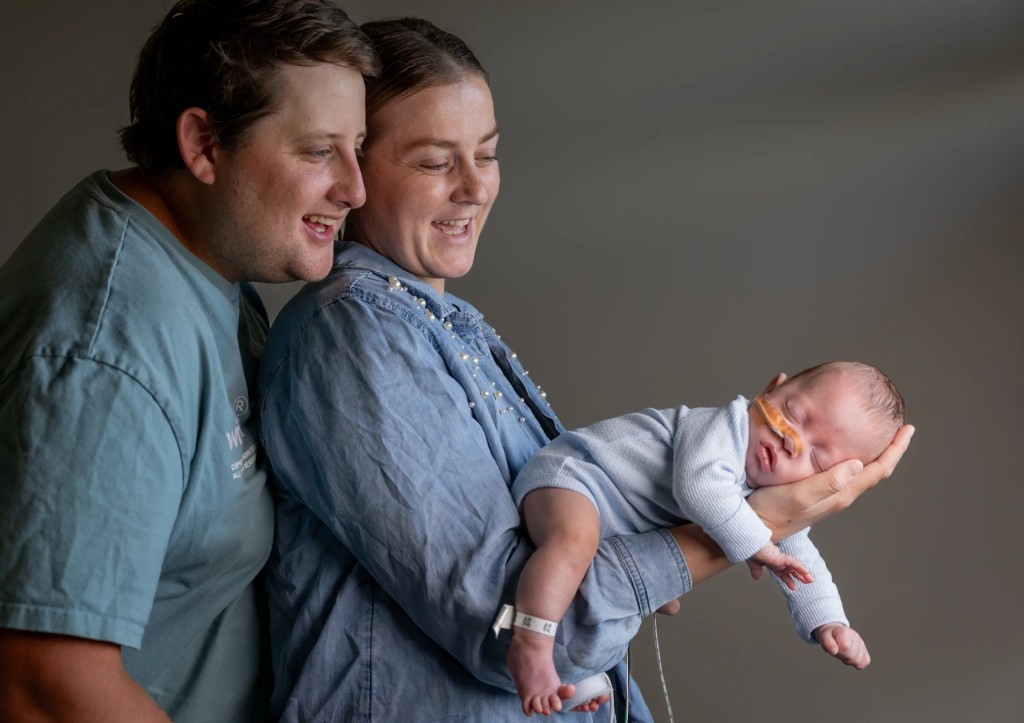
After a long 13 hours, Divya and Nishanth were reunited with their little boy.
“It was such a relief just to look at him,” Divya said.
“It was overwhelming because he was connected to so many tubes in the ICU. There were so many monitors around him. It’s something you can’t even imagine.”
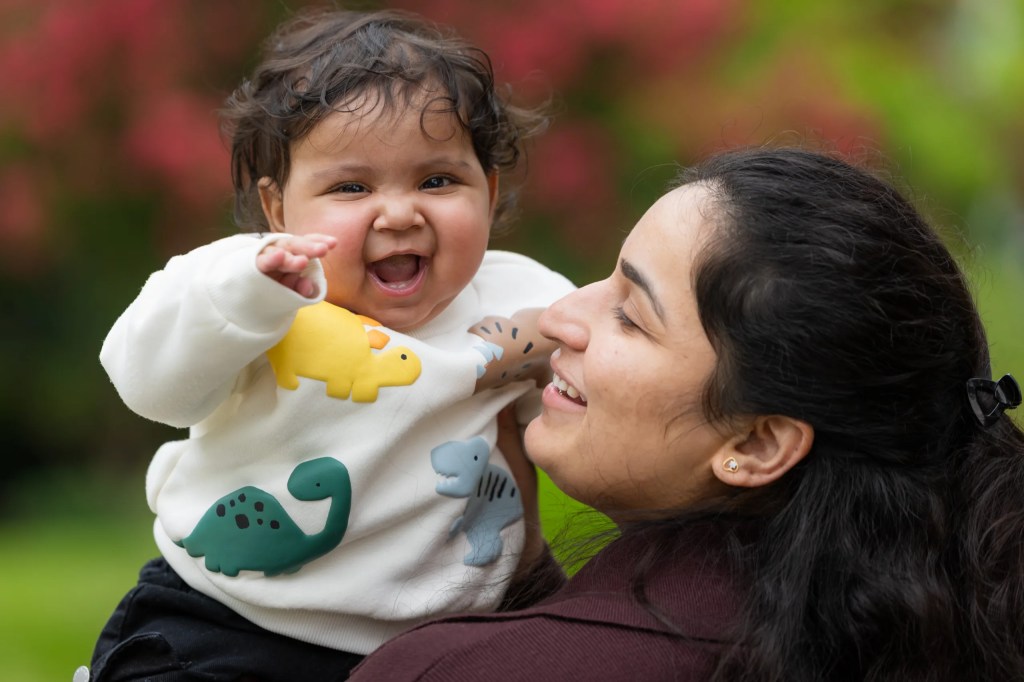
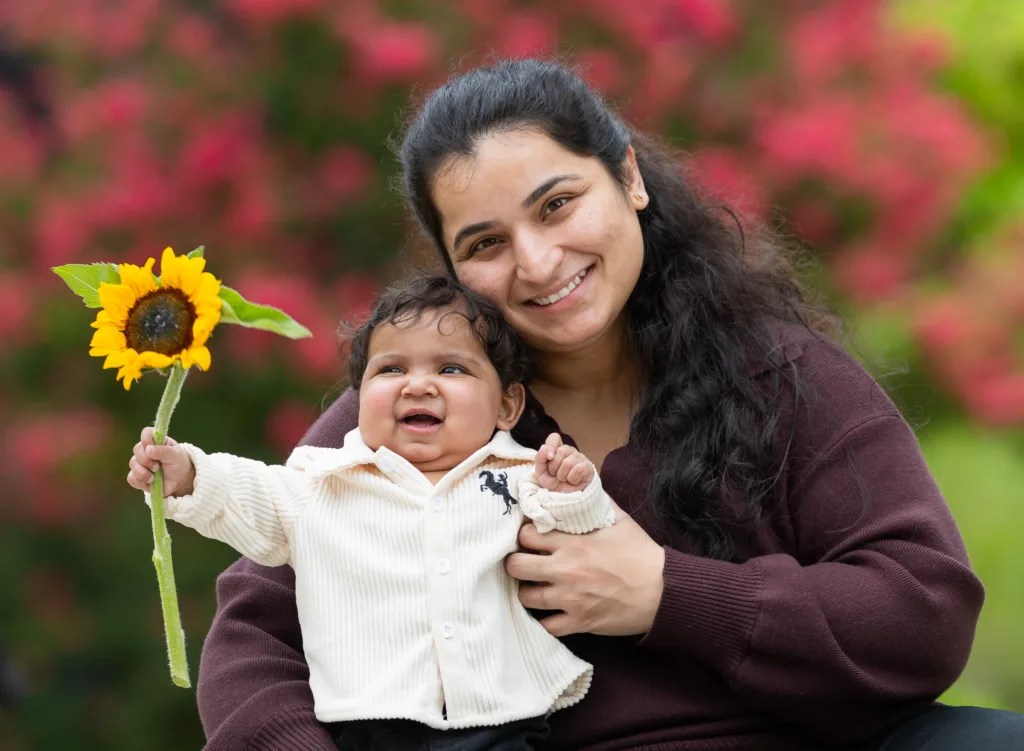
Now, Ojas is a happy and healthy eight-month-old.
“I thought he was an active baby before the surgery but now I can see his real self,” Divya said.
“The next day (after surgery) I could see his actual skin tone and within a
couple of days the yellowness was 99 per cent gone.”
“He was not gaining weight before the procedure because of his condition but now he’s feeding well. He’s just crossing all his milestones.”
Divya said she was forever grateful to The Royal Children’s Hospital and for the donation.
“It saved a life,” she said.
Written by Brooke Grebert-Craig
Images by Jason Edwards
Published in the Herald Sun 1 April 2026
Updated May 2026
Read More
Explore More