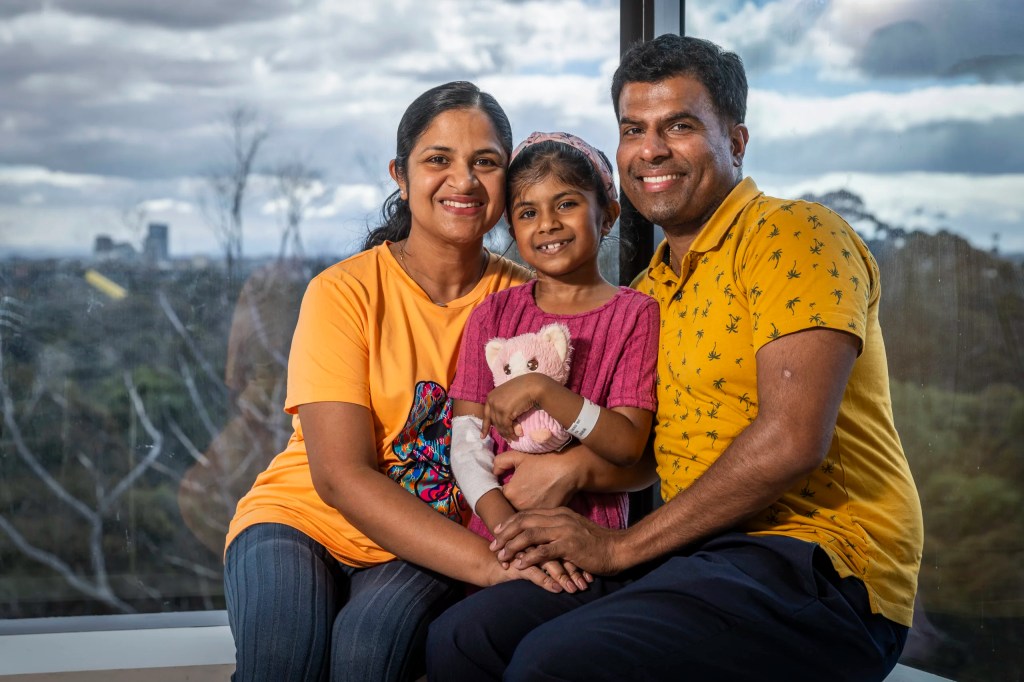
A Miracle Team Saved Our Bella
Miracle is not a medical term. It is a divinely human experience; mysterious and inexplicable.
Kurian and Sabna believe teams at the Royal Children’s Hospital – and miracles – saved their daughter Bella.
“How else could we explain the circumstances Bella was brought back to us?” Kurian said.
Bella, 7, was admitted to the Royal Children’s Hospital after suffering a cardiac arrest at home. Her parents, Kuran and Sabna, performed CPR on their daughter and called an ambulance.
Later, scans at the hospital indicated Bella had signs of hypoxic brain injury (which occurs when the brain does not receive enough oxygen).
“Bella suffered a lot of brain damage, and doctors were not sure how she was going to wake up. We were shattered,” Kurian said.
Bella spent two weeks in the RCH intensive care unit, which included three days on a life support machine.
She also underwent surgery to implant an cardiovascular defibrillator. Bella was then moved from ICU to the cardiac ward.
“That was the darkest period,” Kurian said. “She woke up but she had lost a lot of brain and bodily functions. She could not see. She was totally blind. She couldn’t eat or swallow. She was bedridden, but couldn’t even lie down because of painful muscle spasms. It was relentless, 24-7.”
Kurian and Sabna also began drowning in guilt over the night of Bella’s cardiac arrest; did they perform CPR correctly; should they have been quicker to call an ambulance?
“It was harrowing,” Kurian said. “(We) are not trained in CPR. We called triple-0. I had an idea of how to give CPR, but I didn’t know the counts, the breaths or compressions. Under guidance (from triple-0), we started giving Bella CPR. We acted very quickly, but in hindsight, we might have lost valuable seconds.”
“We blamed ourselves for Bella losing brain functions due to severe hypoxia. But self-blaming is not constructive. It was better to move forward and say: ‘What can we do for Bella from here’?”
Six weeks later, hope.
Bella started responding to rehabilitation sessions, music therapy and watching family videos.
“We didn’t know if the videos invoked memories of her beautiful life before the cardiac arrest,” Kurian said.
“But it was difficult seeing her locked in this painful body, and unable to do anything.”
Twelve weeks into her journey, miracles.
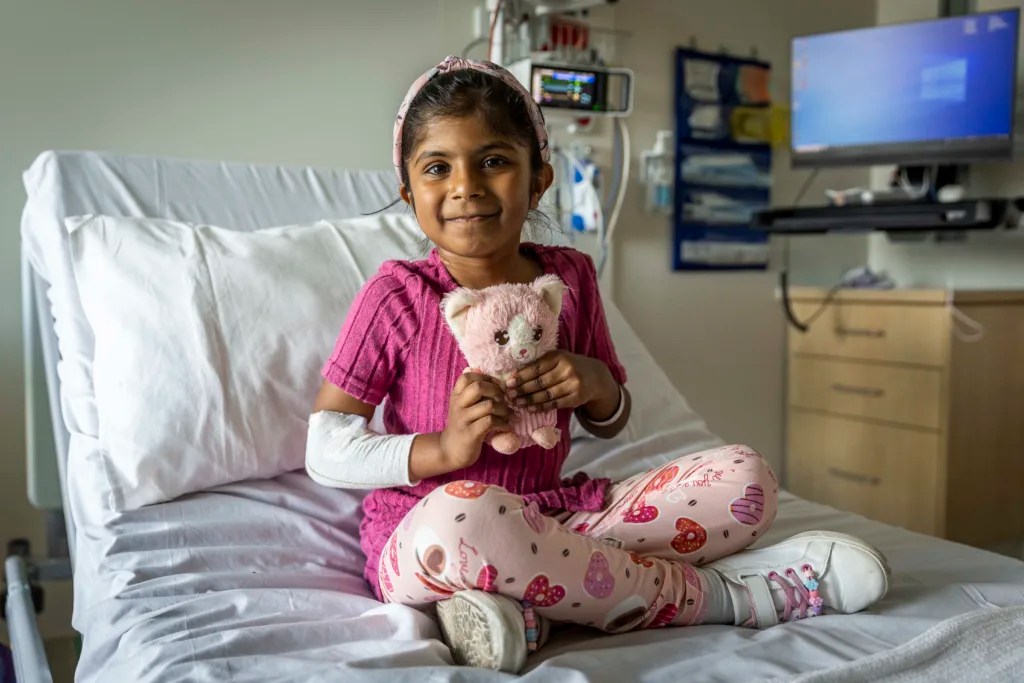
Bella started speaking again, and slowly regained body functions that had shut down, including her eyesight.
“She was so resilient, so brave,” Kurian said. “From then, we knew she would make a full recovery.”
He added: “I think there was divine intervention, definitely. But it was also the hard work of surgeons, doctors, nurses and therapists. The miracle happened at the RCH.”
Professor Andreas Pflaumer, a consultant cardiologist at the RCH said Bella had suffered “severe neurological damage,” but added: “Children have an amazing ability to restructure their brain, relearn things and replace parts of the brain with new development.
“With good support and rehabilitation, that often leads to quite exceptional results,” Professor Pflaumer said.
“People talk about miracles, and on one side, there’s definitely luck and faith involved, but (Bella’s recovery) was an amazing team effort by doctors, nurses and family.”
Written by Nui Te Koha
Images by Jake Nowakowski
Published in the Herald Sun April 2025
Updated July 2025
Read More
Explore More