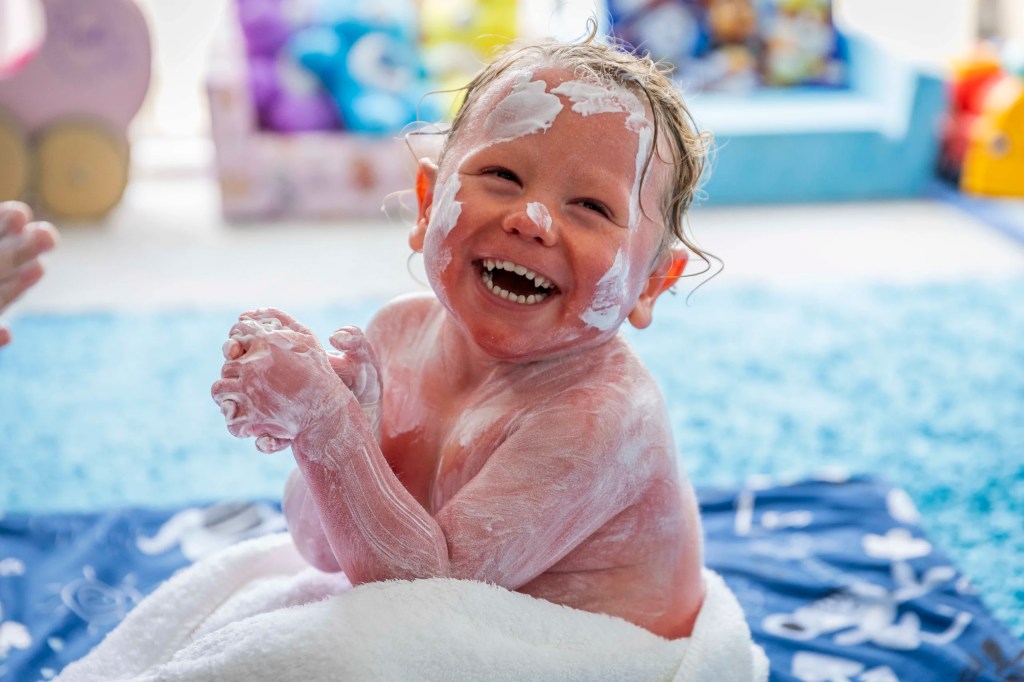
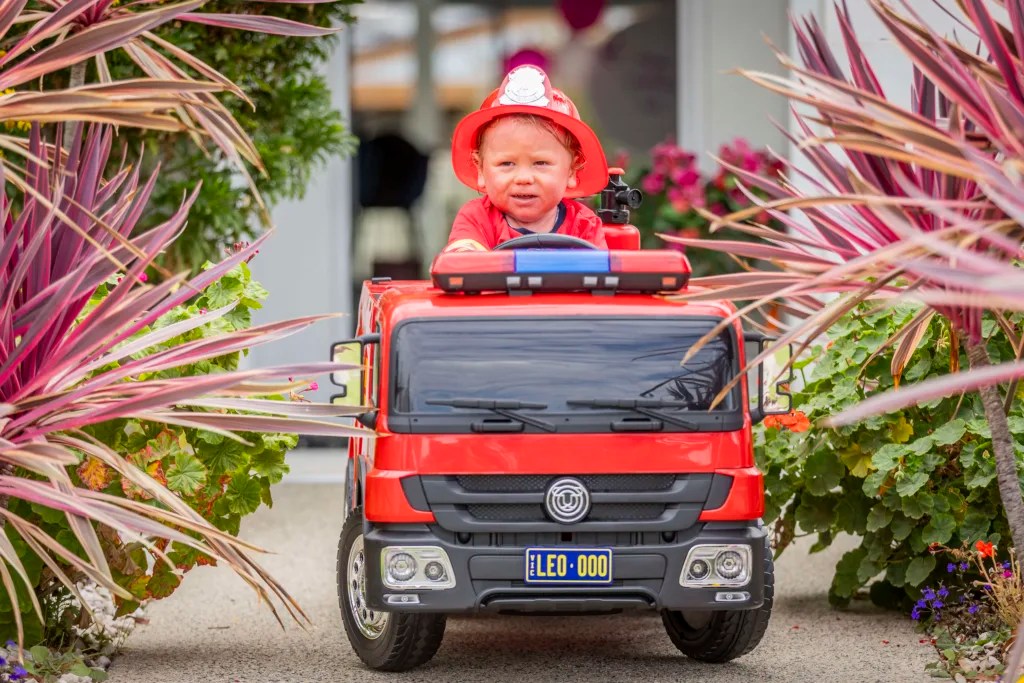
Leo is beautiful and very brave.
Lion-hearted Leo comfortable in his own skin.
Lion-hearted Leo is determined to be comfortable in his own skin.
Leo, 3, has a rare genetic condition called Netherton syndrome, which causes inflamed, red, scaly skin.
“His skin doesn’t work properly,” Leo’s mother, Rhiannon said.
“All of the things affiliated with his skin, like maintaining his body temperature, protecting him against infection, and hydration, are severely affected.”
Dr Julian Kelly, a pediatrician at The Royal Children’s Hospital, and Leo’s clinician, said the brave boy first presented to the RCH with “life-threatening sepsis,” adding: “He was as sick as you can get.”
Dr Kelly said teams at the RCH intensive care unit saved Leo’s life.
“They had a very challenging situation,” he said.
“Leo is the kind of patient that, if you didn’t have a tertiary hospital like the RCH, he wouldn’t be with us.”
Tests confirmed Leo had Netherton syndrome.
“It’s a rare skin disorder, and there are only 150 documented cases in medical literature,” Dr Kelly said.
“Most people forget that skin is our primary immune defence mechanism. It’s that primary way in which we stop getting life threatening infections.
“Leo’s condition is one where he has massive amounts of inflammation, skin turnover and leakage. He’s at the severe end of the spectrum. He has endured irritated and inflamed skin ever since he was born.”
Leo’s treatment includes two weekly injections of an agent that puts “immune products back into his system,” and another biologic agent that “targets his inflammatory pathway.”
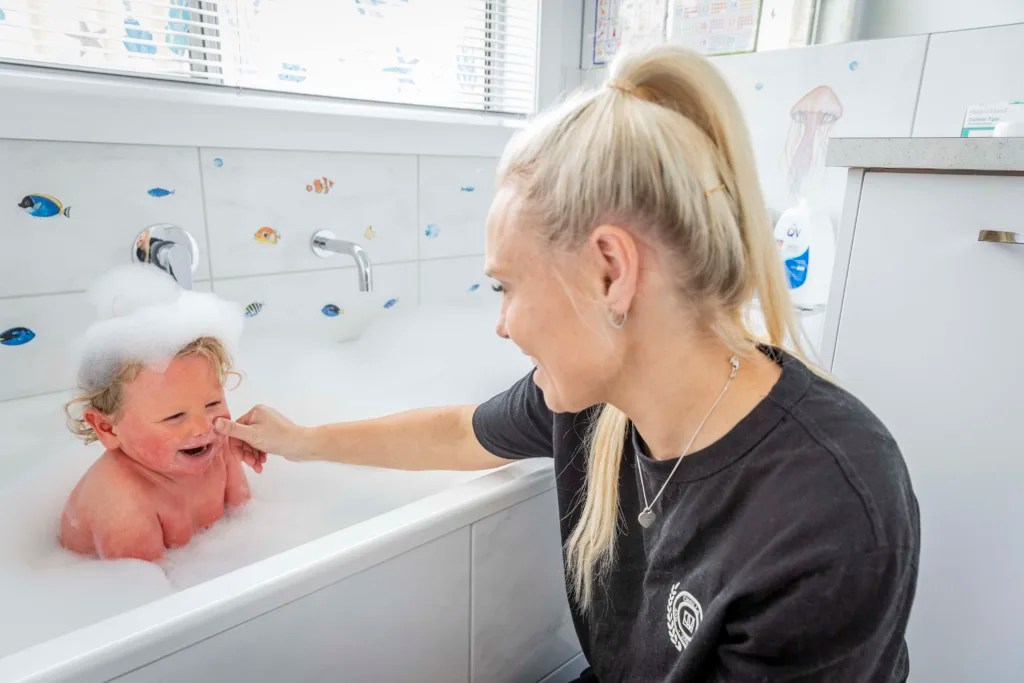
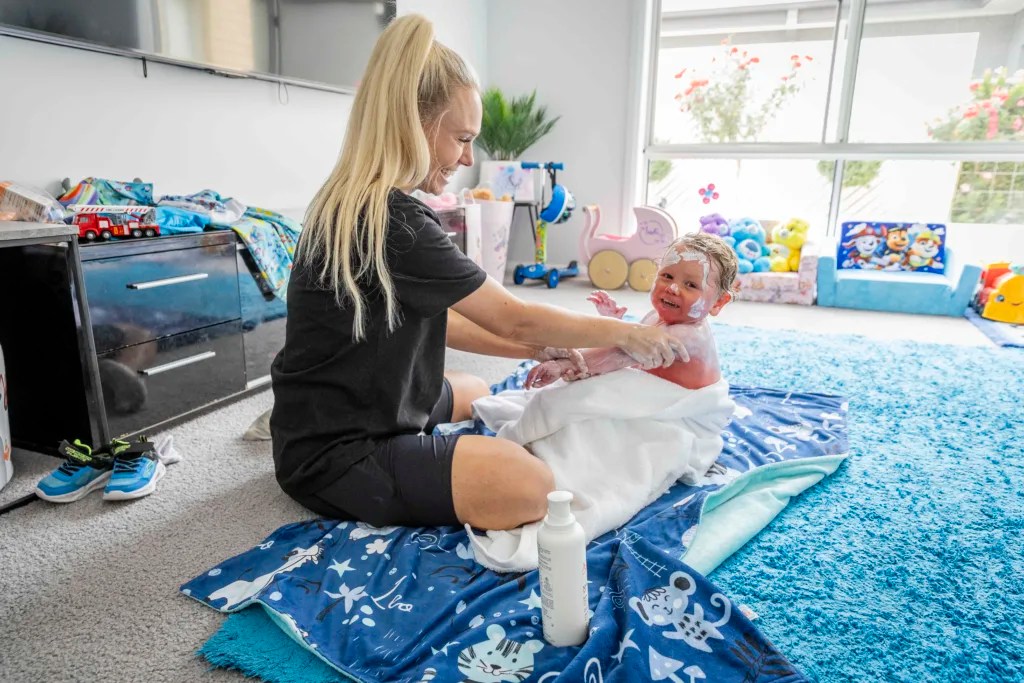
But the hard work, relatively speaking, happens at home. Rhiannon has to bathe Leo, and apply skin-soothing creams several times a day.
“Initially, we gave him four or five baths a day, which take between an hour or two hours each,” she said. “Now we’re down to three, which is six hours a day of bathing, and creams on top.
“We apply creams eight times a day; three times for the whole body, head to toe; then topping up face and hands, anything that’s exposed – all day.
“It’s a big impact for everyone, but because he’s had this his whole life, he doesn’t know any differently. He doesn’t yet recognise that other kids aren’t getting their face creamed all the time.
“Occasionally, he’ll see kids at the park getting their sunscreen put on, and he’ll say, ‘Mum, look, they’re getting cream, too,” Rhiannon said.
“It’s so beautiful.”
They also have to be hyper aware of potential dangers in parks and playgrounds.
“It’s the fragility of his skin,” Rhiannon said. “He went for a run up the hill the other day, and fell over really lightly, and took the skin off his knee. Blades of grass cut him. Bark chips at a playground can cut him, too. You think, ‘He’ll be all right.’ But he gets up and he’s covered in blood.”
She is thankful Leo heals quickly.
Dr Kelly said Leo’s family, especially Rhiannon, were selfless and compassionate with Leo’s care.
“I’ve been a doctor for 30 something years, and I don’t think I’ve seen a family that’s been so adept at adapting to a very difficult situation, remaining sane, and also being so charitable,” he said.
“They do the most amazing job … in terms of the amount of skin care they have to do, and medication administration. It’s a torrid process they have to go through, and they do it remarkably well.”
Dr Kelly said Leo was making good progress.
“He’s got a life long condition, but it tends to improve as you get older. The reasons for that are unclear,” Dr Kelly said. “But we’ve got him stable, and developing, and growing. I’ll look after him until he’s 18 and finished school. Hopefully, by then, his skin will be less of a problem.”
Rhiannon said she and her family were grateful for Leo’s care at the RCH. They lived at the hospital for a year during the most difficult days of Leo’s health journey.
“The RCH has showed us so much love and compassion,”
Rhiannon said. “After Leo was discharged, and we returned to the real world, we realised the real world isn’t as magical as the RCH.
“(At the RCH), we felt normal and accepted, and no-one looked at him twice. It was, ‘Leo is Leo, and he’s beautiful.’ Now we’re really feeling the impact of what the real world is. Some people judge and make comments. The most common thing is, ‘Why are you so sunburnt,’ or ‘What happened to your face?’
“We’ve always known that was going to happen,” Rhiannon says, with sadness in her voice. “But it’s hard, and it’s hard to explain it to a 3-year-old who now understands.
Now he can look at me and ask, ‘Mum, what did happen to my face?’
“That’s something we’re going to build resilience around because this is forever. I guess the key to Leo is that he embraces it, and he knows he’s beautiful no matter what.”
Written by Nui Te Koha
Images by Jake Nowakowski
Published in the Herald Sun April 2025
Updated October 2025
Read More

Explore More