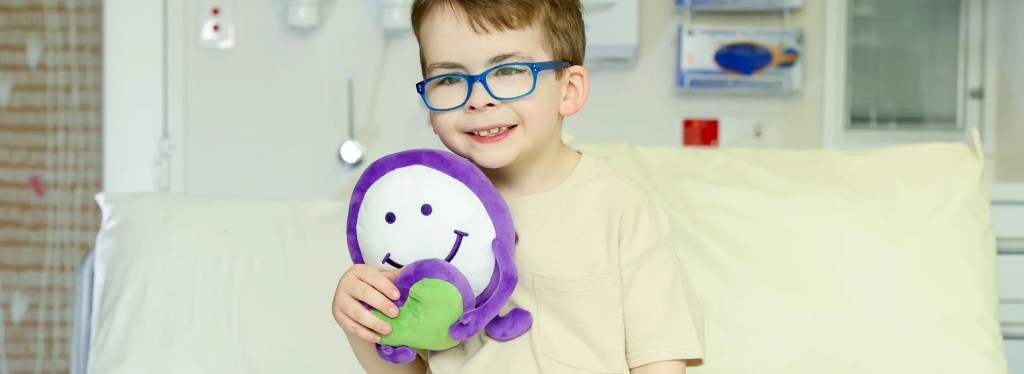
Meet Oliver
Six-year-old Oliver is an aspiring superstar. He loves school, celebrates every birthday like a victory, and talks proudly about his “different heart.”
To anyone meeting him today, it’s hard to imagine how bumpy his start to life was, or how many people at The Royal Children’s Hospital (RCH) have been there to ensure he’s never skipped a beat.
During a routine pregnancy scan, Oliver’s parents, Jacinta and Darcy, were told something was wrong with their baby’s heart. The moment remains sharp in Darcy’s memory. “I didn’t say a word for 30 minutes afterwards … just trying to process and wrap my head around what that meant,” he recalls.
Before birth, Oliver was diagnosed with truncus arteriosus, a rare and complex congenital heart defect. In a healthy heart, blood travels to the lungs and body through separate vessels. As Oliver’s Cardiologist, Dr Robert, explains, “Oliver was born with a large hole between the two pumping chambers and a single blood vessel that gave rise to both the lungs and the body. This is a relatively uncommon form of congenital heart disease and Oliver’s case was complicated by having additional holes between the collecting and pumping chambers of his heart, abnormalities of the veins bringing oxygenated blood from the lungs to the heart, and progressive abnormalities of the lung arteries.”
The news was devastating. “We didn’t think that it could happen to us,” Jacinta says. “Everything came back as normal. And then suddenly, our lives changed.” Darcy remembers trying to steady himself. “When you first get a diagnosis that your child has the rarest form of his condition, you sort of go, okay, I need to find a way to get through this and understand it.”
Because the condition was detected early, the RCH team prepared the family long before Oliver arrived. “The hospital was fantastic. They gave us all the preparation that we possibly could have ever asked for – they were welcoming, they walked us through what was going to happen and they kept communicating with us the whole time,” recalls Jacinta.
“The field has evolved enormously,” says Dr Robert. “We make antenatal diagnoses to prepare families for the journey. We have better imaging, and considerable advances in surgery, anesthesthetics, and intensive care. We’re also better at making judgements such as working out what needs to be repaired immediately and what is better left for a future time.”
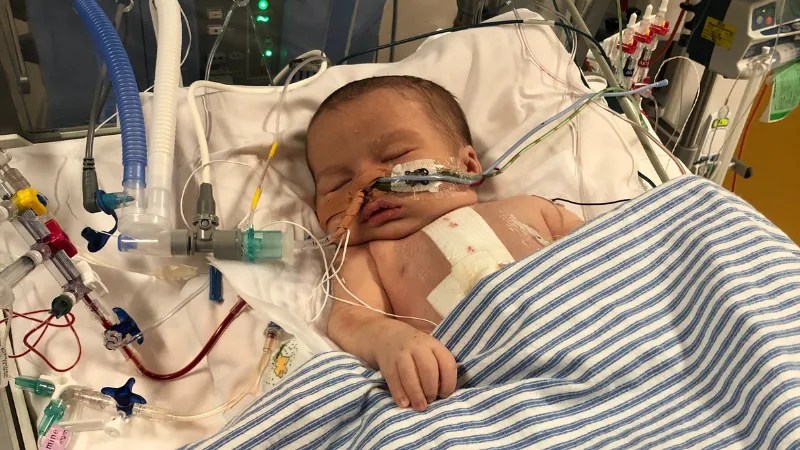
Oliver was born in March 2019 looking strong – pink, crying and responsive – yet his heart was struggling. “Oliver was breathing quickly and showing signs of heart failure,” Dr Robert explains. “He had congested lungs and was working hard to maintain circulation.” At four weeks old, he was transferred by the specialist Paediatric Infant Perinatal Emergency Retrieval (PIPER) team to the RCH for open‐heart surgery.
“Walking into Newborn Intensive Care (NICU) and seeing our tiny little baby strapped up to 18 different medications, and on breathing support – that was really confronting,” Darcy says. Jacinta vividly remembers the moment before surgery. “I remember thinking, if something happens to him when he’s on that table, at least I’ve got this last image of him etched in my mind.”
The operation was complex. “The largest hole between the two pumping chambers was closed, the blood vessels to the body and the lungs were separated, and a tube was put in between the right side of the heart and circulation to the lungs. We felt the other abnormalities were best left for when he was older,” Dr Robert explains. One of Oliver’s cardiac surgeons, Dr Christian, described the procedure as highly customised, requiring real‐time decisions to give Oliver the best chance of survival.
Recovery was far harder than either parent expected. “You think that surgery is the hardest part,” Jacinta says, “but the surgery was actually nothing compared to recovery.” Darcy agrees. “His first surgery was the hardest recovery by a mile. He had complications around his lungs and was struggling to breathe for quite a while.”
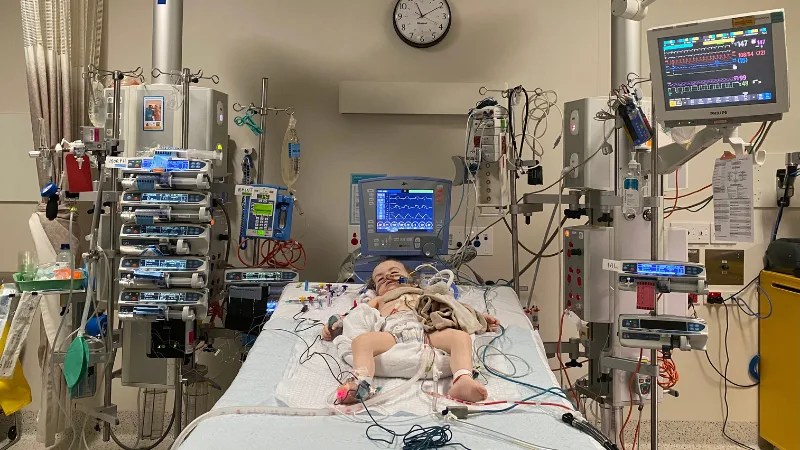
When Oliver was two, he needed a second open‐heart surgery to replace the tube between his right heart and lungs that his growing body had outgrown. “When the baby reaches 15 or 20 kilograms, that tube has become very, very small compared to the body size, and you have to upgrade that conduit,” says Dr Christian. During the same operation, the abnormal lung veins were diverted to drain normally, and the lung arteries were repaired.
Post‐surgery, Oliver needed blood‐thinning medication to keep the lung veins open, bringing the RCH haematology team into their daily lives. “For Oliver, we needed the procedure to work… The last thing you want is for Oliver to have to go back to theater” explains Oliver’s aematology and Anticoagulation Nurse Practitioner, Hollie. “The medication we use can be quite difficult to manage and it needs to be monitored carefully using a blood test.” Hollie taught the family how to test Oliver’s blood at home. “Hollie dealt with every phone call, every stress, every fall, every bump,” Jacinta says. Darcy remembers Oliver’s complete trust in her. “He ran straight up to her. I didn’t even need to be there – he was that familiar and
comfortable.”
This time, Darcy felt the emotional weight more deeply. “I quickly got humbled on the second surgery,” he says. “It brought around a lot of emotions I didn’t have time to process the first time.” The surgery was a success. “Oliver had a great result from his surgery,” Dr Robert recalls. “He’s thriving. He’s fulfilling normal milestones; his growth and development have been very pleasing.”
At the RCH, care extends well beyond medical treatment. “We’re much more focused on quality of life,” Dr Robert explains. “Ability to function appropriately as a child, an adolescent, and as an adult.” Oliver has received ongoing mental health and allied health support to manage anxiety and trauma from his early experiences. “Something as simple as seeing someone with a lanyard used to trigger hysterical crying,” Darcy says. “Now, he jumps on the bed for check-ups like it’s a holiday.”
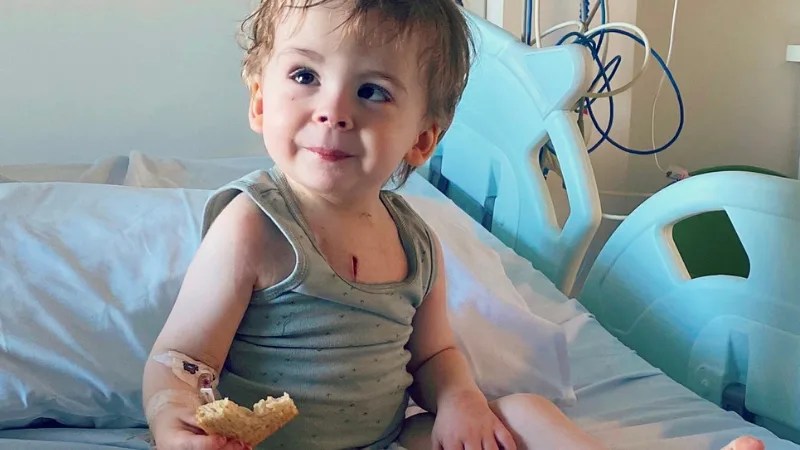
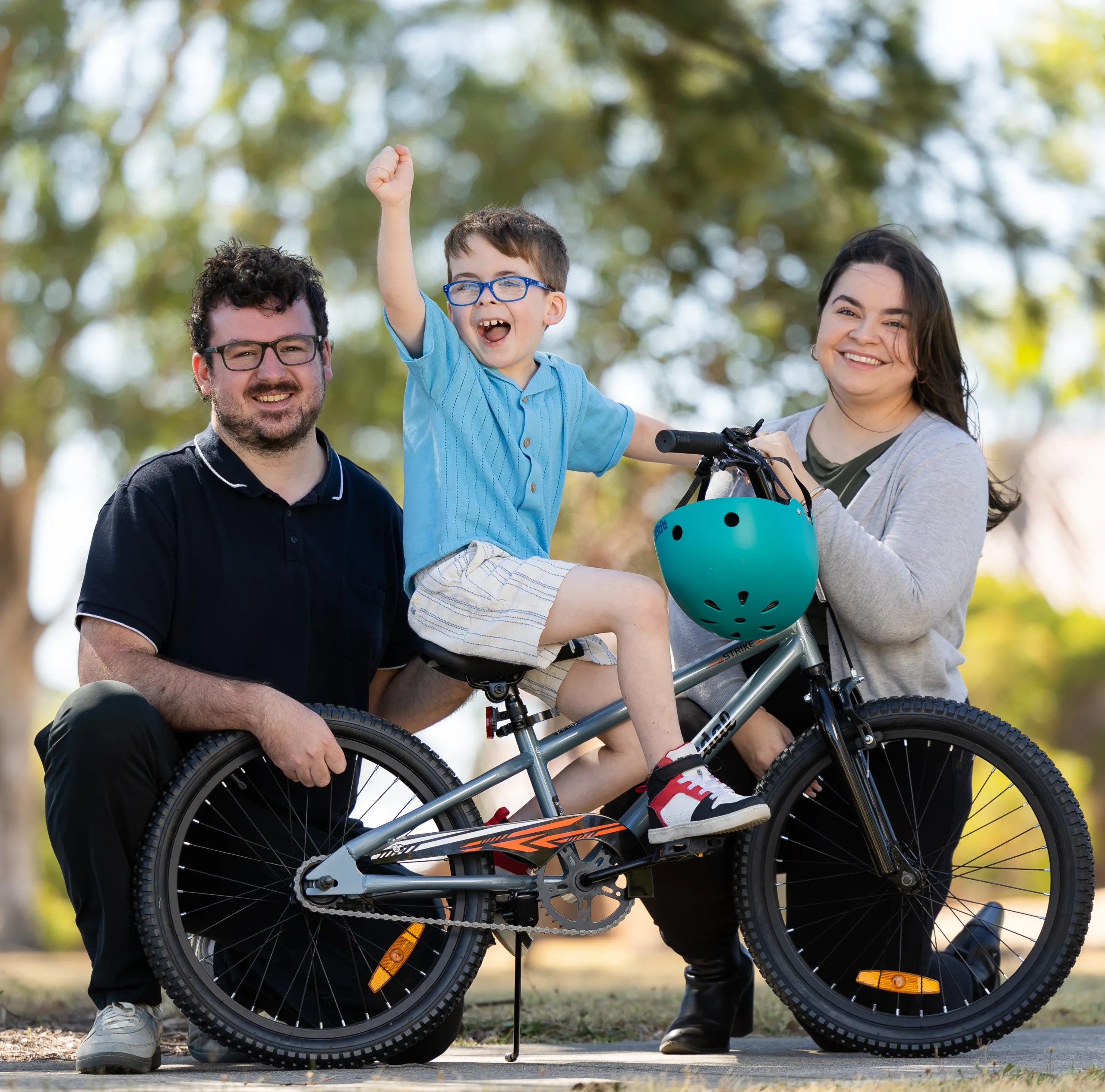
Today, Oliver is confident, independent and proud. “He knows that he’s different to a degree,” Jacinta says, “but he wears his scar with so much pride.” Darcy smiles at the transformation. “I’ve got a photo from a week after his second surgery – a broken little boy. Now, he runs rings around me. It’s an incredible transformation.”
Oliver will need lifelong follow‐up and future procedures, but the outlook is bright. “I don’t think that his heart will limit him,” Dr Robert says. Darcy feels the shift. “You go from thinking none of it’s guaranteed… to now feeling confident about the future.”
“There was so much darkness at the beginning,” Jacinta reflects. “We didn’t know if we would ever get here.” Darcy puts it simply: “You’ve got to trust the process. The people running his care are absolutely phenomenal at what they do.”
“The Royal Children’s Hospital gave Oliver a second chance at life,” Jacinta says. Oliver is living proof of what’s possible when extraordinary care meets extraordinary courage.
Give to help kids like Oliver
Young Oliver in action
Read More
Explore More