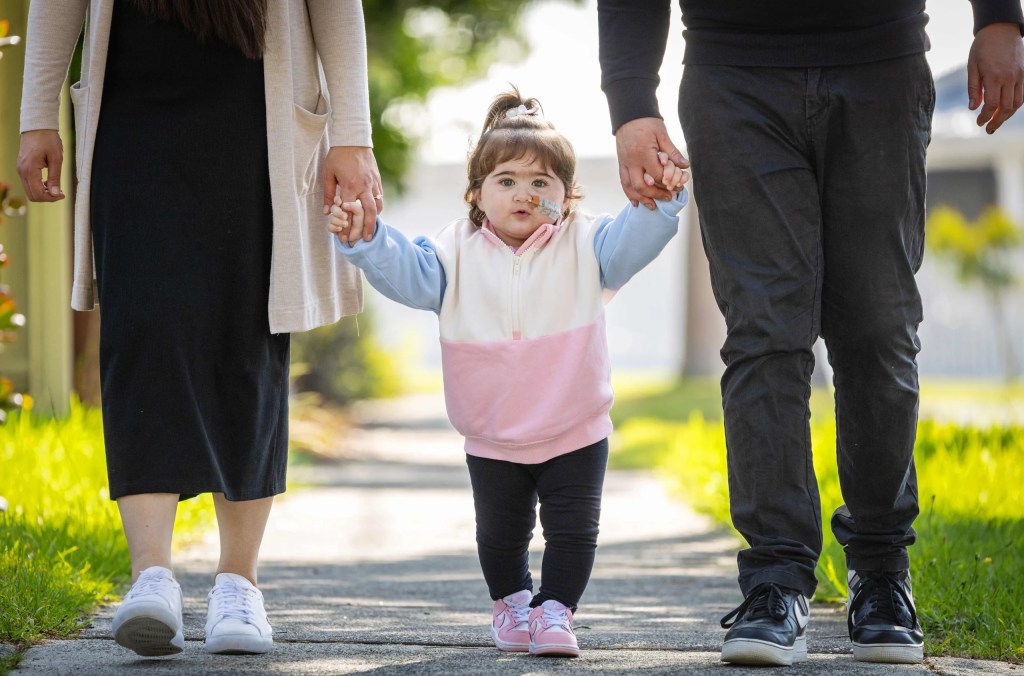
Door to the world opens for Kiara
Timely transplant began with one pivotal phone call.
Life can be found in the most unexpected places at The Royal Children’s Hospital.
It’s in the quiet smile of a child, tears now forgotten, as the doctor first examines their teddy bear.
It’s the laughter on the playground, a patient’s moment of reprieve, and the hug from a nurse when it all gets too much.
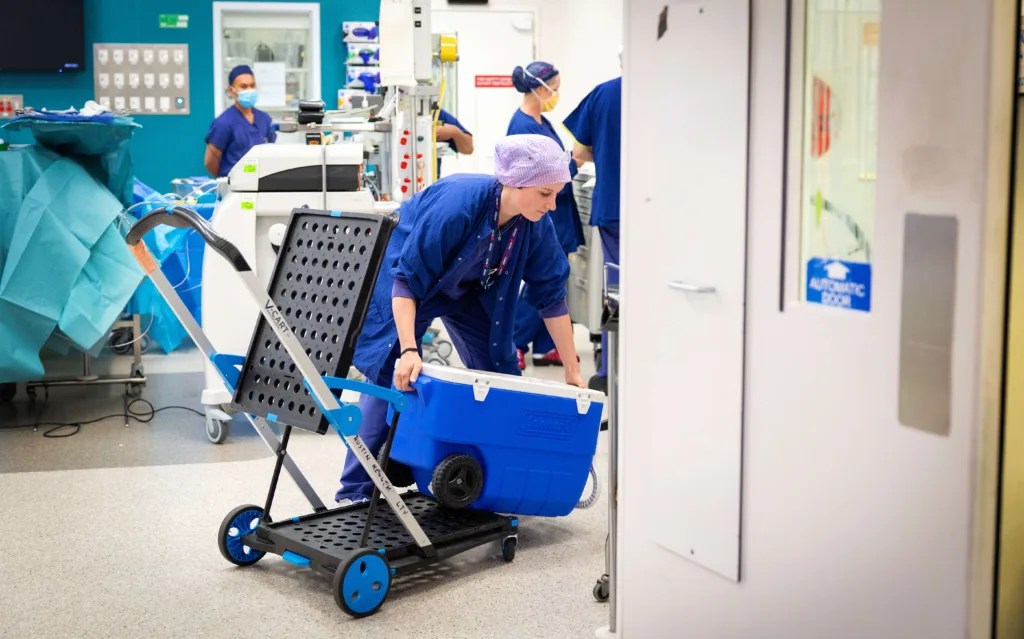
And, one evening over the summer just gone, it could be found inside an Esky that had travelled across Melbourne with one goal: saving little Kiara.
Hours earlier, the toddler was asleep in her room, unaware of the pivotal phone call taking place downstairs.
Her parents Joanna and Chris have spent every day since their daughter’s birth in a constant state of vigilance.
The toddler has a rare condition that is as terrifying as it is silent, where each flare-up risks quietly damaging her growing brain.
But a grieving family’s gift of organ donation – the only “cure” for her condition – offers an escape from this dangerous waiting game, and an unknown number is calling Joanna’s phone.
It’s an offer that may not just save Kiara’s life, but completely change it, too.
Kiara was born with maple syrup urine disease, a rare genetic condition her parents had never heard of before her diagnosis.
RCH and Austin Health liver transplant surgeon Graham Starkey said MSUD patients like Kiara were missing an enzyme that processed some amino acids.
“These toxins can build up in her blood and then with enough time it can cause brain damage,” he said.
“These kids with metabolic disease can end up literally in ICU because of the common cold.
“They have to follow a really restricted diet … it’s this sugary, carbohydrate diet.
“And despite (the restrictions), despite the best care, they still have a tendency to develop brain injury and end up quite disabled.”
Joanna said most patients’ conditions could be well managed via diet, but this was not the case for Kiara and she was often hospitalised, critically unwell from the levels of toxins in her blood.
“She just became very unpredictable with her condition and unmanageable medically,” she said.
“In the long run, she could wake up having severe brain damage and we can’t do anything about it.”
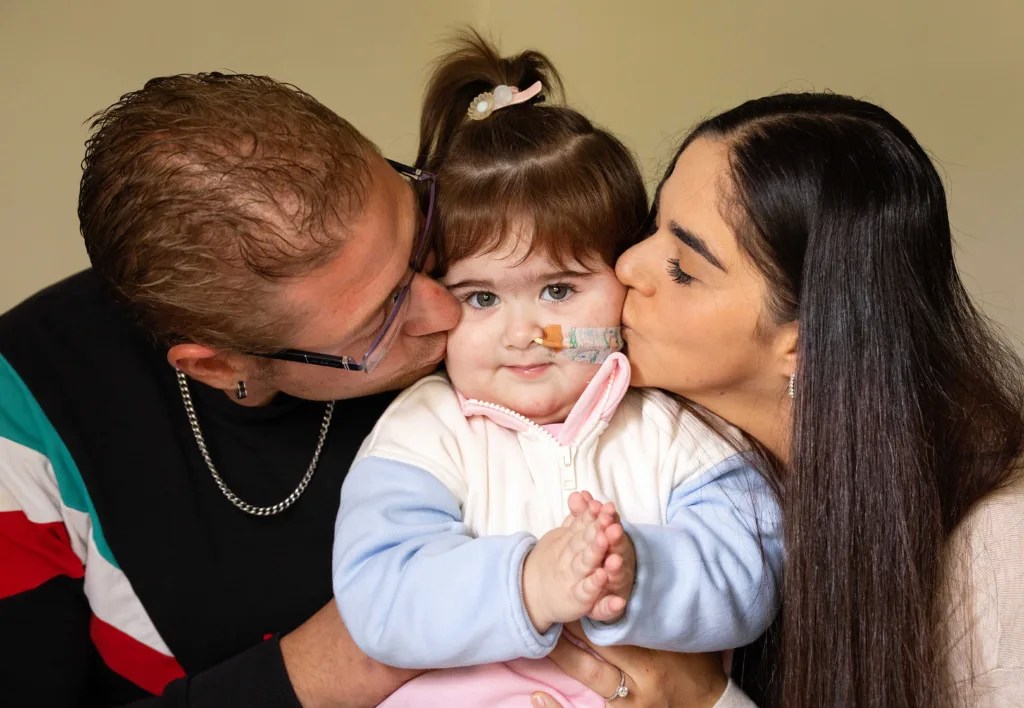
Joanna said it used to be quite obvious when Kiara needed to be rushed to the emergency department as the high toxin levels caused symptoms such as vomiting, diarrhoea and lethargy to the point of appearing drunk.
“Kiara from the age of six months and onwards stopped showing us any signs of symptoms,” she said.
Kiara could be running around happy and active, while her levels were silently damaging her brain, and they had no idea until the RCH called with her weekly test results.
“The fear as a mother knowing that there’s nothing I can actually do to prevent her from having that brain damage, other than a transplant, is the most scary thing,” she said.
Chris said life was a constant unknown.
“Everyday was just anxiety and stress because you didn’t know what you were going to face,” he said. “It was a constant rollercoaster.”
After a particularly bad episode, the decision was made to put Kiara on the waiting list for a new liver.
Mr Starkey said a donor liver from a non-MSUD patient contained the missing enzymes Kiara needs.
“The enzyme is abundant in the liver,” he said.
“So if you replace the liver, you’ve still got that enzyme missing in the rest of her body, but there should be enough in the (new) liver for her to function pretty normally.”
When Joanna’s phone rang with the news that Kiara’s wait was over, and a liver was available, she went into survival mode.
She said she held it together until Kiara was sedated and the moment arrived to kiss her 16-month-old daughter goodbye and leave.
“We were both trying really hard to just stay calm, collected and positive, but once those doors were shut I just let it all out,” she said.
“I just cried it all out and was saying ‘my baby, my poor baby, my baby’.”
Chris said: “There’s nothing, really, that you can do once those doors shut.
“Her life is in the surgeon’s hand, but it’s for the best.”
And for the best it was.
There was a calmness to the theatre as those steady hands wove their magic.
First, the team – led by Mr Starkey – had to carefully remove Kiara’s liver, tying off the delicate web of blood vessels one by one without compromising blood flow to other organs too much.
Mr Starkey described it as a “complex operation”.
“There is a bit of pressure, because once you take the liver out, you’ve got to get a new liver in and it’s got to work,” he said.
Four key bits of “plumbing” need to connect, including the bile duct and a crucial artery.
“The key with transplantation is blood flow through the new organ,” Mr Starkey said. “The artery, it is tiny, it’s a couple of millimetres.
“We’ve got to join that up and the blood has got to flow.”
When the donor organ arrived, it was handled with great care. Mr Starkey said it was a beautiful sight.
“They are beautiful,” he said. “When you hold the little chuck of liver, you’re holding someone’s life.”
He said the donor family’s decision had not just saved Kiara but several other Victorians, and he hoped the public understood just “how amazing it is for these recipients”.
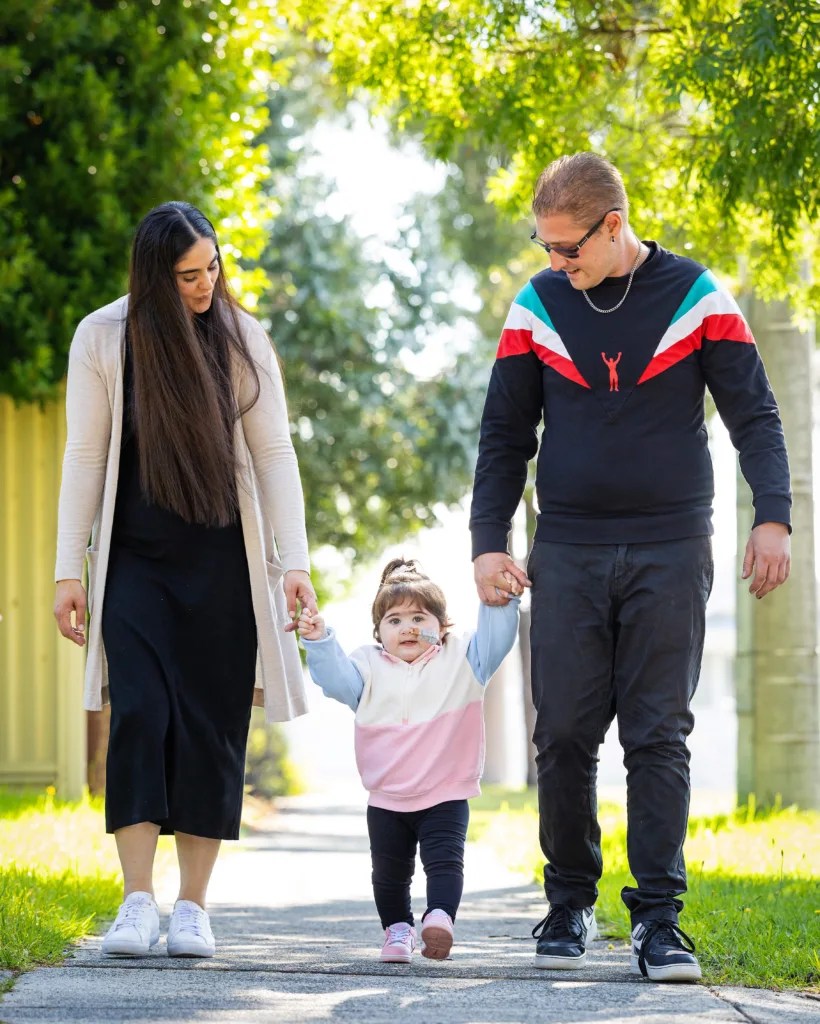
That was the exact word Joanna used to describe Kiara’s condition several weeks after the operation – “amazing”.
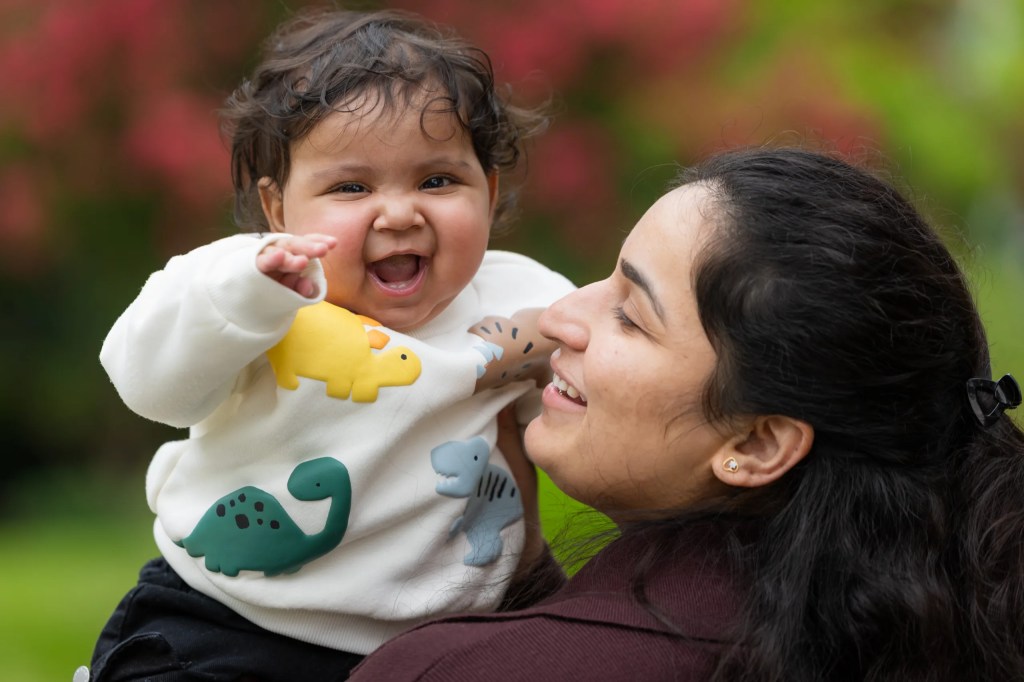
“She’s so happy to be home and we’re so happy,” she said.
Their family had “lived a very sheltered life until now”, as Kiara’s MSUD was so unstable she could not risk infection.
“Parks were a no-go, childcare centres were a no-go,” Joanna said.
“We could see that Kiara had such a big thirst for life, and we had to create a boundary for her on that, and that was really hard. She wants to explore, she wants to play with other children, she wants to do all of these things. We were shut in four walls.”
But, now thanks to the team at the RCH and a grieving family’s gift, a door has finally opened for them.
Written by Sarah Booth
Images by Mark Stewart
Published in the Herald Sun 21 March 2026
Updated March 2026
Read More
Explore More